Jun 28, 2026
Last Updated: June 28, 2026
An accessible minibus lease provides organisations with flexible, cost-effective transport solutions designed specifically for wheelchair users and passengers with mobility challenges. This guide walks you through everything you need to know about leasing wheelchair-accessible vehicles, from understanding what makes a minibus truly accessible to navigating the entire procurement process.
Whether you manage a school, care facility, charity, or commercial fleet, the choice between leasing and buying has profound implications for your budget and operational flexibility. Properly specified accessible vehicles reduce transport-related incidents and improve service reliability for organisations serving vulnerable populations.
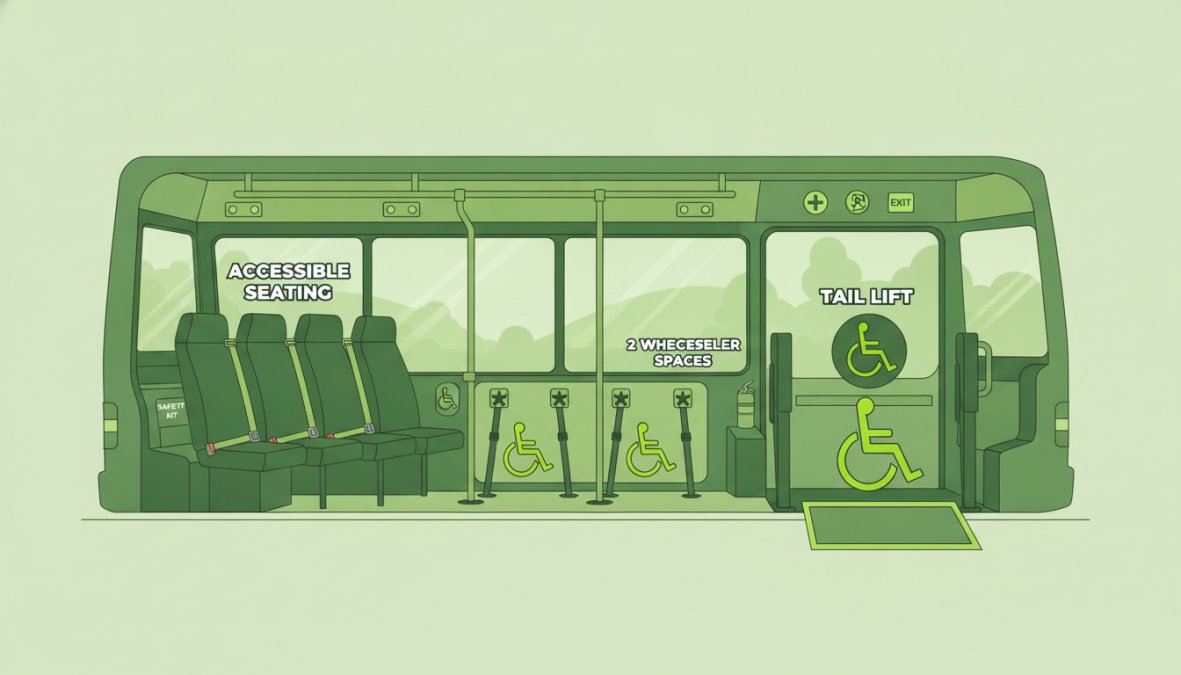
An accessible minibus lease is a fixed-term rental agreement for a vehicle equipped with mobility features such as tail lifts, wheelchair ramps, accessible seating configurations, and compliant safety systems. Rather than purchasing outright, your organisation makes monthly payments to use a brand-new, fully maintained minibus tailored to your accessibility requirements.
The leasing model transfers vehicle ownership risk to the leasing company while you retain operational control. This matters because accessible vehicles require specialist maintenance, regular safety certification, and compliance with evolving regulations. A lease bundles these responsibilities into your monthly payment, eliminating surprise repair costs.
Wheelchair-accessible minibuses share core specifications. The tail lift is a powered hydraulic platform that lowers from the rear bumper, allowing wheelchair users to board without assistance. These lifts typically accommodate standard wheelchairs up to 300kg and operate smoothly in temperatures from -10°C to +50°C.
Inside, wheelchair securing systems use four-point restraint mechanisms meeting European safety standards. Accessible seating is positioned to allow easy transfer from personal wheelchairs or use of vehicle seats. Aisle width, door aperture dimensions, and handrail placement all follow accessibility specifications. Flooring is non-slip vinyl or rubber for safety during acceleration and braking. Enhanced climate control is essential because passengers with reduced mobility are more sensitive to temperature extremes.
The lease-versus-buy decision hinges on three factors: capital availability, fleet volatility, and regulatory appetite. Leasing suits organisations lacking significant capital reserves, facing uncertain demand, or wanting to avoid ownership complexity. Buying makes sense for stable, long-term operations with strong cash flow and expertise to manage vehicle maintenance.
Total cost of ownership encompasses every expense from purchase through disposal. For a purchased accessible minibus, TCO includes capital cost, maintenance contracts, insurance, road tax, MOT testing, driver training, and eventual residual value recovery. Over five years, many organisations find TCO significantly higher than expected because accessible vehicles require specialist servicing.
A lease consolidates most costs into a single monthly payment. Maintenance, routine servicing, parts replacement, and emergency repairs are covered. Insurance is often bundled at preferential rates. Road tax and MOT testing fall to the leasing company. Your organisation pays only the monthly lease fee, fuel, and driver training.
A purchased vehicle depreciates unpredictably, especially if accessibility modifications are needed mid-life. A lease payment remains fixed, allowing precise budgeting. If transport needs change, a lease can be adjusted or terminated with notice, whereas a purchased vehicle becomes a stranded asset.
Leasing enables rapid scaling. If your school expands intake by 20%, you can add another accessible minibus within weeks. If demand drops, you can reduce the fleet by allowing leases to expire, avoiding forced asset sales or write-downs.
This flexibility extends to vehicle specification. As accessibility standards evolve or operational requirements shift, a new lease can specify updated features. Purchased vehicles become locked into their original specification, potentially requiring expensive retrofits to remain compliant.
Leasing an accessible minibus involves regulatory obligations varying by vehicle type, passenger category, and operational context. Requirements differ significantly depending on whether your organisation operates under Section 19 permits (charitable, non-profit transport) or standard commercial licensing.
A minibus carrying nine or more passengers (including the driver) requires a Passenger Carrying Vehicle (PCV) licence. The driver must hold a Category D1 or D licence, involving medical certification and enhanced training. For organisations operating under Section 19 permits, common for schools, charities, and care providers, the regulatory burden is lower, but compliance is mandatory.
Accessible vehicles must meet specific technical standards. The tail lift must be regularly inspected and certified. Wheelchair securing systems must be tested annually. Emergency exits must be functional and clearly marked. These compliance checks are typically included in lease maintenance packages, but your organisation remains responsible for ensuring they occur.
Insurance requirements are stricter for accessible vehicles. Standard minibus policies may exclude wheelchair passengers or impose additional premiums. Comprehensive lease agreements include appropriate insurance, but verify coverage limits match your actual passenger numbers and usage patterns.
Liability exposure is higher when transporting vulnerable passengers. If a wheelchair user is injured during boarding or in an accident, liability claims can be substantial. Leasing companies typically carry employer's liability and public liability insurance, but gaps can emerge if your organisation's actual usage exceeds the agreed scope.
Disclose all intended uses upfront. If you lease a minibus for school transport but also use it for community outreach events, you may fall outside standard insurance coverage. Driver training is a liability control mechanism often overlooked. Drivers need to understand tail lift operation, wheelchair securing procedures, emergency protocols, and passenger assistance techniques. Formal training reduces accidents and liability exposure.
Accessible minibus leasing offers diverse payment and term options designed to match different organisational cash flows and operational timelines.
Standard lease terms run 24, 36, 48, or 60 months. Longer terms reduce monthly payments because the leasing company amortises the vehicle cost over more months. A 36-month lease is common for schools because it aligns with medium-term budget planning and allows specification updates every three years. Care organisations often prefer 48 or 60-month terms because their passenger base is more stable.
Early termination clauses matter. Some leases allow penalty-free exit if circumstances change dramatically. Others impose substantial penalties. If your organisation faces any uncertainty about long-term viability, negotiate flexible exit terms even if it slightly increases monthly payments.
Leases specify annual mileage limits, typically 15,000 to 25,000 miles per year. Exceeding limits triggers excess mileage charges, usually 8-12 pence per mile. Calculate your actual mileage conservatively by reviewing previous years' records or estimating based on route distances and frequency. Underestimating leads to excess charges; overestimating inflates your monthly payment unnecessarily.
Usage limits extend beyond mileage. Lease agreements typically restrict vehicle use to the stated purpose. Using a school minibus for commercial hire or private charter violates the lease and can void insurance coverage.
Maintenance is where leasing delivers significant value over ownership. A comprehensive lease includes all routine servicing, parts replacement, and emergency repairs.
Standard maintenance covers oil and filter changes, fluid top-ups, brake inspections, tyre replacements, windscreen repairs, and battery servicing. For accessible vehicles, this extends to tail lift servicing, hydraulic system checks, and wheelchair securing mechanism inspections. Most plans include 24/7 breakdown assistance and vehicle replacement if repairs take more than a few hours.
Parts are covered without deductibles. If the transmission fails, the leasing company absorbs the cost. Warranty coverage typically extends the full lease term. If a manufacturer defect emerges, repairs are free. This is particularly important for accessible vehicles because tail lifts and wheelchair systems are complex and expensive to repair if not under warranty.
As your lease approaches expiration, plan the transition carefully. The leasing company will conduct a final inspection, assessing wear and tear. Normal wear is acceptable; damage beyond normal use incurs charges. Ensure the vehicle is clean and well-maintained in the final months to avoid surprise invoices.
Decide whether to renew with the same leasing company, switch to a competitor, or return to purchasing. If satisfied with the service, renewal is straightforward. Coordinate timing so you have continuous transport coverage.
Different sectors have distinct accessible transport needs shaped by passenger demographics, regulatory requirements, and operational patterns.
Schools represent the largest accessible minibus leasing segment. Pupils with mobility challenges require reliable daily transport. Leasing allows schools to match vehicle capacity to pupil numbers. As pupil numbers fluctuate annually, leasing avoids the capital strain of buying and selling vehicles.
Care facilities use accessible minibuses for therapeutic outings, medical appointments, and community integration activities. These organisations benefit from flexible lease terms because activity schedules vary seasonally. Summer months might require two minibuses; winter months one.
Charities providing transport to vulnerable populations face tight budgets and uncertain funding. Leasing reduces upfront capital requirements, freeing resources for direct service delivery. Monthly payments can often be structured to align with funding cycles, improving cash flow management.
Procuring an accessible minibus lease involves clear stages, each with specific decisions and timelines.
Stage 1: Define Requirements (2-3 weeks) Document your transport needs precisely. How many wheelchair users? How many ambulant passengers? What routes and frequencies? What accessibility features are essential?
Stage 2: Request Quotes (2-4 weeks) Contact multiple leasing companies with your specification. Request quotes from at least three providers to ensure competitive pricing. Compare total cost of ownership, not just monthly payments. Check whether providers offer Minibus Leasing Special Offers that could reduce your overall costs.
Stage 3: Evaluate Options (1-2 weeks) Review quotes against your criteria. Consider payment flexibility, maintenance inclusion, driver training provision, and exit terms. The cheapest option is rarely the best if it excludes critical services or imposes rigid terms.
Stage 4: Negotiate Terms (1-2 weeks) Leasing companies have flexibility on payment schedules, mileage allowances, and service inclusions. Request adjustments to mileage limits, extended warranty periods, or enhanced driver training.
Stage 5: Arrange Insurance and Compliance (1-2 weeks) Confirm insurance arrangements, driver licensing requirements, and any safety certifications your organisation must complete. Ensure drivers hold appropriate licences and complete required training before vehicle delivery.
Stage 6: Vehicle Delivery and Handover (1 week) The leasing company delivers the vehicle to your site. Conduct a thorough inspection, test the tail lift, check wheelchair securing systems, verify all features function. Receive training on vehicle operation, emergency procedures, and maintenance reporting.
Stage 7: Operational Launch (ongoing) Begin operations with clear protocols. Designate responsible staff for daily vehicle checks, maintenance reporting, and compliance documentation. Maintain a log of any issues and report them promptly to the leasing company.
Accessible minibus specifications are largely standardised by regulatory requirements, but options exist. Tail lift capacity varies; standard lifts handle 300kg, heavy-duty lifts accommodate 400kg. Seating configurations differ. Some organisations prefer maximum wheelchair spaces; others want a mix of wheelchair and standard seats for ambulant passengers.
Interior colours and finishes can be specified. Climate control options range from basic to premium. If your passengers are vulnerable to temperature extremes, enhanced air conditioning and heating justify the additional cost.
Driver training is non-negotiable. Drivers must understand tail lift operation and safety procedures, wheelchair securing techniques and verification, emergency evacuation protocols, and passenger assistance practices. Many leasing companies include driver training in their packages. If not, budget for external training, typically £150-300 per driver for a half-day course.
Safety requirements extend beyond driver training. Your organisation must maintain vehicle inspection records, document any incidents, and ensure regular safety audits. Leasing companies support this through maintenance scheduling and compliance reporting.
Accessible minibus leasing removes the capital and operational barriers that prevent many organisations from offering reliable transport to passengers with mobility challenges. The combination of flexible terms, included maintenance, and regulatory compliance support transforms transport from a burden into a strategic advantage.
Minibus Leasing UK specialises in tailored lease solutions for education, care, and community sectors. Our whole life cost analysis ensures your lease delivers genuine value. With dedicated account managers, comprehensive maintenance packages, and expertise in Section 19 permits and D1 licensing, we handle the complexity so you focus on service delivery.
Get a bespoke quote or speak to a sector specialist today, we'll match you with the right accessible minibus lease for your organisation's needs.
Key features include wheelchair-accessible ramps or tail lifts, secure seating capacity for mixed passengers, spacious aisles for mobility aids, and climate control. Ensure the vehicle meets ADA compliance and safety regulations. Vehicle adaptation options, such as grab rails, accessible toilets, and lowered entry points, are essential for care and community sector organisations. Verify that the leasing programme includes proper vehicle maintenance and warranty coverage to keep accessibility features in optimal condition throughout your lease term.
Leasing offers predictable monthly payments with fixed-term lease agreements, eliminating unexpected repair costs through comprehensive warranty coverage. Buying requires significant capital investment and ongoing vehicle maintenance responsibility. For organisations in education, healthcare, and community sectors, leasing provides superior fleet management flexibility, allowing you to adjust seating capacity and vehicle specifications as needs change. Leasing also ensures your vehicles remain compliant with safety regulations and remain reliable brand-new models throughout the contract hire period.
Your organisation must ensure drivers hold appropriate D1 licensing for passenger-carrying vehicles and comply with Section 19 permit requirements if applicable. Insurance and liability coverage must protect both passengers and your organisation. Accessible minibus leasing requirements include maintaining safety standards for wheelchair accessibility, ensuring proper vehicle maintenance schedules, and documenting driver training completion. Many leasing programmes provide guidance on regulatory compliance, helping your organisation meet legal obligations for accessible transport provision.
Whilst specific grants vary by region and sector, many non-profit organisations, schools, and charities access funding through local authority grants or charitable trusts to support accessible transport. Some leasing programmes offer budget-friendly options tailored to non-profit funding constraints. We recommend exploring sector-specific funding schemes and speaking with a specialist account manager who understands your organisation's financial frameworks. They can advise on how flexible lease terms and monthly payment structures align with your available budget and grant funding cycles.

