Oct 03, 2026
Last Updated: October 2, 2026
When your care home or social care agency depends on vehicles to transport vulnerable residents, breakdowns aren't just inconvenient, they disrupt care schedules, risk resident safety, and create operational chaos. Vehicle reliability social care depends on brand-new vehicles that form the foundation of dependable service delivery.
Unlike older fleet vehicles that carry accumulated wear and unpredictable failure points, new vehicles come with manufacturer warranties, predictable maintenance schedules, and documented performance standards. This matters because social care transport isn't optional: residents depend on scheduled appointments, day centre visits, and essential outings. A single vehicle failure can cascade through your entire operation.
At Minibus Leasing UK, we've worked with care homes and community organisations across the Northampton area and beyond to understand what reliability actually means in practice.
Whole life cost analysis examines the total expense of owning and operating a vehicle over its entire service life, not just the purchase price. For social care agencies, this perspective reveals why newer vehicles often cost significantly less to operate than ageing alternatives.
When you factor in maintenance, repairs, downtime, fuel efficiency, and potential safety issues, a vehicle that seems cheap to purchase can become expensive to run. New vehicles typically offer better fuel economy, require less frequent maintenance, and experience fewer unexpected breakdowns. A care home in Northampton considering whether to repair an older minibus or lease a new one will find that the new vehicle's predictable costs and reliable performance often deliver better overall value.
The whole life cost analysis for care fleets should include:
Many care organisations find that leasing new vehicles eliminates the guesswork. Instead of budgeting for unpredictable repair bills, you know your monthly costs in advance, which simplifies financial planning and frees resources for direct care delivery.
Every new vehicle comes with a manufacturer warranty, which is your safety net for unexpected repairs and defects (What you need to know before you buy an extended warranty).
For social care agencies, warranty coverage means that if a component fails due to a manufacturing defect, the manufacturer covers the repair cost and, in many cases, provides a replacement vehicle while yours is being serviced. This support is invaluable when you operate a small fleet and can't afford downtime.
Beyond the standard warranty, many manufacturers offer extended support packages that care organisations should evaluate:
When selecting a vehicle for your care fleet, review what the manufacturer's warranty actually covers. Some warranties exclude certain components or have mileage limitations that matter for high-use care vehicles. Understanding these details prevents costly surprises later.
Minibus Leasing UK helps care homes and agencies navigate warranty options, ensuring you choose vehicles with coverage that matches your operational needs. Our account managers work with you to understand what support is included and what additional protection might be worth considering.
Downtime, the period when a vehicle is unavailable due to maintenance, repair, or breakdown, directly impacts care delivery. A single unavailable minibus can force cancellation of resident outings or delay transport to medical appointments.
Effective downtime management for social care starts with reliable vehicles that need less frequent servicing. New vehicles typically require less frequent servicing compared to older vehicles. This reduces planned downtime significantly.
When downtime does occur, several strategies minimise disruption:
Many care organisations operating in the Northampton region and across the UK have found that leasing new vehicles substantially reduces downtime because manufacturers and leasing companies prioritise rapid repairs and replacement vehicles.
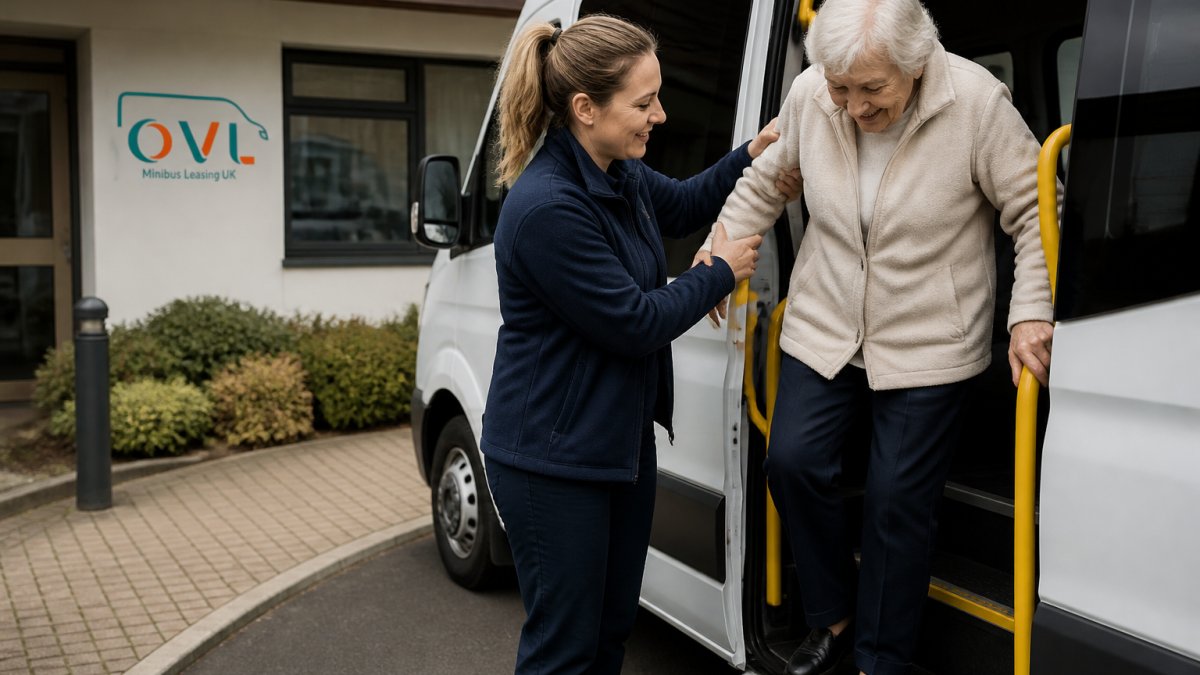
Care homes face unique vehicle requirements: accessibility for residents with mobility challenges, compliance with passenger safety regulations, and reliable transport for scheduled outings.

A purpose-built care home minibus comes with wheelchair lifts, secure seating, and safety features designed specifically for vulnerable passengers.
Reliability matters especially for care homes because residents depend on scheduled activities.
The leasing model also simplifies compliance. Your leasing provider ensures vehicles are properly maintained, insured, and meet all regulatory requirements.
Get a Bespoke Quote or Speak to a Sector Specialist →
Minibus Leasing UK specialises in tailored solutions for care homes, combining brand-new vehicle reliability with whole life cost analysis and regulatory expertise.
New vehicles operate under manufacturer-specified maintenance schedules that are predictable and, compared to older vehicles, relatively infrequent.
A typical new vehicle maintenance schedule includes:
| Maintenance Task | Frequency | Typical Cost Impact |
|---|---|---|
| Oil and filter change | Every 10,000-15,000 miles | Included in many leasing packages |
| Tyre rotation and inspection | Every 20,000 miles | Minimal cost |
| Brake fluid and coolant checks | Annually | Often included in servicing |
| Major service (components replacement) | Every 2-3 years | Predictable, budgeted cost |
| MOT test | Annually | Fixed regulatory requirement |
When you lease a new vehicle, some maintenance costs may be covered under warranty. This can transform unpredictable repair expenses into more manageable costs that simplify financial planning.
Older vehicles, by contrast, operate on unpredictable maintenance cycles. You might face an expensive transmission repair, worn suspension components, or electrical failures that weren't anticipated.
By maintaining new vehicles according to manufacturer schedules, you ensure optimal reliability and extend the vehicle's useful life.
Selecting reliable vehicles for your social care agency requires evaluating several factors beyond brand reputation. Here's what matters most:
Manufacturer reliability track record - Research which manufacturers have the best history of reliability in care and community transport. Industry forums, operator reviews, and fleet management associations provide genuine insight into real-world performance.
Warranty and support coverage - Compare what different manufacturers include in their standard warranty and what additional support packages cost.
Fuel efficiency and running costs - Modern vehicles are significantly more efficient than older models.
Leasing versus ownership - For many care organisations, leasing new vehicles can be a cost-effective option compared to purchasing.
Fleet management support - Choose a provider like Minibus Leasing UK that offers dedicated account management, regulatory expertise, and operational support.
Vehicle reliability social care is not a luxury; it's a foundation for dependable care delivery.
Minibus Leasing UK has helped care homes, community organisations, and social care agencies across the Northampton area and throughout the UK build reliable, compliant fleets that support their mission.
Whether you operate a single minibus or a multi-vehicle fleet, the right leasing partner makes a measurable difference. Get a bespoke quote from Minibus Leasing UK or speak to a sector specialist who understands social care transport requirements.
The cost of vehicle unreliability, unexpected repairs, downtime, and regulatory non-compliance can be significant. Minibus Leasing UK specialises in delivering reliable, brand-new minibus solutions designed specifically for care homes, community organisations, and social care agencies. Our account managers combine deep sector expertise with data-driven whole life cost analysis to ensure your fleet remains compliant, safe, and cost-effective. Explore our minibus leasing special offers and tailored solutions to discover how we can support your organisation's transport needs with the reliability and compliance your residents deserve.
Social care agencies depend on consistent transport to deliver essential services to vulnerable residents. Vehicle downtime disrupts care schedules, increases operational costs, and compromises the safety and wellbeing of those you serve. Brand-new vehicles with manufacturer warranties eliminate the unpredictability of older fleets, ensuring your team can focus on care rather than managing breakdowns.
New vehicles arrive fully compliant with current regulations, including D1 licensing and accessibility standards. Leasing spreads costs predictably, includes manufacturer support, and removes the burden of depreciation and major repairs. Your team gains access to the latest safety features and technology, whilst manufacturers guarantee parts availability and service standards throughout the lease term.
A single vehicle breakdown can cascade through your schedule, affecting multiple resident trips, staff availability, and service continuity. Downtime also forces reliance on temporary hire or alternative transport, driving unbudgeted costs. Brand-new vehicles with predictable maintenance schedules and rapid manufacturer support minimise unplanned downtime, keeping your fleet operational and your care delivery on track.
Whole life cost analysis can demonstrate the value of new vehicles for care agencies. Whilst purchase price appears higher, new vehicles can help eliminate costly repairs, reduce downtime losses, qualify for predictable servicing, and include warranty coverage. For social care operations, the reliability and compliance certainty of new vehicles can deliver better value over the fleet lifecycle.

