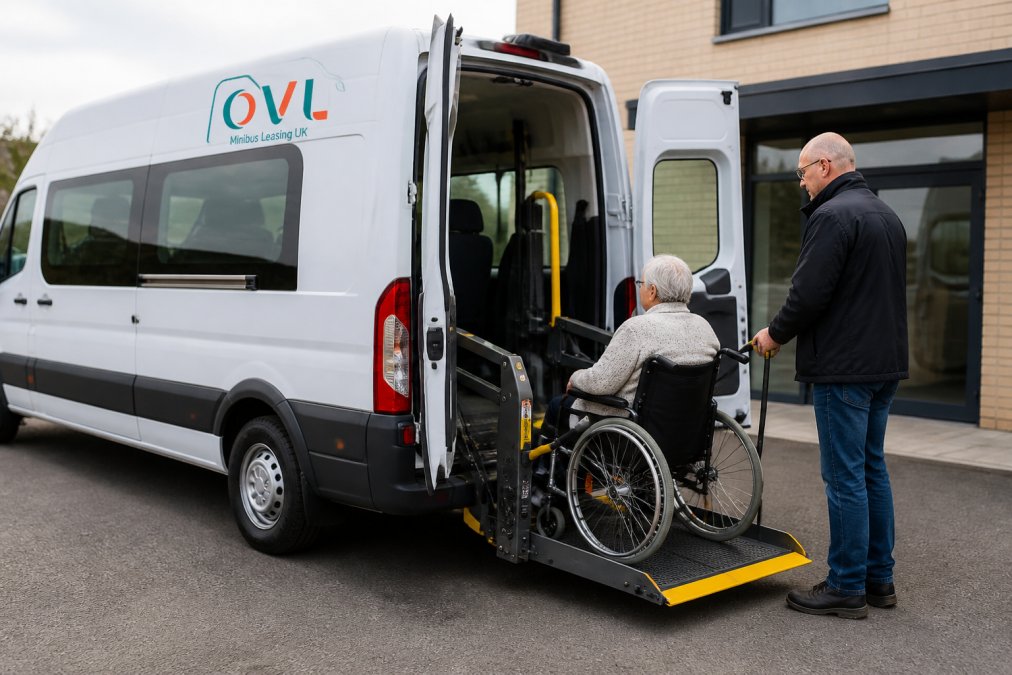
Aug 12, 2026
Last Updated: August 12, 2026
When evaluating whether buying a used accessible minibus is worth it, the headline purchase price masks several harder decisions. What actually matters is the total cost of ownership over five to seven years, and whether a used vehicle can deliver that value reliably.
A used accessible minibus locks you into maintenance cycles, regulatory compliance costs, and potential downtime that can multiply the real expense. The question isn't "Is it cheaper?" but "Does the savings justify the risk?" For many organisations, the answer is no. For others, particularly those with specific operational constraints or budget frameworks, a used accessible minibus can make financial sense if approached strategically.
At Minibus Leasing UK, we work with education trusts, care homes, and charities to navigate this decision. We've seen organisations save tens of thousands of pounds by choosing the right procurement route, and others waste money on used vehicles that became liabilities within months. This guide walks through the real considerations that separate a smart purchase from a costly mistake.
The depreciation curve on a used accessible minibus is steeper than most expect. A vehicle worth £35,000 when purchased second-hand may be worth £20,000 in three years as mileage climbs and the hydraulic lift system requires attention.
Mileage is the best predictor of future maintenance burden. A minibus with 80,000 miles has absorbed more wear on the floor tracking system, wheelchair lift mechanism, and engine components than one with 40,000 miles. Expect service intervals to tighten and repair costs to spike.
The hidden cost is downtime. When your accessible minibus breaks down during a school run or care home outing, you pay for the repair plus operational disruption. Alternative transport must be arranged and staff time consumed managing the crisis. For organisations operating on tight schedules, this hidden cost often exceeds the repair bill.
Long-term ownership also means you absorb every regulatory change. If new accessibility standards emerge, you may need to retrofit your vehicle or retire it early. A leased vehicle transfers that risk to the provider.
| Cost Factor | Used Purchase | Leasing |
|---|---|---|
| Initial outlay | High capital cost | Predictable monthly payment |
| Depreciation risk | You absorb losses | Provider absorbs losses |
| Maintenance & repairs | Your responsibility | Included in lease |
| Regulatory updates | Your cost to comply | Provider's responsibility |
| Downtime management | Operational disruption | Replacement vehicle provided |
| Resale complexity | Uncertain resale value | No resale concern |
A used accessible minibus must meet the same safety and accessibility standards as a new one. The compliance burden falls entirely on you as the buyer.
The vehicle must pass MOT testing, including checks on the hydraulic lift system, ramp deployment, and structural integrity of access features. It must also comply with the Equality Act 2010, which sets accessibility standards for passenger transport. If the minibus fails either standard, you're liable for remedial work or the vehicle becomes unusable.
For organisations operating under Section 19 permits (community transport) or D1 licensing (passenger carrying), the regulatory framework is strict. If you purchase a used minibus with hidden structural issues or lift mechanism problems, you discover these during compliance checks, after payment.
Warranty coverage on a used accessible minibus is typically limited to 12 months on mechanical components. The hydraulic lift system, the most expensive component to repair, is often covered for a shorter period or excluded entirely. Major failures beyond warranty are your cost to bear.
A used minibus that appeared sound at purchase can fail certification for accessibility features, leaving you unable to operate it legally. That's a sunk investment with no recovery path.
Before committing to a purchase, a thorough physical inspection is non-negotiable.
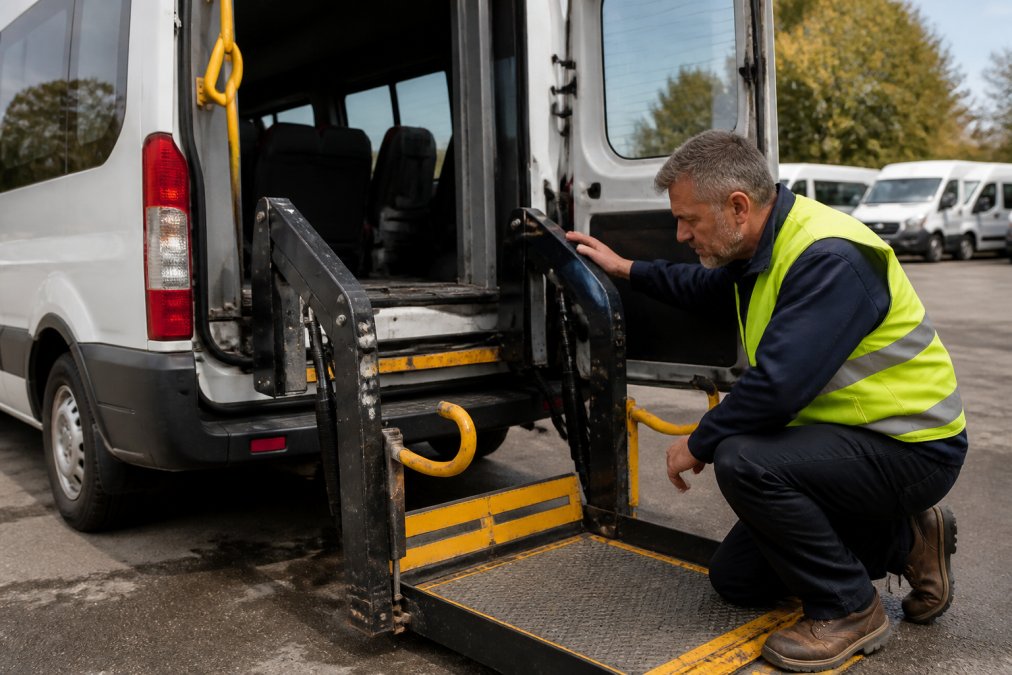
Start with the hydraulic lift. Operate it multiple times under load. Listen for unusual sounds and check for fluid leaks around the cylinder and hose connections. A lift that hesitates, jerks, or grinds signals imminent failure. Hydraulic system repairs can exceed £5,000.
Examine the floor tracking system. Run your hand along the clip-in points where wheelchairs secure. Look for bent or corroded metal, missing clips, or shifted track. Warped flooring compromises wheelchair safety and requires partial floor replacement.
Check the ramp deployment mechanism. Extend and retract it several times. Does it move smoothly and lock firmly? Inspect rubber seals; deteriorated seals allow water ingress, corroding the mechanism from inside.
Inspect interior seating and restraint systems. Test every door, including the emergency exit. Doors that stick or don't seal properly indicate frame misalignment.
Look under the vehicle for rust, leaks, and suspension damage. Rust on the chassis signals neglected maintenance.
Request the full service history. A minibus with documented regular servicing is worth a premium over one with gaps in maintenance records.
Arrange an independent mechanical inspection by a surveyor specialising in accessible vehicles. This costs £300-500 but can prevent a costly mistake.
Maintenance on a used accessible minibus is where the true cost of ownership emerges. Unlike a standard minibus, an accessible minibus has hydraulic systems, specialised seating, and safety-critical components requiring specialist servicing.

Annual servicing typically costs more than a standard vehicle because the hydraulic lift system, floor tracking, and accessible entry mechanisms require specialist training. Not every garage can service these systems; you'll likely need a specialist converter or authorised dealer, which limits options and increases labour costs.
Hydraulic fluid requires regular flushing and top-ups. The lift mechanism should be tested under load annually. Seals and hoses deteriorate on a predictable cycle.
The floor tracking system needs inspection for corrosion, alignment issues, and clip wear. Damaged clips compromise wheelchair safety.
Tyre wear is often faster on accessible minibuses because the added weight of the conversion increases stress on suspension and tyres.
Get a Bespoke Quote or Speak to a Sector Specialist →
Service history is the best predictor of future maintenance costs. A minibus with a complete service record will likely be more reliable than one with gaps. However, by year five or six of ownership, you're often facing major component replacements costing £3,000-8,000 per repair.
Many organisations find that cumulative maintenance costs, combined with the risk of catastrophic failures and downtime, exceed the savings made by avoiding a new vehicle purchase.
Buying a used accessible minibus makes sense in specific circumstances.
A used accessible minibus is worth considering if:
Your budget is genuinely constrained and cannot stretch to a lease or new purchase. If you have a one-time capital budget and no access to financing, a used vehicle is your only path forward.
Your operational needs are predictable and low-mileage. If you operate fixed routes with controlled mileage, a used minibus with good service history may serve reliably.
You have in-house mechanical expertise or access to a trusted specialist. You can reduce the risk of catastrophic failure.
You're purchasing from a reputable dealer with transparent history and warranty. A dealer offering a 12-month warranty, full service records, and professional inspection certificate is lower-risk than a private sale.
A used accessible minibus is probably not worth it if:
Your organisation operates high-mileage routes or 24/7 schedules. Wear accelerates and downtime becomes operationally critical.
You lack cash reserves to absorb a major repair. A £6,000 hydraulic lift failure would create a budget crisis.
Regulatory compliance is complex or frequently updated. The compliance burden and retrofit costs of an older vehicle add hidden risk.
You need the vehicle to be available reliably without exception. Care homes, schools, and medical transport organisations often require this. The cost of downtime exceeds savings from buying used.
Many organisations purchase a used accessible minibus intending to modify it to suit specific needs. This is where costs often spiral.
Post-purchase modifications might include adding extra wheelchair securing points, installing additional seating, or upgrading the hydraulic lift system. Each requires specialist work and certification. Adding two extra clip-in seats can cost £2,000-3,000 when labour and safety certification are included.
Warranty coverage becomes critical. If you modify the vehicle after purchase, the dealer's warranty is typically voided for that component and sometimes for the entire vehicle. Any failure related to your modification becomes your cost to repair.
The safer approach is to purchase a used accessible minibus that already matches your operational needs, rather than buying a cheaper vehicle and investing in modifications. However, this narrows available inventory and often negates cost savings.
If you do modify a used minibus, ensure the work is done by a certified converter and obtain written certification of compliance with accessibility standards and safety regulations.
The answer depends on your specific constraints and risk tolerance. A used accessible minibus can deliver value if you're operating in a low-risk scenario with predictable usage, strong maintenance discipline, and access to specialist servicing. For most organisations, particularly those running educational transport, care home services, or community transport under regulatory oversight, the hidden costs of ownership, the risk of downtime, and the compliance burden make a used vehicle a false economy.
Minibus Leasing UK helps organisations move beyond this choice by providing brand-new accessible minibuses through tailored leasing arrangements. Our whole life cost analysis removes the depreciation risk, the maintenance burden, and the regulatory compliance uncertainty. With dedicated account managers and expertise in Section 19 permits and D1 licensing, we ensure your fleet remains compliant and operational. You pay a predictable monthly cost, and we manage the rest, including vehicle replacement, maintenance, and regulatory updates. Explore our Minibus Leasing Special Offers to see how a structured lease can deliver better value than ownership for your organisation.
If you're weighing the used minibus decision, speak to a sector specialist who can walk through your specific operational needs and budget framework to understand whether leasing delivers better value than ownership for your organisation.
Examine the hydraulic lift mechanism for smooth operation, check the condition of the ramp system and door seals, inspect floor tracking and clip-in seats for wear, review full service history and maintenance records, verify MOT certificates and safety compliance documentation, assess overall mileage relative to vehicle age, and test all accessibility features thoroughly. Request an independent inspection if unfamiliar with technical aspects of wheelchair accessible vehicles.
Maintenance costs for used accessible minibuses depend heavily on age, mileage, and previous service history. Hydraulic lift servicing, ramp system repairs, and specialist accessibility component maintenance can be more expensive than standard minibus work. Budget for annual servicing, MOT testing, and potential replacement of worn seals and mechanical parts. Request detailed maintenance records from the seller to understand past costs and identify any recurring issues that may indicate future expenses.
High-mileage used accessible minibuses may offer lower initial purchase prices, but they typically incur higher maintenance costs and shorter remaining operational life. Wear and tear on hydraulic systems, accessibility features, and structural components accelerates with mileage. For organisations operating vehicles regularly, a lower-mileage example with documented service history often proves more cost-effective over its lifetime, despite higher upfront cost.
Used accessible minibuses must comply with relevant safety standards and may require specific licensing depending on passenger capacity and use (Section 19 permits for community transport, D1 classification for passenger vehicles). Insurance premiums may differ from new vehicles and depend on age, safety features, and claims history. Verify that the vehicle meets current accessibility standards and that insurance providers will cover the specific modifications and use case for your organisation.

