Oct 01, 2026
Last Updated: September 30, 2026
Choosing the right van racking for crew vans is harder than kitting out a standard panel van, and the reason is simple: you are sharing one load space between people and equipment.
A standard van gives you a metal box and a free hand. A crew van gives you a second row of seats, a bulkhead to work around, and a payload figure that has to cover passengers, tools and racking itself. Get the balance wrong and you either lose seats you paid for or push the van over its legal weight.
This guide from Minibus Leasing UK covers how to spec racking that keeps your crew safe, your tools secure and your van within its limits. We work with schools, care providers and commercial fleets across Northampton and the wider United Kingdom, so we see where specs go wrong.
Most racking guides treat crew vans like cargo vans. That single assumption causes more failed installations than anything else.
Before you look at a single shelving unit, gather four things. Skipping this step is the fastest way to buy racking that does not fit.
Write the heaviest items down first. A single generator or cable drum often decides where the racking goes.
Also check whether your crew van has a factory second row or a converted one. Conversion layouts vary, and the seat fixings affect how far racking can run forward.
Three system types work well in crew vans, and each suits a different job. Here is how they compare.
| System type | Best for | Watch out for |
|---|---|---|
| Shelving and drawer units | Mixed tool loads, parts and small equipment | Adds weight fast if you over-specify |
| Modular van racking | Fleets that change tools between jobs | Needs a fixed layout plan |
| Half-height racking behind seats | Crew vans with limited rear space | Less vertical storage |
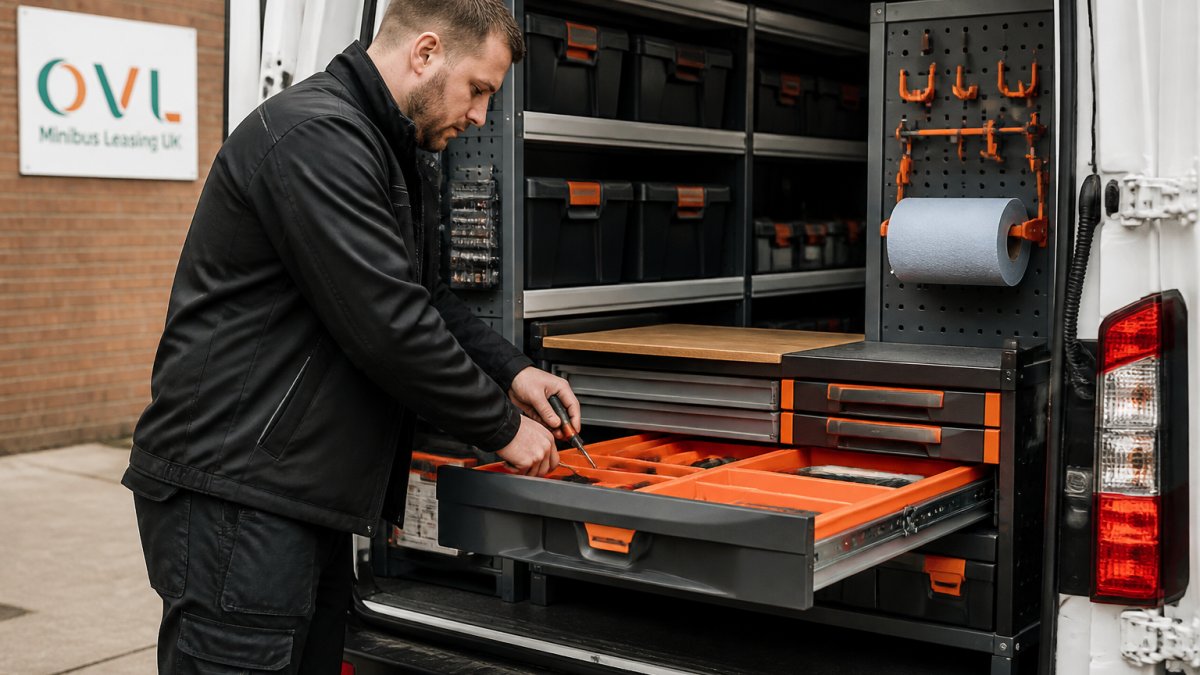
Shelving and drawer units are the default for most trades. They keep small parts visible and let you load the van in minutes.
Modular systems cost more upfront but pay off when your tool list changes. You move a section rather than replacing the whole fit-out.
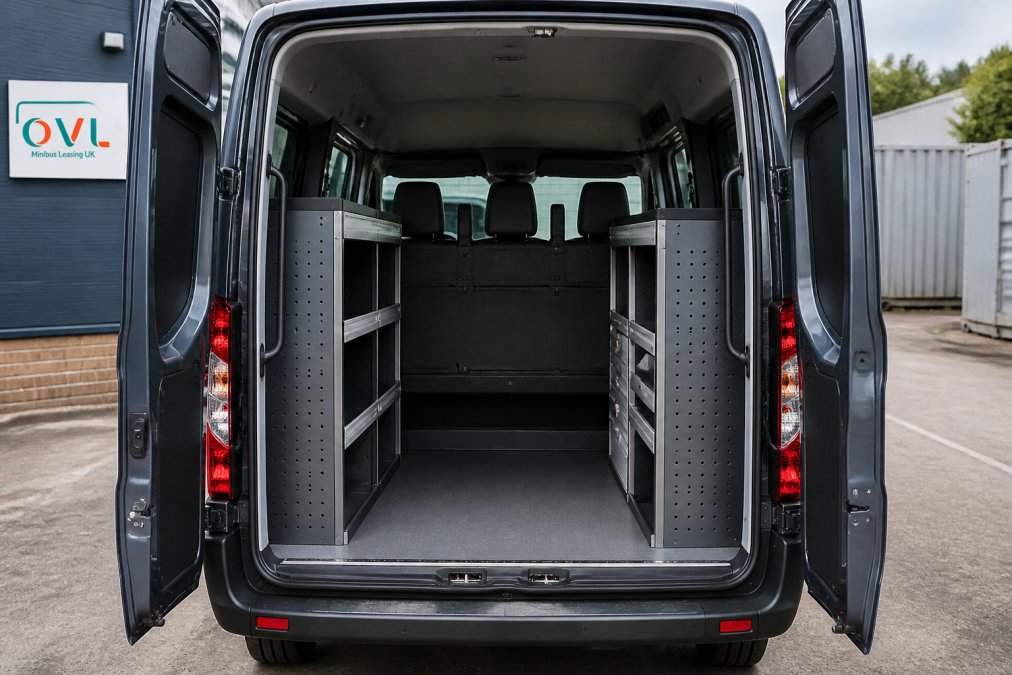
Half-height racking is the one most crews overlook. It keeps the bulkhead clear and lets you see through the rear window, which matters on tight sites.
There is no single "van racking law" in the UK. Instead, several duties apply at once, and they all point the same way.
The Health and Safety at Work etc. Act 1974 places a general duty on employers to keep workers safe (Health and Safety at Work etc Act 1974). The Provision and Use of Work Equipment Regulations 1998 cover how equipment is used and maintained (Provision and Use of Work Equipment Regulations 1998 (PUWER)). For the vehicle itself, load security and weight limits fall under road traffic law and DVSA enforcement.
In practice, that means:
The Health and Safety Executive guidance on safe workplace vehicles sets out the employer's duty to manage vehicle risks, including load security.
Where racking is fitted, keep the fitting instructions and a record of who installed it. If there is an incident, that paperwork is your evidence.
The layout question comes down to one decision: how far forward can racking run before it blocks the seats?
Get a Bespoke Quote or Speak to a Sector Specialist →
A few layouts that work well:
The most common mistake is running racking past the second row. It looks tidy in the yard and is useless the moment you need to carry five people.
Payload capacity calculations for crew vans start with one number: the van's maximum gross weight, minus its kerb weight, minus everything you add.
Work through it in this order:
If step five gives you a negative number, the spec is illegal before it leaves the yard.
A common mistake is treating the payload figure as available for tools alone. It is not. Passengers, fuel and racking all count.
Weigh your tool load once. Load cells or a public weighbridge will give you a real figure in minutes, and it will change how you spec the van.
The right van racking is the one that fits your payload, your crew and your daily routine. Work through these steps in order.
Steps one to three take an afternoon. They save you from a fit-out that has to be stripped out.
If you are leasing rather than buying, tell your provider what you plan to carry.
Five mistakes come up again and again, and all of them are avoidable.
The spec is where every crew van racking project is won or lost. Payload first, layout second, system type third.
Loads must be secured so they cannot move in a way that risks injury or affects vehicle stability. The Health and Safety at Work etc. Act 1974 places duties on employers to protect workers, including those who drive or travel in crew vans, and the Road Vehicles (Construction and Use) Regulations 1986 require loads to be carried safely. In practice this means racking should be bolted to the van body or chassis, tools and parts restrained with straps, drawers or lockable units, and nothing left loose on a shelf that could become a projectile in heavy braking.
Every racking component counts against the payload figure on the vehicle's VIN plate, alongside passengers, fuel and any towbar load. A steel racking kit might weigh well over 100 kg once drawers and shelves are fitted, while aluminium or plywood systems are usually lighter. Add the weight of tools and spares, then compare the total against the payload allowance. If the numbers are close, a lighter racking material or a higher-payload crew van variant will keep you compliant and avoid overloading the rear axle.
Warranty terms vary by manufacturer, so check the vehicle handbook and any bodybuilder guidelines before drilling. Many makers publish approved mounting points or conversion guides, and using those keeps the warranty intact. If you drill through a structural panel or into an area the maker says to avoid, a corrosion or stress claim could be refused. Ask the racking supplier for fitting instructions that reference the manufacturer's guidance, and keep the paperwork with your fleet records.
Start with the seating you actually need for the crew, then treat the remaining load bay as your storage footprint. A bulkhead-mounted racking unit behind the second row gives secure tool storage without eating into passenger legroom, while overhead or half-height shelves preserve floor space for bulky items. Measure the longest tool or part you carry, since that often dictates whether you need a full-height unit or a low-level drawer system. If you are unsure, a specialist fleet provider can help you spec the layout against your daily routes and crew numbers.

