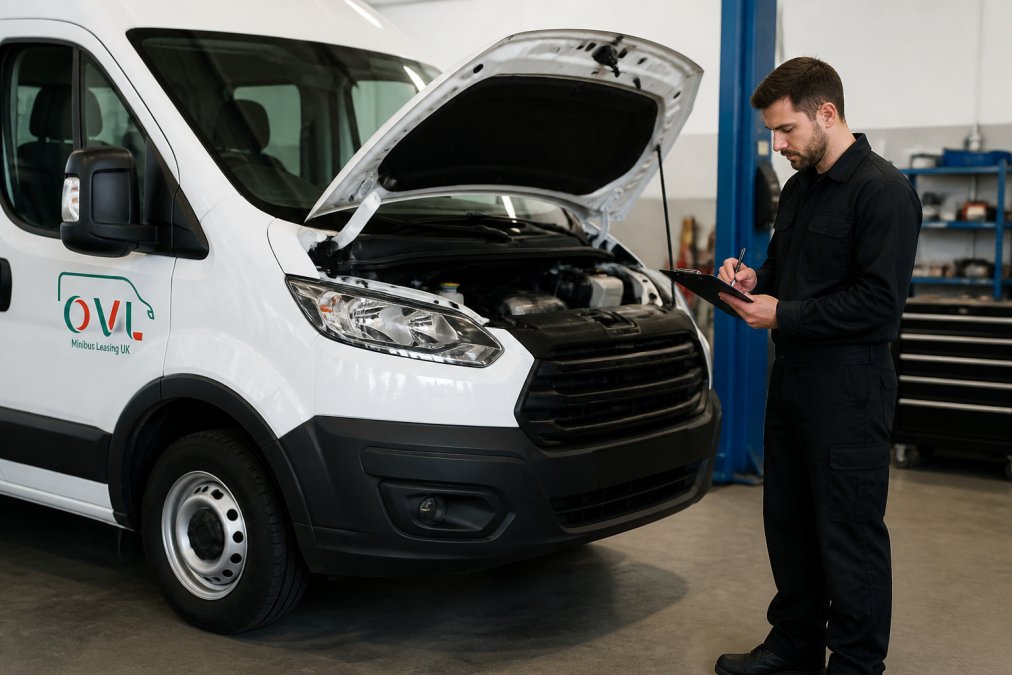
Aug 21, 2026
Last Updated: August 21, 2026
When you're considering minibus leasing for your organisation, understanding what's actually included in the agreement is essential. Most lease contracts cover the vehicle itself, insurance, roadside assistance, and routine servicing, but the specifics vary significantly depending on the lease type and provider terms.
At Minibus Leasing UK, we work with education trusts, care homes, charities, and commercial operations across the country to clarify exactly what they're paying for. The confusion usually starts here: a "fully maintained" lease and a "non-maintained" lease sound straightforward, but the devil is genuinely in the details.
A standard minibus lease typically includes the vehicle, basic insurance cover, and breakdown support. What it doesn't automatically include is often what catches organisations off guard, particularly when budgets are tight and an unexpected repair bill lands on the doorstep. The cost of ownership extends far beyond the monthly payment, and understanding where your financial responsibility begins and ends is crucial to accurate budgeting.
The key question isn't just "what's included?", it's "what will this actually cost my organisation over the lease term?" That's where whole life cost analysis becomes your best tool.
A fully maintained lease means the leasing company handles most routine servicing, repairs, and maintenance during the contract term. You pay a fixed monthly amount, and the provider covers items like oil changes, filter replacements, brake inspections, and parts replacement up to certain limits. Your financial exposure is predictable.
A non-maintained lease shifts maintenance responsibility to you. You own the servicing costs, repair bills, parts, and labour. The lease payment is lower, but you're budgeting for unknowns. An ageing minibus might need expensive gearbox work; a newer one might sail through with just routine servicing. Either way, it's your bill.
The practical difference is profound. Organisations running on tight budgets often assume the lower monthly payment of a non-maintained lease makes financial sense. In reality, a single major repair, a transmission issue, suspension work, or engine problem, can wipe out the savings and then some.
Minibus Leasing UK recommends a fully maintained lease for most organisations, particularly those without dedicated mechanical expertise or the infrastructure to manage vendor relationships with garages. Here's why: predictability matters more than a slightly lower headline cost. School business managers, care home operators, and charity directors need to know their transport budget won't blow apart mid-year because a minibus needs unexpected work.
That said, some organisations with in-house maintenance teams or long-standing relationships with trusted garages do manage non-maintained leases successfully. The difference is they have the expertise and vendor network to control costs. For most, though, the fully maintained option eliminates a significant operational headache.
| Lease Type | Monthly Payment | Includes Servicing | Includes Repairs | Your Financial Risk |
|---|---|---|---|---|
| Fully Maintained | Higher | Yes | Yes (within limits) | Predictable |
| Non-Maintained | Lower | No | No | Variable, potentially high |
The table above shows the trade-off clearly. A fully maintained lease costs more upfront but removes surprise costs. A non-maintained lease has a lower headline figure but leaves you exposed to repair bills that could be substantial.
Every minibus operating in the UK must meet specific legal maintenance standards. These aren't optional, they're regulatory requirements that protect your passengers, your staff, and your organisation's legal standing.
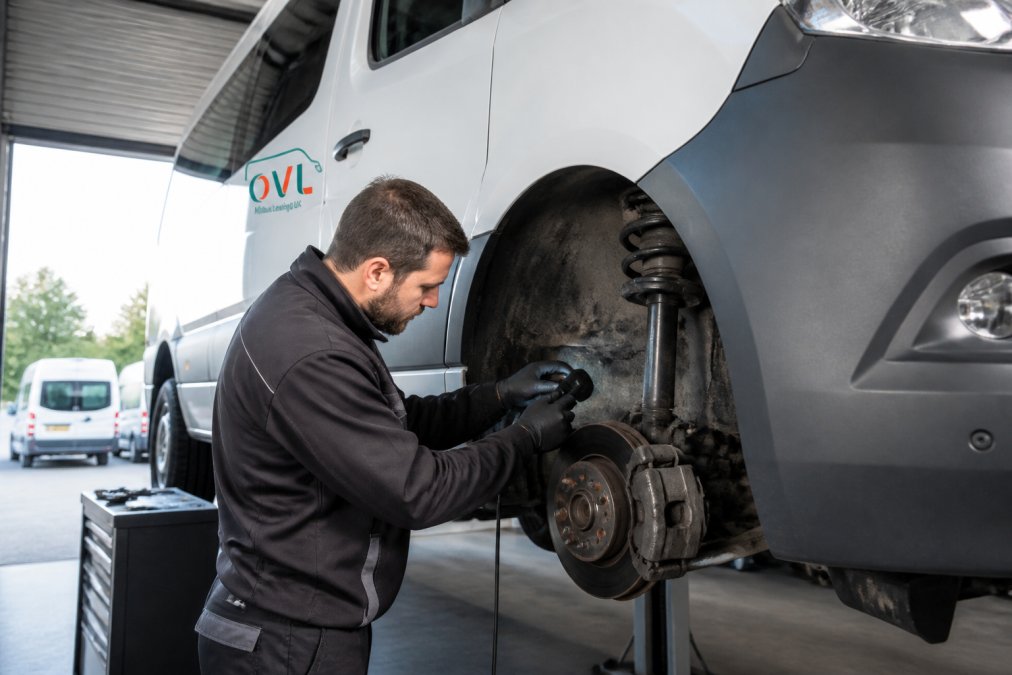
Your minibus must pass an MOT (Ministry of Transport test) annually once it reaches three years old (gov.uk). The MOT checks safety-critical systems: brakes, steering, lights, emissions, and structural integrity. Failing an MOT means the vehicle cannot legally operate on public roads until the issues are resolved.
Beyond the MOT, regular servicing is a legal requirement under the Road Traffic Act (gov.uk). For minibuses, servicing intervals typically follow manufacturer recommendations, usually every 10,000 miles or annually, whichever comes first (fca.org.uk). Servicing covers fluid checks and changes (oil, coolant, brake fluid), filter replacements, brake pad inspection, and general safety checks.
Many organisations underestimate the cost of keeping a non-maintained minibus roadworthy. Between MOT failures, unexpected repairs, and routine servicing, the total annual maintenance bill can easily exceed what you'd pay for a fully maintained lease. The difference is that with a fully maintained lease, you know the cost. With ownership or non-maintained leasing, you're guessing.
Breakdown cover is essential but often overlooked when organisations compare lease options. If a minibus breaks down mid-journey, carrying students, care home residents, or staff, you need rapid professional support.
A fully maintained lease typically includes breakdown cover as standard. The leasing company arranges recovery, repair, or replacement transport. A non-maintained lease usually requires you to arrange and pay for breakdown cover separately, adding another line item to your annual costs.
The difference matters operationally, not just financially. When a vehicle fails during the working day, you need immediate resolution. Breakdown cover ensures a professional recovery service arrives within hours, not days. For organisations transporting vulnerable passengers, school children or elderly care home residents, this isn't a luxury. It's a safety and duty-of-care essential.
Whole life cost analysis is the framework that separates smart leasing decisions from expensive mistakes. It accounts for every cost associated with operating a minibus over the lease term: the monthly payment, insurance, fuel, servicing, repairs, tyres, and breakdown cover.
When you compare a fully maintained lease to a non-maintained lease, the headline monthly payment tells only part of the story. A non-maintained lease might be lower per month, but if you're budgeting for servicing and repairs, the "saving" evaporates. Add breakdown cover, and the gap closes further.
Get a Bespoke Quote or Speak to a Sector Specialist →
Minibus Leasing UK conducts whole life cost analysis for every client to ensure they're making informed decisions. The analysis typically reveals that a fully maintained lease delivers better value for organisations without in-house maintenance capability, whilst non-maintained leasing makes sense only for those with established repair networks and predictable maintenance patterns. If you're exploring your options, Minibus Leasing Special Offers can help you understand the true costs of different lease structures tailored to your operational needs.
The analysis also accounts for vehicle age and reliability. A brand-new minibus under lease has lower repair risk than a five-year-old vehicle. If you're leasing a newer vehicle, maintenance costs are inherently lower, making the financial case for non-maintained leasing stronger. If you're considering a used minibus, the risk profile shifts dramatically, and a fully maintained lease becomes the safer choice.
Understanding the payment split between you and the leasing company is critical to avoiding disputes and budget overruns.
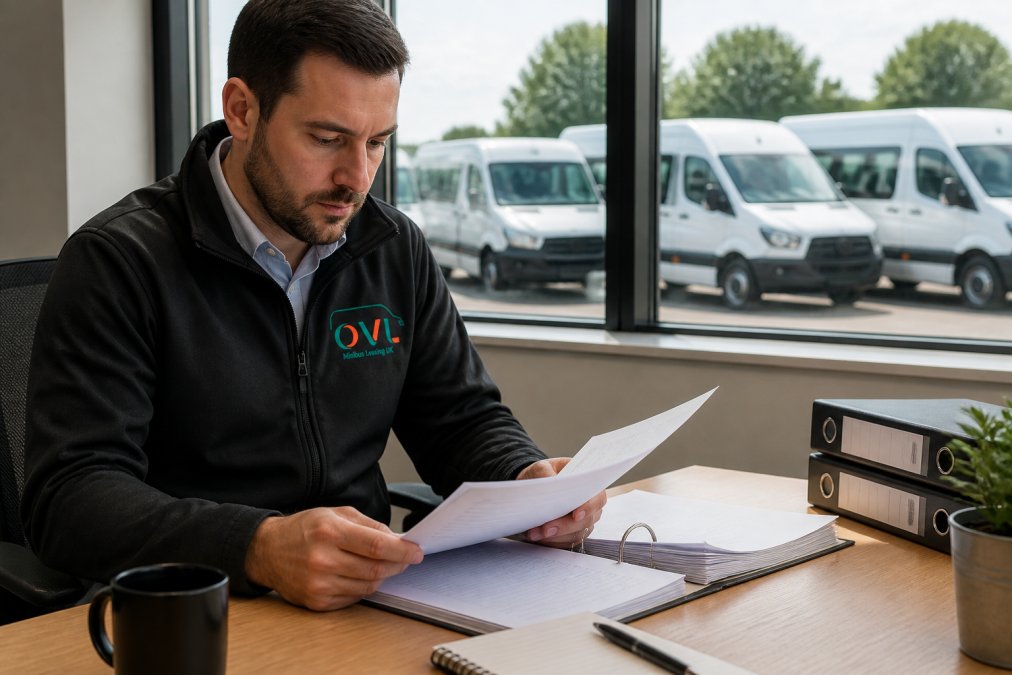
In a fully maintained lease, the leasing company typically pays for:
You pay for:
In a non-maintained lease, you pay for everything except the vehicle itself and basic insurance. The leasing company's only obligation is to provide a roadworthy vehicle at the start of the lease term.
The contract language matters enormously. "Normal wear and tear" is vague. What one leasing company considers acceptable wear, another might charge you to repair. Before signing, clarify:
Minibus Leasing UK ensures these points are explicit in every contract. Ambiguity leads to disputes, and disputes are expensive to resolve. A clear, detailed lease agreement protects both parties.
Choosing between fully maintained and non-maintained leasing depends on your specific circumstances.
A fully maintained lease is the right choice if:
A non-maintained lease might work if:
For most organisations, particularly school business managers, care home operators, and charities, a fully maintained lease removes operational complexity and financial uncertainty. The slightly higher monthly cost delivers peace of mind and allows your team to focus on their core mission rather than vehicle maintenance logistics.
When evaluating providers, ask specific questions about what's included, what's excluded, and what happens when things go wrong. A reputable leasing partner like Minibus Leasing UK will provide transparent whole life cost analysis, clear contract terms, and dedicated account management throughout the lease term. That level of support is worth the investment.
The decision between fully maintained and non-maintained leasing ultimately comes down to your organisation's capacity to manage maintenance and your appetite for financial uncertainty. For most operations across the UK, a fully maintained lease delivers better value, stronger compliance assurance, and the operational reliability that vulnerable passenger transport demands. When you're ready to explore options tailored to your specific needs, speak with a sector specialist who understands the regulatory landscape and can model the true costs of each approach. Minibus Leasing UK offers bespoke whole life cost analysis to help education trusts, care homes, charities, and commercial operations make informed decisions based on their operational requirements and budgetary frameworks.
This depends on the lease type. A fully maintained minibus lease typically covers MOT, servicing, and parts replacement as part of the agreement. A non-maintained lease leaves these responsibilities with you. Always check your lease agreement to confirm what's included, as terms vary between providers. Most fully maintained agreements handle all statutory requirements, but you should verify specifics before signing.
Fully maintained leases offer budget certainty, you know your monthly costs upfront without surprise repair bills. Maintenance is handled by professionals, reducing downtime and keeping your fleet roadworthy. For education and care organisations, this ensures compliance with safety standards. You avoid capital outlay on repairs and can focus on operations rather than vehicle management. The trade-off is a higher monthly payment, but many organisations find the predictability worth it.
The organisation operating the minibus holds legal responsibility for roadworthiness and compliance. This includes regular safety checks, MOT compliance, and maintenance of safety equipment. Under a fully maintained lease, the leasing company typically handles these obligations on your behalf. Under a non-maintained lease, you remain responsible. Either way, your organisation cannot delegate legal liability, so ensure your lease agreement clearly defines who performs these checks and maintains records.
Fully maintained leases have higher monthly payments because maintenance, servicing, and breakdown cover are included. Non-maintained leases cost less monthly but require you to budget separately for repairs and servicing. The actual difference depends on vehicle age, mileage allowance, and lease length. A whole life cost analysis, comparing total monthly payments plus expected maintenance costs, helps you determine which option suits your budget and operational needs.

