Sep 12, 2026
Last Updated: September 12, 2026
Essential safety features for elderly passenger transport vehicles are the specific equipment and design choices that keep older passengers safe during boarding, travel, and alighting. This guide from Minibus Leasing UK covers what operators in Northampton and across the United Kingdom must specify, check, and maintain.
Standard minibus design assumes a mobile adult who can step up, grip a rail, and brace themselves. Many elderly passengers cannot do any of those things reliably. Balance, grip strength, and reaction time change with age, and a vehicle built for a school run is not automatically suitable for a care home.
The difference shows up at the door. A high first step, no handhold on the near side, and a narrow doorway turn a routine trip into a fall risk. Get the specification right at procurement and most of those risks disappear before the vehicle is ever on the road.
Below, we break down the equipment, the compliance rules, and the daily checks that matter most.
PSVAR compliance for minibuses means meeting the Public Service Vehicles Accessibility Regulations, which set legal accessibility standards for vehicles used on local bus services. The regulations are enforced by the Driver and Vehicle Standards Agency, and DVSA guidance on PSVAR and accessible vehicle requirements is the definitive reference for operators.
PSVAR applies to vehicles over 22 seats used on local bus services, and it sets requirements for boarding devices, priority seating, and passenger communication. The core obligations are:
Procurement is where compliance is won or lost. Retrofitting a boarding device or a wheelchair restraint after purchase costs more than specifying it from new, and some vehicle layouts simply cannot be adapted.
When you specify a vehicle, confirm the accessibility specification in writing before the order is placed. Ask what boarding device is fitted, where the wheelchair space sits relative to the doors, and whether the restraint system is certified for the weights you carry. A consultative leasing partner will run this check as part of the specification, not leave it to you after delivery.
Accessible minibus safety equipment covers two distinct jobs: getting passengers on and off the vehicle safely, and keeping them secure once seated. Both matter equally for elderly passengers, and both are frequently under-specified.
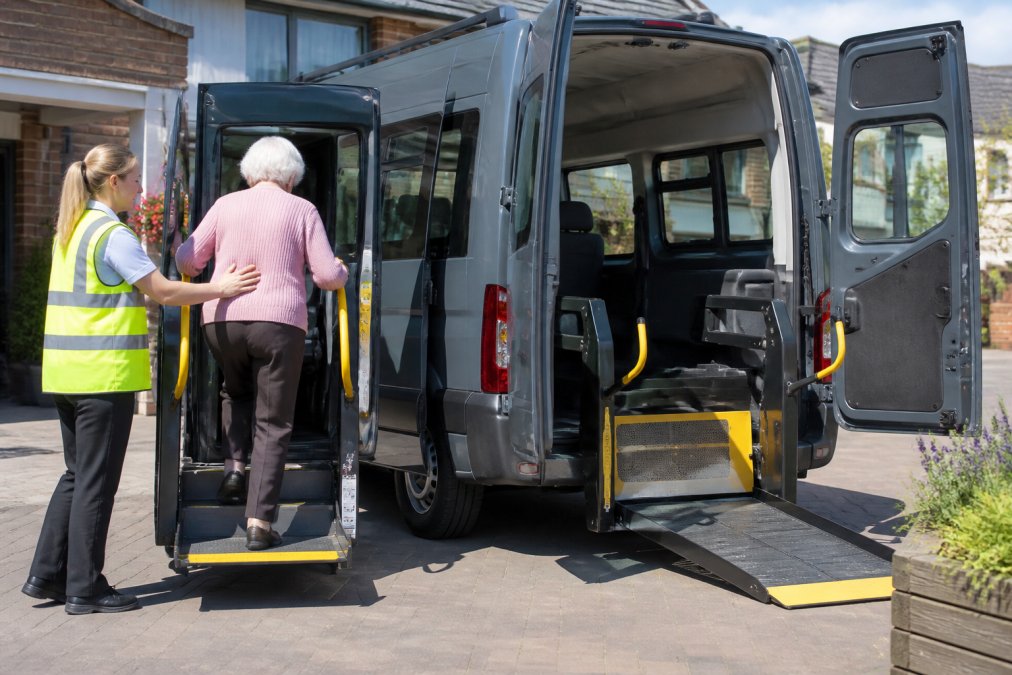
The entrance is where most incidents happen. A retractable side step reduces the height of the first step, which is the single most effective change for passengers with limited mobility. Pair it with a full-length handrail on both sides of the doorway, not just one.
A fold-out ramp or a powered lift handles wheelchair users and passengers who use walking frames. Specify the device for the heaviest passenger you expect to carry, with headroom to spare. Grab handles inside the doorway give passengers something to hold while they turn and sit.
Once seated, elderly passengers need restraint that fits them. Standard three-point belts work, but belt height adjusters stop the belt cutting across the neck of a shorter passenger. For wheelchair users, a four-point restraint system anchored to the vehicle floor is the correct specification, not a belt threaded through the chair frame.
A reversing camera and a rear-view monitor help the driver see passengers who are still on their feet. Interior lighting that stays on while the doors are open reduces trip hazards during boarding and alighting.
An elderly passenger transport risk assessment is a written review of the specific journeys, passengers, and vehicles in your operation, identifying where someone could be injured and what controls prevent it. It is a legal expectation for any operator carrying passengers, and it should be reviewed whenever routes, passengers, or vehicles change.
A workable assessment covers four areas:
Record the controls you put in place and review the assessment at least annually. A risk assessment that is written once and filed away protects nobody.
Get a Bespoke Quote or Speak to a Sector Specialist →
Daily walkaround checks are the difference between equipment that works and equipment that fails when a passenger is relying on it. The Driver and Vehicle Standards Agency sets out the walkaround check standard for passenger-carrying vehicles, and DVSA guidance on daily walkaround checks lists what drivers must inspect before each journey.
For elderly passenger transport, add these items to the standard check:
| Feature |
|---|
| Retractable step |
| Deploys fully, no obstruction, warning buzzer works |
| Every journey |
| Wheelchair ramp or lift |
| Operates smoothly, locking mechanism engages |
| Every journey |
| Wheelchair restraints |
| Straps intact, buckles secure, anchors tight |
| Every journey |
| Handrails and grab handles |
| Firmly fixed, no movement, no sharp edges |
| Weekly |
| Interior lighting |
| All lights work with doors open |
| Weekly |
| Seat belts and height adjusters |
| Retract fully, adjusters lock |
| Weekly |
| Reversing camera and monitor |
| Clear image, no obstruction |
| Every journey |
Any defect on a safety-critical item means the vehicle comes off the road until it is fixed. There is no middle ground here: a ramp that sticks or a restraint that will not lock is a vehicle that cannot carry the passengers it was specified for.
The mistakes that cause problems are rarely about budget. They are about specifying for the average passenger instead of the actual ones.
Specifying one handrail instead of two. A single rail on the near side forces passengers to reach across the doorway. Two rails, one on each side, let people use whichever hand is stronger.
Choosing a lift over a ramp without checking the route. A powered lift adds weight and needs space to deploy. On a tight residential drop-off in Northampton, a fold-out ramp is often the more practical choice.
Ignoring belt geometry. A three-point belt that fits a 6-foot adult will cut across the neck of a shorter passenger. Height adjusters solve this for very little cost at specification stage.
Buying on headline rental alone. Whole life cost, including maintenance, downtime, and compliance, matters more than the monthly figure. A vehicle that fails its accessibility checks is not a saving.
Leaving compliance to the supplier's word. Get the accessibility specification in writing and confirm it against the regulations yourself. GOV.UK guidance on accessible transport for disabled passengers sets out the standards your vehicles must meet.
If you are unsure whether your current fleet meets the standard, a whole life cost review will show you where the gaps are and what it costs to close them.
Specifying safe, compliant vehicles for elderly passengers is not complicated, but it is unforgiving of guesswork. Getting the boarding equipment, restraints, and compliance paperwork right at the point of procurement saves you from retrofits, failed checks, and incidents later.
Minibus Leasing UK builds compliant, accessible minibus specifications for care homes, charities, and community operators across Northampton and the wider United Kingdom. Our team works through PSVAR requirements, accessibility equipment, and whole life cost with you before anything is ordered, and our minibus leasing special offers page shows current availability. Get a bespoke quote or speak to a sector specialist, and we will match the vehicle to the passengers you actually carry.
Under PSVAR, minibuses used on local or scheduled services must meet accessibility standards including wheelchair spaces, ramps or lifts, priority seating, and clear signage. Drivers must also receive disability awareness training. PSVAR applies to vehicles over 22 passenger seats on local services, though many operators choose to exceed these requirements voluntarily. The Equality Act 2010 also places duties on transport providers to make reasonable adjustments for disabled and elderly passengers.
Prioritise features that address mobility and balance: retractable side steps, sturdy grab handles at every doorway, non-slip flooring, high-backed seats with armrests, and adequate interior lighting. For passengers using wheelchairs or walking frames, a certified ramp or lift is essential. A 3-point seatbelt system for every seat, including wheelchair anchorages, protects all passengers. Rear-view cameras and reversing sensors reduce low-speed incidents, which are common in care home car parks and residential streets.
PSVAR compliance shapes which vehicles you can operate on local services. When specifying a new minibus, confirm it has a certificate of conformity for accessibility or can be retrofitted by an approved converter. Retrofitting after purchase often costs more and can delay vehicle availability. Leasing providers who understand PSVAR can supply vehicles built to the correct specification from the outset, avoiding compliance gaps and keeping your fleet road-legal.
Conduct daily walk-around checks before each journey: test the ramp or lift, inspect steps, check seatbelts and wheelchair anchorages, and confirm all lights work. Weekly checks should cover handrails, flooring grip, and emergency exits. Arrange a formal inspection by a qualified engineer at least every six weeks, and keep written records. Regular maintenance prevents breakdowns and demonstrates due diligence if an incident occurs during an elderly passenger transport risk assessment review.

