Jul 23, 2026
Last Updated: July 23, 2026
Managing a school's transport fleet is far more complex than many educational leaders anticipate. Between regulatory compliance, vehicle maintenance, driver accountability, and budget constraints, the operational burden falls on a small team managing assets worth hundreds of thousands of pounds. At Minibus Leasing UK, we've worked with dozens of schools and educational trusts to simplify their fleet operations, and one pattern emerges consistently: organisations that implement structured fleet management for schools see dramatic improvements in safety, compliance, and cost control within the first six months.
This guide covers the complete framework for managing school transport fleets in the UK, from safety protocols and regulatory requirements through to software selection and operational cost reduction.
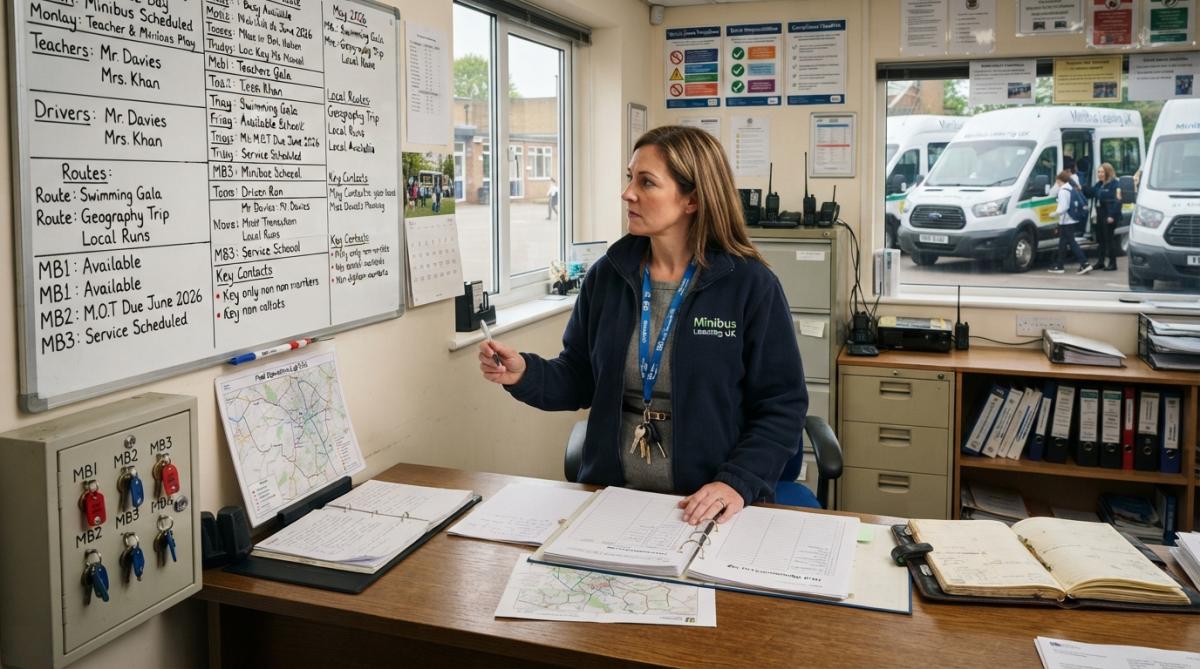
Fleet management for schools encompasses the systems, processes, and tools used to oversee vehicles dedicated to student transport, staff mobility, and educational activities. A structured approach typically includes real-time vehicle tracking, preventive maintenance scheduling, driver performance monitoring, fuel management, and compliance documentation. The goal is to transform what many schools treat as a cost centre into an efficiently operated asset that protects students, supports staff, and operates within budget.
Schools managing their own fleets face unique pressures: duty of care obligations, student safeguarding requirements, tight budgets, and staff shortages in transport roles. Fleet management for schools addresses these challenges by creating transparency and accountability across the entire operation.
School minibus safety in the UK is governed by strict standards that go well beyond general vehicle maintenance. Your duty of care extends from vehicle condition through to driver competence and emergency response protocols.
Every minibus used for school transport must meet specific safety standards regardless of its age or purchase method. The vehicle must pass an annual MOT, comply with Construction and Use Regulations, and meet specific requirements for passenger seating, emergency exits, and safety equipment.
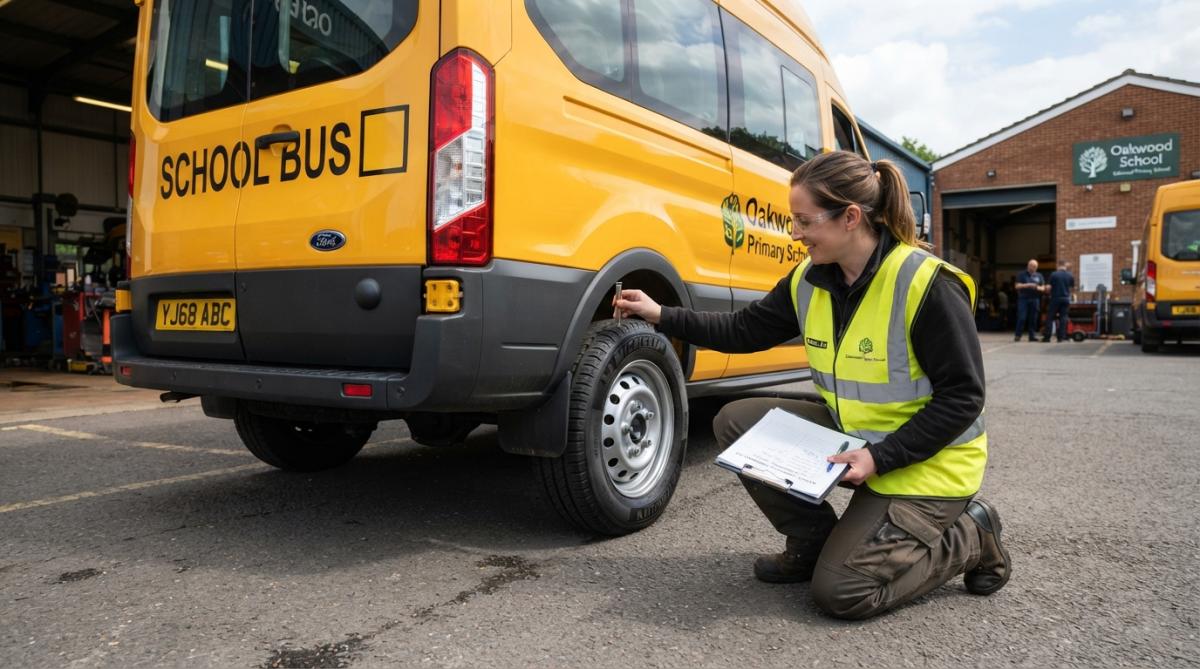
Pre-journey inspections are non-negotiable. A driver should complete a formal check before every trip, documenting tyre condition, brake function, lights, mirrors, windscreen wipers, and emergency equipment. A simple daily checklist, printed or digital, ensures every driver follows the same protocol and creates a record of vehicle condition over time.
Your school's duty of care includes having documented emergency procedures for every scenario: breakdowns, accidents, medical emergencies, and evacuations. Every driver should know the procedure, and every minibus should carry emergency contact numbers, first aid kits, and communication devices.
Breakdown cover is essential. If a minibus fails during a trip, you need rapid response to collect students and get them to safety. A breakdown on a motorway with schoolchildren is a serious safeguarding incident waiting to happen.
Operating school transport in the UK requires understanding several regulatory frameworks. Non-compliance can result in fines, enforcement action, or suspension of transport operations.
If your school operates minibuses to transport students, you almost certainly need a Section 19 permit. This permit, issued by the local authority, authorises the use of a minibus for passenger transport on a non-commercial basis. Without it, you're operating illegally.
A Section 19 permit requires:
The application process takes 4-6 weeks. Many schools underestimate the complexity here. A single administrative oversight, failing to notify the authority when a vehicle is replaced, for instance, can invalidate the permit and expose the school to enforcement action.
Beyond the Section 19 permit, your school must maintain records demonstrating compliance with the Health and Safety at Work etc. Act 1974, the Management of Health and Safety at Work Regulations 1999, the Road Traffic Act 1988, and Construction and Use Regulations. This means documented risk assessments, maintenance schedules, driver training records, incident reports, and vehicle inspection logs.
Minibus Leasing UK specialises in helping schools navigate these regulatory requirements. Our account managers understand Section 19 permits, D1 licensing, and the documentation standards required by local authorities.
Your drivers are the frontline of safety and compliance. For minibuses carrying more than eight passengers, drivers need a D1 category driving licence and Driver CPC (Certificate of Professional Competence) qualification.
A practical approach includes:
Driver behaviour monitoring is particularly valuable. Harsh braking, speeding, and aggressive acceleration increase accident risk and fuel consumption. When drivers know their behaviour is monitored, performance improves measurably.
Software transforms fleet management from a paper-based, reactive process into a data-driven operation. The right tools provide visibility, automate routine tasks, and generate the compliance reports your local authority expects.
GPS tracking shows where each minibus is at any moment, confirming students have arrived safely and enabling efficient response to breakdowns. Route optimisation software can reduce mileage by 10-15% simply by sequencing stops more efficiently. Over a year, this translates to significant fuel savings and reduced wear on vehicles.
Tracking must be implemented carefully. Parents need clear communication about why tracking exists (student safety and operational efficiency). Drivers need to understand that data is used to improve operations, not to punish individuals.
Preventive maintenance is the cornerstone of fleet reliability. A maintenance management system tracks service intervals, parts and consumables, technician time, vehicle downtime, and compliance with manufacturer recommendations. When maintenance is scheduled proactively, vehicles spend less time out of service.
Many schools use spreadsheets to track maintenance, which creates delays and errors. A basic fleet management system eliminates these problems entirely.
Any system handling student data must comply with GDPR and the Data Protection Act 2018. Your school should:
Transport is often the second-largest operational cost for schools after staffing. Even modest improvements in fuel efficiency, maintenance costs, and vehicle utilisation can free up thousands of pounds annually for educational spending.
A well-maintained vehicle lasts longer and costs less to operate. Preventive maintenance prevents expensive failures: replacing a worn brake pad costs £50-100 plus labour, whilst replacing brake components after failure costs £500-1,500 plus downtime and potential incident costs.
A maintenance schedule tied to mileage or time ensures work happens on schedule. This approach typically extends vehicle life by 2-3 years and reduces total cost of ownership by 15-20%.
Fuel is often the largest controllable cost in fleet operations. A 10% improvement in fuel efficiency can save thousands of pounds annually depending on fleet size and usage.
Fuel efficiency improvements come from driver behaviour (smoother acceleration, maintaining steady speeds), vehicle maintenance (properly inflated tyres, regular servicing), route planning (avoiding congestion), and vehicle selection (newer vehicles are typically more efficient). Telematics systems provide data on fuel consumption per vehicle and per driver, creating accountability and identifying opportunities for improvement.
Emissions management is increasingly important as local authorities push for cleaner transport. Many councils now favour organisations operating electric or hybrid vehicles. If your school is considering vehicle replacement, electric minibuses are becoming more viable, though the upfront cost remains higher than diesel equivalents.
Schools typically operate fleets through one of three models: direct ownership, leasing, or a hybrid approach. Each has distinct advantages and challenges.
A whole-life cost analysis compares the true cost of ownership across a vehicle's lifetime, including purchase price, maintenance, insurance, fuel, and depreciation.
Ownership means capital expenditure upfront, all maintenance and repair costs, insurance and road tax, depreciation risk, and disposal costs at end of life. Leasing means fixed monthly costs, maintenance typically included, no depreciation risk, no disposal responsibility, and greater flexibility if transport needs change.
For schools, leasing often makes sense because transport needs fluctuate with pupil numbers, capital budgets are constrained, maintenance costs are predictable, and vehicles can be returned if no longer needed. However, leasing is more expensive if you're keeping vehicles beyond their typical lease period (3-5 years). If your school operates a stable fleet with vehicles kept for 7+ years, ownership may be more cost-effective.
Factor | Ownership | Leasing |
|---|---|---|
Upfront cost | High | Low/None |
Monthly cost | Variable | Fixed |
Maintenance | School responsibility | Usually included |
Flexibility | Low | High |
Best for | Stable, long-term fleets | Changing needs |
If you decide to lease, choosing the right vendor matters. You need a partner who understands school transport requirements, offers reliable vehicles, and provides responsive support.
Key evaluation criteria include sector experience (do they understand school transport and regulatory requirements?), vehicle quality (are vehicles brand-new and appropriate for your use case?), support responsiveness (can they respond quickly to breakdowns?), flexibility (can they accommodate changing needs?), transparency (are costs clear?), and account management (will you have a dedicated contact?).
Minibus Leasing UK meets these criteria. We specialise in school transport, understand the regulatory landscape, provide brand-new vehicles, and assign dedicated account managers to each client. Rather than treating school fleets as a commodity, we work consultatively to understand your specific requirements and design a solution that fits your budget and operational model. We also offer Minibus Leasing Special Offers designed to help schools manage their transport budgets more effectively.
Introducing new systems, processes, or vehicles disrupts established routines. Staff resistance is normal, and managing it effectively determines whether improvements stick or fade.
Change management for school transport includes clear communication (explain why change is happening and what benefits it brings), staff involvement (involve drivers and transport staff in designing new processes), training (ensure everyone understands new systems), support (provide ongoing help as staff adapt), and feedback loops (listen to staff concerns and adjust processes).
A practical approach includes piloting changes with a small group before rolling out across the fleet, dedicating someone to champion the change, scheduling training sessions at convenient times, creating simple reference guides, and celebrating early wins to build momentum.
Managing school transport effectively requires coordination across multiple domains: safety, compliance, operations, and budgeting. The framework outlined in this guide provides a roadmap, but implementation requires sustained commitment from leadership, clear processes, trained staff, and appropriate tools.
Minibus Leasing UK can simplify this journey. We provide brand-new, compliant vehicles tailored to school transport requirements, support you through regulatory obligations including Section 19 permits and D1 licensing, and work with your team to optimise costs and operations. Rather than treating your school as a transaction, we become a partner in your transport strategy, providing expertise, accountability, and responsive support.
Get a bespoke quote or speak to a sector specialist at Minibus Leasing UK. We'll assess your current fleet, understand your challenges, and design a solution that improves safety, ensures compliance, and reduces costs.
A Section 19 Permit, issued under the Transport Act 1985, allows non-commercial organisations to operate minibuses for passengers. Schools typically require a Section 19 Permit if they operate their own minibus fleet for student transport. This permit exempts schools from certain Public Service Vehicle (PSV) operator licensing requirements, but vehicles must still meet safety standards and drivers must hold appropriate D1 licences. Operating without the correct permit can result in significant fines and operational disruption.
School fleet management software UK solutions provide real-time vehicle tracking, automated maintenance reminders, driver behaviour monitoring, and compliance reporting. These systems help transportation departments maintain regulatory standards, reduce accident risk through driver performance insights, schedule preventive maintenance to avoid breakdowns, and generate automated reports for HMRC and local authority audits. Integration with telematics data also enables schools to identify safety concerns before they become serious issues.
Owning vehicles requires upfront capital, ongoing maintenance responsibility, depreciation risk, and end-of-life disposal costs. Leasing transfers maintenance and compliance responsibility to the provider, offers predictable monthly costs, includes brand-new vehicles with latest safety features, and eliminates capital expenditure from school budgets. Whole-life cost analysis typically favours leasing for schools because it reduces operational complexity, ensures regulatory compliance, and allows budget certainty—particularly valuable when managing multiple vehicles across a transportation department.
School minibus drivers must hold a full driving licence and a D1 category entitlement (for vehicles with 8-16 passenger seats). Drivers also need a Passenger Carrying Vehicle (PCV) licence and must complete regular training in passenger safety, emergency procedures, and safeguarding. Many schools require additional training on student behaviour management, accessibility support, and route-specific hazards. Ongoing driver performance monitoring through telematics and periodic refresher training help maintain safety standards and reduce insurance premiums.

