Aug 08, 2026
Last Updated: August 8, 2026
A tail lift that fails mid-deployment creates operational chaos, exposes your organisation to serious legal liability, puts passengers at risk, and can cost thousands in emergency repairs. Organisations that maintain their tail lifts consistently see dramatically fewer service interruptions, lower repair bills, and peace of mind knowing their passengers are safe.
This guide covers daily checks, legal compliance, scheduled maintenance intervals, and when to call a certified engineer.
Your minibus tail lift should be checked every single day before passenger transport. These pre-drive inspections take 10 minutes and catch 90% of problems before they become serious.
Walk around the tail lift platform and look for obvious damage. Check for corrosion on the metal frame, especially around welds and joints. Rust weakens structural integrity; surface corrosion needs cleaning and treating, while deep pitting requires professional assessment.
Examine all visible bolts and fasteners. They should be tight with no signs of movement or vibration damage. Look at the hydraulic connections, tubes and fittings that carry fluid to operate the lift. Check for leaks, cracks, or damage to protective covers. Hydraulic fluid stains beneath the vehicle indicate a leak requiring immediate attention.
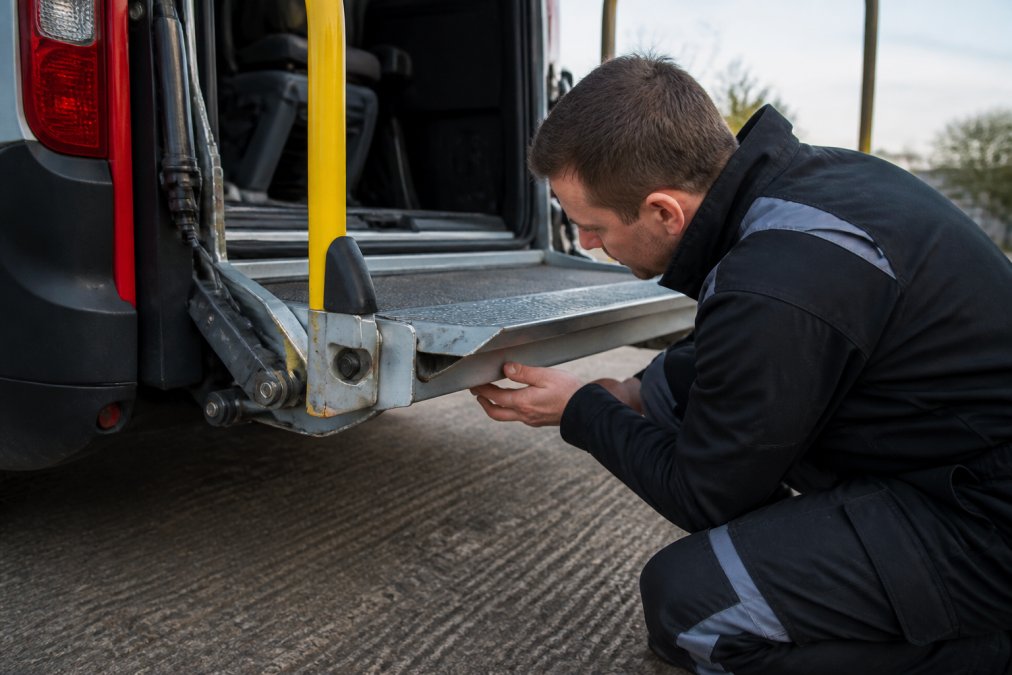
Inspect the platform surface. It should be clean, dry, and free of debris. Check that the safety edges, the rubber or foam strips around the platform, are intact and not compressed or damaged.
After your visual check, test the lift's operation with the vehicle parked on flat, level ground and the handbrake engaged.
Deploy the platform slowly and watch for smooth, even movement. The platform should rise steadily without jerking, tilting, or hesitation. Listen during deployment. Normal operation is relatively quiet with a steady hum. Grinding, squealing, or knocking noises mean something is worn or damaged.
Stow the platform fully and check that it locks securely. It should not rattle or move when pushed. Test the emergency release. Most tail lifts have a manual release valve allowing the platform to be lowered by hand if the hydraulic system fails. The release should function smoothly and lower the platform under control.
If any test reveals a problem, do not use the vehicle for passenger transport. Report the fault to your maintenance provider immediately.
The Lifting Operations and Lifting Equipment Regulations 1998 (LOLER) apply to every tail lift used to transport passengers in the UK. Understanding your legal obligations is not optional; it's a statutory requirement.
LOLER requires that all lifting equipment, including passenger tail lifts, be thoroughly examined by a competent person at least every six months. A "competent person" means someone with the technical knowledge, training, and experience to identify defects and assess risks. In practice, this means a certified engineer from a specialist tail lift maintenance company.
The examination must be recorded in writing, and the report must be kept available for inspection. If defects are found, you must not use the lift until they're corrected.
LOLER also requires that you maintain the equipment in good working order. You must keep a maintenance log, respond promptly to faults, and ensure repairs are carried out by competent persons. If you operate a minibus with a tail lift, you have a legal duty to ensure it's safe for use, including training your drivers and care staff on proper operation and daily checking procedures. Failure to maintain LOLER compliance can result in enforcement action by the Health and Safety Executive (HSE), fines, and, in cases of serious breach, criminal liability.
Beyond daily checks, your tail lift requires scheduled maintenance at set intervals to catch wear before it becomes a safety problem.
Every month, your maintenance provider should perform a thorough inspection including checking hydraulic fluid levels and condition, testing all safety functions, inspecting bearings and moving parts for wear, and cleaning the platform and frame.
Hydraulic fluid is the lifeblood of the tail lift. It should be checked monthly for colour and clarity. Fresh hydraulic fluid is typically amber or red. If the fluid is dark, cloudy, or smells burnt, it's degraded and needs replacing.
The safety interlock system, which prevents the vehicle from moving while the platform is deployed, must be tested monthly. Bearings and pivot points should be inspected for wear, noise, and smooth operation.
Every six months, a certified engineer must conduct a thorough examination as required by LOLER regulations. This includes detailed inspection of the structural integrity of the platform and frame, testing of the hydraulic system under load, examination of all welds for cracks, and assessment of wear on all moving components.
The engineer will produce a written report documenting the condition of the lift, any defects found, and recommendations for repair or replacement. You must keep this report and act on any recommendations.
Annually, the hydraulic fluid should be changed completely. An annual inspection should also include detailed examination of the electrical system, testing of all safety sensors and interlocks, and inspection of the platform surface and safety edges for damage.
Proper lubrication keeps the tail lift operating smoothly and prevents premature wear. However, lubrication must be done correctly; using the wrong lubricant or applying it to the wrong components can cause damage.
The pivot points, hinges, and moving joints of the tail lift platform should be greased regularly. Use only the grease specified in your operator manual. Most tail lifts use lithium-based multipurpose grease, but some systems require specific high-temperature or water-resistant formulations.
Apply grease sparingly. Over-greasing attracts dust and dirt, which then gets worked into the joint and causes accelerated wear. A light coating is sufficient. Wipe away excess grease to keep the platform clean and safe.
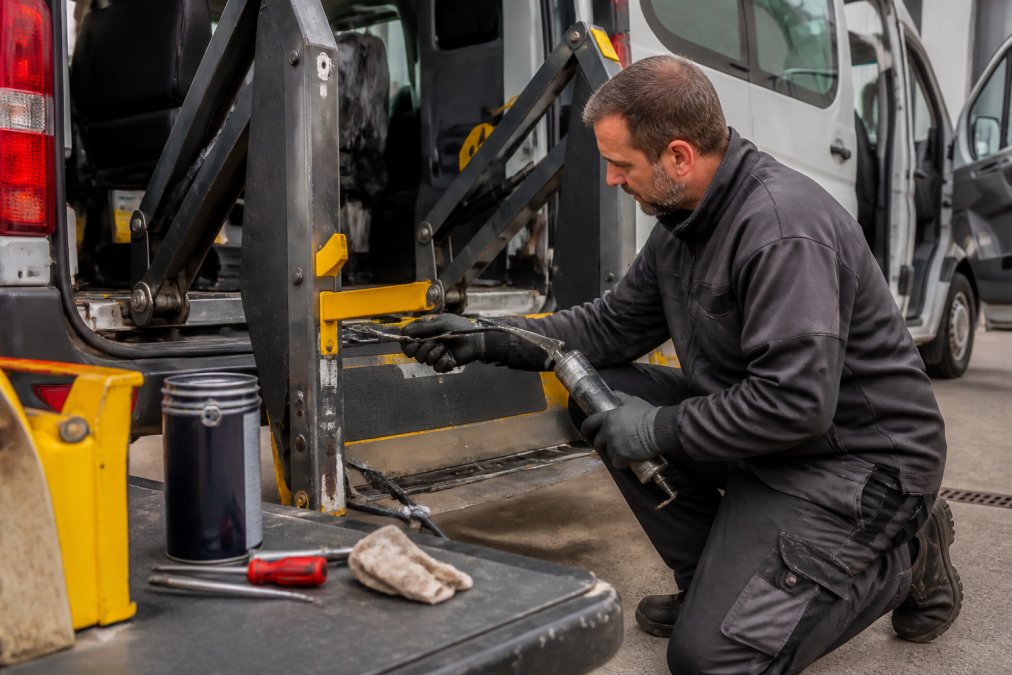
The handbrake mechanism should be lubricated regularly to ensure smooth, reliable operation. Check your operator manual for the location of all lubrication points.
The hydraulic system is the engine of your tail lift. Check hydraulic fluid levels monthly using the sight glass or dipstick specified in your manual. The fluid should be at the marked level when the platform is fully stowed and the engine is off. Low fluid levels mean the system cannot operate at full pressure and allow air to enter, causing sluggish operation.
If fluid levels are dropping, there is a leak. Small weeps at connection points can sometimes be tightened, but significant leaks require professional repair. Never top up the system repeatedly without finding and fixing the leak.
Hydraulic pressure should be tested annually by a certified engineer. The hydraulic filter must be changed at the intervals specified in your maintenance schedule. Most filters should be changed annually or every 500 operating hours, whichever comes first.
Operating a passenger lift comes with specific safety responsibilities. Provide clear, written instructions for passengers on how to use the lift. For wheelchair users, instructions should cover how to position the wheelchair on the platform and what to do if the lift malfunctions.
Your drivers and care staff must be trained on the operation of the lift, daily checking procedures, and what to do if a fault occurs. Conduct a risk assessment specific to your use of the tail lift. Identify the hazards, mechanical failure, operator error, passenger injury, and assess the likelihood and severity of each. Document your risk assessment and review it annually.
Ensure that the minibus is always parked on flat, level ground before deploying the lift. Keep the area around the lift clear of obstacles and bystanders during deployment.
When something goes wrong with your tail lift, you need to know whether it's a minor issue you can address or a serious fault requiring professional help.
If the platform deploys or stows more slowly than usual, check hydraulic fluid level first. Low fluid reduces system pressure and slows operation. If fluid level is correct, the problem may be a clogged filter. Slow operation can also indicate that the hydraulic pump is losing pressure, which requires professional diagnosis.
If one side of the platform rises higher than the other, or if the platform tilts during deployment, this is a serious fault. Uneven lifting usually indicates that one hydraulic cylinder is not receiving full pressure. Do not use the lift while it's tilting unevenly. Stop immediately, stow the platform, and report the fault to your maintenance provider.
If the safety interlock fails, meaning the vehicle can move while the platform is deployed, this is a critical safety fault. Stop using the lift immediately and do not attempt to operate it until the interlock has been repaired by a certified engineer.
If the emergency release valve is stiff or difficult to operate, have it serviced. The release mechanism must be easy to operate in an emergency.
Call a certified engineer immediately if you encounter uneven lifting or platform tilt, safety interlock failure, emergency release malfunction, loss of hydraulic pressure, hydraulic fluid leaks, grinding or unusual noises, electrical faults, or any fault that makes the lift unsafe to use.
Do not attempt to repair the tail lift yourself unless you have formal training and the correct tools. Hydraulic systems operate under high pressure and can cause serious injury if mishandled. Electrical components can deliver a fatal shock.
Many tail lift maintenance companies offer mobile repair services. They will attend your site with a fully equipped vehicle, diagnose the fault, and carry out repairs on location, minimising downtime. When choosing a mobile repair provider, ensure they employ certified engineers with formal qualifications in tail lift maintenance. Ask for evidence of their training and certification and confirm that they carry the necessary spare parts and have the correct diagnostic equipment.
At Minibus Leasing UK, we can assist with coordinating maintenance and repair for your leased vehicles, helping to ensure your fleet stays compliant and operational. We also offer Minibus Leasing Special Offers that can help reduce your whole-life fleet costs, including maintenance and compliance support.
Get a Bespoke Quote or Speak to a Sector Specialist at Minibus Leasing UK to discuss your fleet's maintenance needs and how we can help you maintain compliance while optimising your whole-life costs.
Under the Lifting Operations and Lifting Equipment Regulations (LOLER) 1998, minibus tail lifts must undergo a statutory thorough examination at least every six months by a competent person. Additionally, you must perform daily visual checks before each use and keep detailed maintenance records. Some operators conduct more frequent inspections depending on usage intensity and manufacturer recommendations. Always refer to your operator manual for specific guidance.
A daily check list should cover: visual inspection for corrosion, cracks, or loose bolts; testing the deploy and stow functions without load; checking the safety interlock engages correctly; ensuring the platform is level when lowered; verifying emergency release operates smoothly; checking hydraulic hoses for leaks or damage; and confirming the handbrake holds securely. Document findings in your maintenance log. If any fault is found, do not use the lift until it is repaired by a certified engineer.
UK regulations require tail lift maintenance under LOLER 1998 and the Health and Safety at Work etc. Act 1974. You must ensure the lift is safe before each use, maintain it in good working order, and conduct statutory thorough examinations every six months by a competent person. All maintenance work must be recorded, and operators must have access to the manufacturer's operator manual. Failure to comply can result in enforcement action by the Health and Safety Executive (HSE).
Warning signs include slow or jerky deployment and stowing, uneven lifting causing platform tilt, hydraulic fluid leaks, unusual noises during operation, safety interlock failures, corrosion or rust on the platform or frame, worn hinges or pivot pins, and handbrake not holding securely. If you notice any of these issues during your daily checks, stop using the lift immediately and contact a certified engineer. Do not attempt DIY repairs on hydraulic systems or structural components.
Regular maintenance of your minibus tail lift is not an optional extra, it's a legal requirement and a fundamental safety responsibility. The organisations that invest in consistent, professional maintenance experience fewer breakdowns, lower repair costs, and the confidence that their passengers are safe. Start with daily checks, follow the LOLER examination schedule, and respond promptly to faults. Your passengers depend on it.

