Sep 30, 2026
Last Updated: September 29, 2026
Knowing how to prepare a crew van for resale means cleaning, repairing, and documenting a commercial vehicle so it sells quickly and at a fair price. It rewards planning more than spending.
Gather these basics first:
At Minibus Leasing UK, we handle fleet procurement and whole life cost analysis for schools, care homes, charities, and commercial operators across Northampton and the wider United Kingdom. One pattern holds true whether you sell or lease: presentation and paperwork decide the price.
Budget two weekends. Most of the work is elbow grease, not money.
A commercial van valuation UK sellers can rely on comes from three sources, not one. Check them all before you set an asking price.
Start with free online tools. Enter the registration, mileage, and condition to get a trade and private sale figure. Then compare against live listings for similar crew vans: same age, similar mileage, same spec.
Finally, get a written offer from a trade buyer. That is your floor. Anything you sell above it is profit for your effort.
Key factors that move the number:
If you are near Northampton, a local commercial van valuation UK appointment is worth the trip. Trade buyers spot things online tools cannot.
Van detailing for resale is not the same as a weekly wash. It is a deep clean that makes a used workhorse look cared for, and it is the single cheapest way to add value.
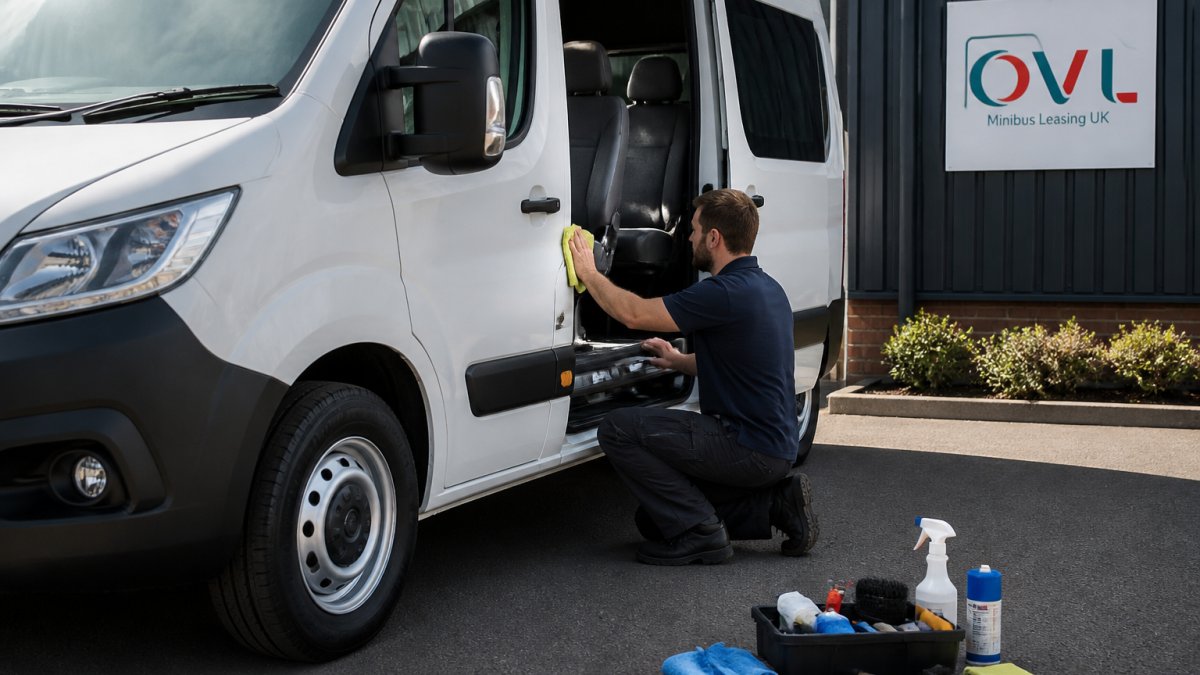
Person wiping down the interior of a white crew van to help you learn how to prepare a crew van for resale.
Work top to bottom, inside to out. Vacuum the headlining, seats, and floor mats first. Then scrub the cargo floor, wheel arches, and bulkhead.
Pay attention to the places buyers check:
Wipe every surface with a damp microfibre, then dress the plastics. A clean cab signals a mechanically cared-for van. Skip the air freshener; it reads as a cover-up.
Small faults cost you more at sale than they cost to fix. A cracked mirror cover or a missing trim clip makes buyers wonder what else is wrong.
Tackle the cheap wins:
For anything structural or expensive, get a quote and disclose it. Honesty sells faster than a hidden fault.
Crew van maintenance records turn a claim into proof. A stamped service book, MOT certificates, and receipts tell a buyer the van was looked after.
Build a simple folder with:
If records are patchy, say so upfront. Many fleet vans have gaps because work was done in-house. Buyers accept that when you explain it.
Check the MOT history online before you list. Buyers will, and any surprise fails or advisories are better addressed by you first. The DVSA MOT history service lets you pull the full record by registration.
A tidy folder also speeds up the sale. Buyers who can see the paperwork relax and negotiate less.
Get a Bespoke Quote or Speak to a Sector Specialist →
Selling a business vehicle HMRC rules matter because the tax treatment depends on how you bought it. Get this wrong and you can create a paperwork headache after the money is in your account.
The key questions:
If you reclaimed VAT on the purchase, you usually account for VAT on the sale. If you did not, you usually don't. Limited companies may face a charge on the disposal depending on the accounts.
Keep the sale documented: buyer details, date, amount, and method. Record it in your books the same way you record any asset disposal.
For definitive guidance, check the HMRC guidance on VAT and business vehicles and speak to your accountant before you list. Rules change, and your circumstances decide the answer.
Good photos sell vans. Bad photos cost you enquiries, and most private sellers get this wrong.
Shoot in daylight, on a dry day, with the van clean. Use these shots:
Write a listing that answers the questions buyers ask first: age, mileage, service history, MOT expiry, and reason for sale. List the good points and the faults. Add your location and a contact number.
For a Northampton sale, mention the area in the title. Buyers searching "crew van for sale near me" filter by distance, so a clear location gets more views.
Price slightly above your target and leave room to negotiate. Most buyers expect to haggle.
The mistakes that cost sellers money when learning how to prepare a crew van for resale are predictable. Avoid these and you keep more of the sale price.
The fix for all of these is simple: prepare the van as if you were the buyer.
Leasing beats selling when the van is old, the repair bills are climbing, and you need a reliable vehicle on the road now. Selling takes time; leasing puts a brand-new van in your fleet without the capital outlay.
This is where a specialist helps. Minibus Leasing UK provides tailored vehicle procurement and fleet management for the education, care, community, and commercial sectors.
Our services fit operators who need compliant, safe transport:
You will need the V5C registration document, which shows you as the registered keeper. Gather the MOT certificate if applicable, the service book or digital service history, and any maintenance records. If the van is leased or financed, check whether you need written consent before selling. For VAT-registered businesses, keep invoices and records for HMRC. A complete document pack reassures buyers and often supports a stronger crew van resale price.
Yes. A complete service history shows the van has been maintained to schedule, which reduces a buyer's risk. It is one of the strongest signals in a commercial van valuation UK buyers use. Missing records raise doubts about wear on the engine, clutch and brakes, so keep every invoice and stamp. If some paperwork is missing, contact the garage that did the work and ask for duplicates before you list.
When selling a business vehicle, HMRC rules depend on how the van was treated for VAT and capital allowances. If you claimed VAT on the purchase, VAT may be due on the sale price. If you claimed capital allowances, the sale proceeds usually reduce your capital allowance pool. Record the sale in your business accounts and keep the paperwork. Speak to your accountant for advice specific to your situation.
Start with a thorough valet inside and out, including the cab, cargo area, seats and floor. Remove personal items, tools and signage. Repair minor damage such as scuffed bumpers, chipped paint and worn floor mats. Replace worn wiper blades and top up fluids. Fix any warning lights or faults before listing, because buyers will spot them on inspection and use them to negotiate the price down.
Selling a crew van takes time, paperwork, and a clean pair of hands. If the numbers no longer stack up, leasing a brand-new vehicle can be the simpler path. Minibus Leasing UK offers tailored procurement, whole life cost analysis, and dedicated account managers for education, care, and commercial fleets. Get a bespoke quote or speak to a sector specialist to see whether leasing your next crew van beats selling your old one.

