Jun 29, 2026
Last Updated: June 29, 2026
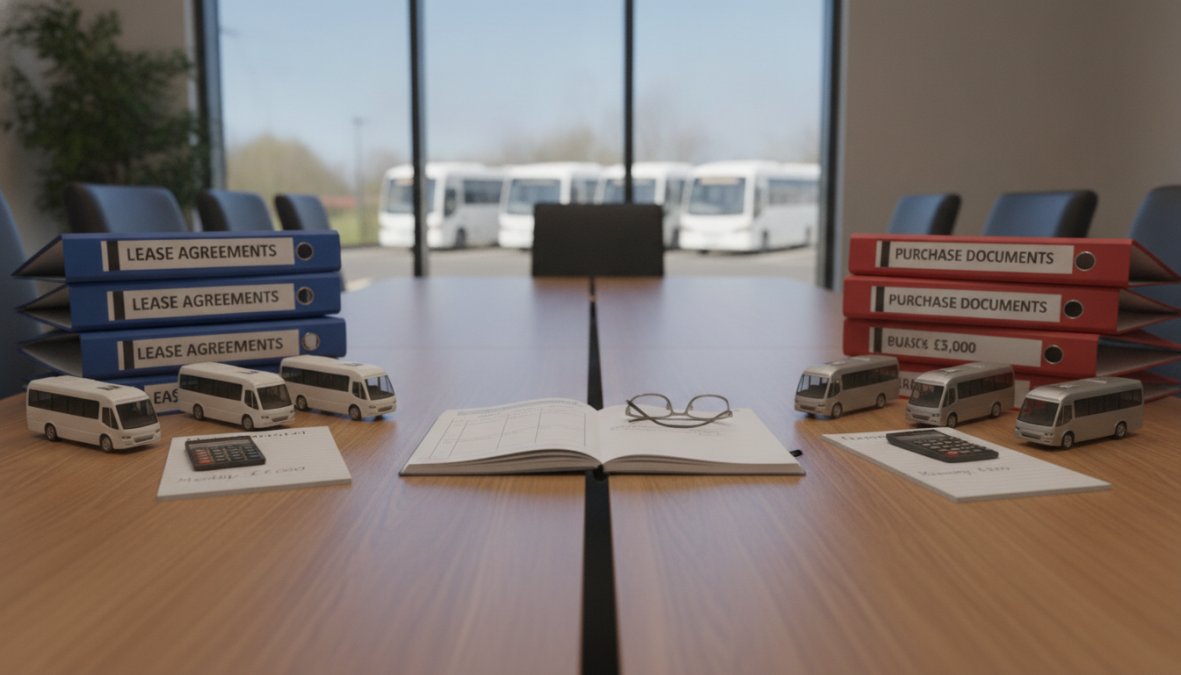
When organisations face the decision between leasing and purchasing minibuses, the stakes are high. This guide breaks down the leasing vs buying minibuses comparison in practical detail, helping you understand the financial, operational, and regulatory implications of each approach. The choice shapes your budget, compliance obligations, and long-term asset strategy for years to come.
When you lease a minibus, you pay a fixed monthly amount to use a vehicle you don't own. When you buy, you acquire an asset and assume full responsibility for its lifecycle. This structural difference shapes everything downstream: your cash flow, balance sheet, maintenance obligations, and depreciation exposure.
An operating lease is a long-term rental arrangement. You pay a monthly fee to use the vehicle, but never own it. The leasing company retains ownership, handles depreciation risk, and typically includes maintenance and roadside assistance. At lease end, you return the vehicle with no further obligation (subject to excess mileage and wear-and-tear clauses).
A finance lease is structurally different. Although you don't legally own the vehicle, you bear the economic risks and rewards of ownership. You're essentially financing the vehicle's purchase through fixed monthly payments. Finance leases typically exclude maintenance; you're responsible for repairs and servicing.
For minibus operators, the operating lease model is more common because it simplifies fleet management. Maintenance, insurance, and roadside support are bundled into one predictable monthly cost.
When you buy a minibus, you build equity with each payment and own an asset with residual value. Leasing offers no equity accumulation; every monthly payment is an operating expense generating no ownership stake. For organisations prioritising cash flow flexibility or with uncertain long-term needs, this is preferable. If you plan to operate minibuses for 7+ years and have sufficient capital, buying can be cost-effective. If your needs are uncertain or your fleet size fluctuates, leasing typically wins.
The payment structure differs fundamentally between leasing and buying, affecting budget forecasting significantly.
When you buy a minibus, you typically face a significant upfront capital expenditure: a down payment of 10-20% of the vehicle's price. For a minibus costing £35,000 to £50,000, this translates to £3,500 to £10,000 due immediately.
Leasing often requires little or no upfront payment. Some agreements ask for one or two months' rent, but many require nothing beyond the first month's payment. This dramatically improves cash flow for organisations with tight working capital. From an accounting perspective, purchased vehicles are capital assets on your balance sheet, while lease payments are operating expenses in the profit-and-loss statement.
Lease payments are fixed for the contract duration, typically three to five years, making budgeting straightforward. A typical minibus lease might run £400 to £600 per month, usually including maintenance, insurance, and roadside support. A purchased minibus financed over five years might have a monthly payment of £500 to £700, but you'd add another £150-£250 monthly for maintenance, repairs, insurance, and contingencies.
If you decide to buy, understanding your financing options is essential. Interest rates, loan terms, and your credit profile all influence the total cost of ownership.
Hire purchase is a common financing method. You make monthly payments over a fixed term (typically three to seven years), then own the vehicle outright. A balloon payment is a lump sum due at the end of the loan term, reducing monthly payments. For example, you might finance a £45,000 minibus with monthly payments of £600 and a balloon payment of £10,000 due at the end of five years. The advantage of hire purchase is straightforward ownership; once paid, the minibus is yours with no mileage restrictions or return conditions. The disadvantage is that you bear all depreciation risk.
The Annual Percentage Rate (APR) you receive depends on your business credit profile, the lender's risk assessment, and current interest rate environments. In 2026, APRs for business vehicle finance typically range from 4% to 12%. A strong credit score, stable business financials, and a substantial down payment improve your APR. Leasing sidesteps this entirely; your credit score doesn't affect lease rates.
Tax treatment is one of the most significant, and most overlooked, differences between leasing and buying. The tax advantages can swing the decision in either direction depending on your organisation's structure and profit position.
When you lease a minibus, the entire monthly payment is tax-deductible as a business expense. If your organisation pays corporation tax at 19%, a £500 monthly lease payment saves you approximately £95 per month in tax, or £1,140 annually.
When you buy, the monthly loan payment itself is not tax-deductible. However, you can claim capital allowances on the vehicle's cost. The Annual Investment Allowance (AIA) permits businesses to deduct up to £1,000,000 of capital expenditure in a single year. Additionally, maintenance and repair costs are tax-deductible.
For organisations with profitable operations and substantial capital expenditure plans, buying can be more tax-efficient. For loss-making organisations or those with limited capital allowance headroom, leasing's straightforward deductibility is cleaner.
When you lease, VAT is charged on monthly payments (at 20%). You can reclaim this VAT if your organisation is VAT-registered and the minibus is used for business purposes.
When you buy, VAT is charged on the purchase price. If you're VAT-registered and the minibus is used for business purposes, you can reclaim the input VAT. This VAT reclaim can be substantial: £7,000 to £10,000 on a £35,000 to £50,000 purchase. Organisations should consult their accountant to model the tax implications specific to their circumstances.
Maintenance and repair costs are where the true cost of ownership becomes apparent. A purchased minibus exposes you to these expenses entirely; a leased vehicle typically includes them in the monthly fee.
New minibuses typically come with a manufacturer's warranty covering defects for three years or 60,000 miles. When you lease, maintenance packages are usually included. The leasing company handles all scheduled servicing, repairs, tyre replacement, and often roadside assistance. When you buy, you're responsible for all maintenance once the warranty expires. For a minibus in commercial or community use, annual maintenance costs can reach £2,000 to £4,000 depending on mileage and age. Many organisations purchasing minibuses opt for extended warranty packages (covering three to five years) to reduce this uncertainty.
Leasing companies define "normal wear and tear" and charge for anything exceeding it. For minibuses used in education, care, or community transport, these charges can accumulate. When you own a minibus, wear and tear is your responsibility, but there's no penalty schedule. A dented panel or worn interior simply reduces the vehicle's resale value.
Mileage and depreciation are two of the most underestimated cost drivers in the lease-versus-buy decision.
Most lease agreements include a mileage allowance, typically 10,000 to 15,000 miles annually. If you exceed this, you pay a penalty, usually 8p to 15p per excess mile. For a minibus running 20,000 miles annually on a 15,000-mile allowance, that's 5,000 excess miles at 10p per mile: £500 in charges. When you own a minibus, there are no mileage restrictions. If you can forecast mileage accurately and stay within allowances, leasing's simplicity wins. If usage is variable or growing, ownership avoids the penalty trap.
A new minibus depreciates significantly in its first year, typically 20-30% of its purchase price. By year three, cumulative depreciation often reaches 40-50%. A £45,000 minibus might be worth only £22,000 to £25,000 after three years.
When you lease, the leasing company absorbs this depreciation risk. When you own, you bear the full depreciation risk. However, if the market strengthens unexpectedly and the vehicle is worth more, you benefit from that upside. Residual value forecasting is notoriously difficult, and organisations with limited forecasting confidence often prefer leasing's certainty.
| Factor | Leasing | Buying |
|---|---|---|
| Depreciation risk | Leasing company bears it | You bear it |
| Mileage flexibility | Limited (penalties apply) | Unlimited |
| Maintenance burden | Included in payment | Your responsibility |
| Upfront capital | Minimal | Substantial (10-20% down) |
| Tax treatment | Monthly deduction | Capital allowances + depreciation |
| End-of-term obligation | Return vehicle | Sell or retain |
The only way to make a sound decision is to calculate the total cost of ownership for both options across your intended usage period. This means accounting for every expense: payments, maintenance, insurance, fuel, registration, and contingencies.
Organisations managing multiple minibuses face additional complexity. Leasing simplifies fleet management. Each vehicle has a fixed monthly cost, predictable maintenance, and a clear end date. Buying a fleet requires active asset management, including tracking maintenance history, monitoring depreciation, and planning replacement cycles. For organisations without dedicated fleet management expertise, this can be administratively burdensome. Organisations managing 5+ vehicles often find leasing more operationally efficient, even if the per-vehicle cost is slightly higher.
Cash flow is often the decisive factor. Leasing requires minimal upfront capital and fixed monthly payments. Buying requires substantial upfront capital and exposes you to variable maintenance costs. For organisations with tight working capital or those in growth phases, leasing preserves cash for operational needs. If your minibus requirements are stable and predictable over 5+ years, buying makes sense. If requirements are evolving or uncertain, leasing's flexibility is invaluable. When evaluating leasing options, exploring Minibus Leasing Special Offers can help identify cost-effective packages that improve your cash position further.
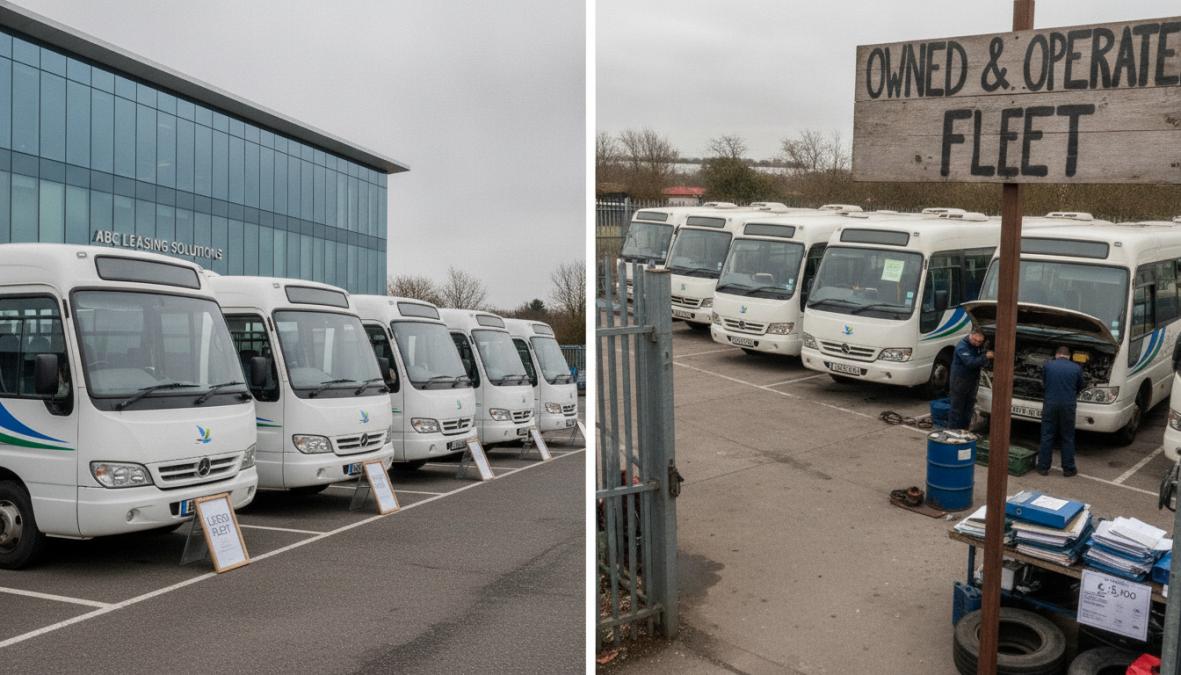
Minibus operations in the UK are subject to specific regulatory requirements that affect both leasing and purchasing decisions. These compliance obligations are non-negotiable and carry significant penalties if overlooked.
Drivers operating minibuses (vehicles with 9-16 passenger seats) require a D1 category driving licence, separate from a standard car licence. A PSV (Public Service Vehicle) operator's licence is required if you operate minibuses for hire or reward, including community transport, school transport, and care home shuttles. The operator's licence is held by the organisation and requires compliance with safety standards, maintenance schedules, driver training, and insurance requirements. Both leasing and buying require the same regulatory compliance. However, leasing companies often provide guidance on compliance and may include PSV-standard maintenance in the lease package.
A Section 19 permit (under the Transport Act 1985) allows non-profit organisations to operate minibuses for community benefit without holding a full PSV operator's licence. Section 19 permits come with strict conditions: the minibus must be used exclusively for the permitted community purpose, no commercial profit can be made, and specific insurance and maintenance standards must be met.
Contract hire arrangements (where you lease a minibus with a driver) have different regulatory implications than bare leases. If you contract hire a minibus with a driver, the hire company assumes some operator responsibilities, simplifying your compliance burden. For organisations operating under Section 19 permits, leasing companies experienced in community transport understand these requirements and can structure agreements accordingly.
The decision between leasing and buying a minibus ultimately depends on your organisation's financial position, operational requirements, and risk tolerance. Leasing offers predictability, simplicity, and minimal upfront capital. Buying provides flexibility, long-term cost control, and asset ownership, but requires active management and capital commitment.
At Minibus Leasing UK, we specialise in tailored fleet solutions for education, care, community, and commercial sectors. Our whole life cost analysis helps organisations model both options transparently, ensuring you understand the true financial and operational implications of each path. We combine deep regulatory expertise, including Section 19 permits and D1 licensing requirements, with dedicated account management to deliver reliable, brand-new vehicles designed to your exact specifications.
Get a bespoke quote from Minibus Leasing UK and discover how we can optimise your fleet procurement and operational efficiency.
The choice depends on your operational needs, cash flow, and vehicle usage patterns. Leasing offers predictable monthly payments, minimal maintenance responsibility, and access to brand-new vehicles with warranty coverage, ideal for organisations prioritising upfront cost certainty and compliance. Buying provides equity building and long-term cost savings for high-mileage operators, though it requires managing depreciation, maintenance costs, and end-of-life disposal. Leasing typically suits education, care, and community sectors with variable fleet needs; buying suits operators with stable, long-term requirements.
Lease payments are generally tax-deductible as operational expenses, reducing your taxable profit. Unlike buying, you avoid capital allowance complications and depreciation tracking. For businesses, the entire monthly lease payment, including any bundled maintenance, can offset against corporation tax. This simplifies tax accounting and improves cash flow visibility. However, tax treatment varies by lease structure (operating vs finance lease) and your specific business circumstances, so consult your accountant for precise guidance on your fleet's tax position.
It depends on your lease agreement. Most full-service leases include scheduled maintenance, repairs, roadside assistance, and replacement parts within the monthly payment. However, you typically remain responsible for wear-and-tear damage beyond normal use, and some leases exclude specific items like tyres or windscreens. Buying a minibus means you cover all maintenance, repairs, and servicing costs directly, a significant ongoing expense. Always review your lease terms carefully to understand what's included and what constitutes excess wear and tear.
Depreciation is a major cost factor when buying. Minibuses typically lose 40-60% of their value within the first three years, directly reducing your equity. This impacts your total cost of ownership and complicates fleet planning, especially for organisations needing predictable budgets. When you eventually sell or trade in your minibus, residual value forecasting becomes critical, market conditions, mileage, and condition all affect resale price. Leasing eliminates depreciation risk entirely, as the lease company assumes this cost, making budgeting more straightforward for fleet managers.

