Sep 13, 2026
Last Updated: September 13, 2026
Every journey a care home arranges carries a duty of care that inspectors will test. Managing passenger safety protocols for care home transport is the difference between a routine outing and a serious incident, and the CQC expects documented evidence either way. This guide from Minibus Leasing UK sets out what to record, how to train drivers, and which vehicle specifications keep residents safe.
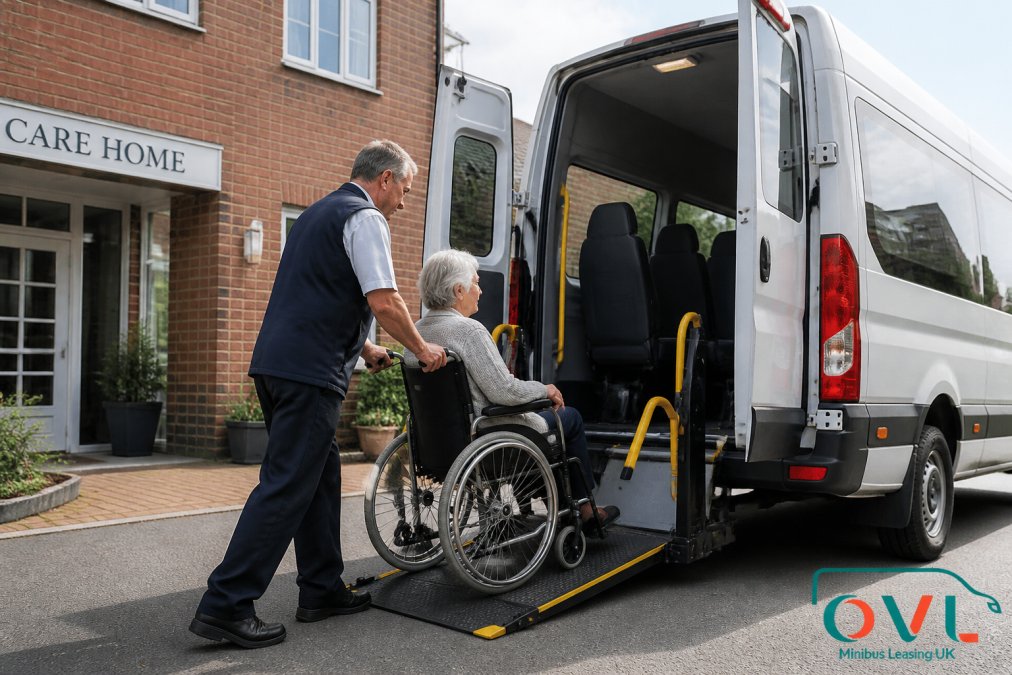
The stakes are straightforward. A resident who uses a wheelchair needs a vehicle with a tested restraint system, not a converted van with a lap belt. A resident living with dementia may attempt to unbuckle a seatbelt mid-journey. Both scenarios are foreseeable, which means both must be planned for before the wheels turn.
At Minibus Leasing UK, we work with care providers across Northampton and the wider United Kingdom on accessible minibus procurement. Homes that treat transport as a clinical process, not a logistics afterthought, often pass inspection without drama.
CQC transport safety requirements are not a separate rulebook. They sit inside Regulation 12 (safe care and treatment) and Regulation 17 (good governance) of the Health and Social Care Act 2008 (Regulated Activities) Regulations 2014, and inspectors assess transport as part of the wider service (cqc.org.uk).
That means your evidence needs to show three things: that you identified the risks, that you acted on them, and that you review the result. CQC guidance on Regulation 12 safe care and treatment sets out the expectation that providers assess risk to people using the service and do all that is reasonably practicable to mitigate it.
Inspectors typically probe five areas during inspection:
The governance point matters more than most managers expect. A single missing review date on a risk assessment can trigger a "requires improvement" finding, even when day-to-day practice is sound.
A risk assessment template for care home transport is a living document, not a form filed once at admission. It should be completed before the first journey and updated whenever a resident's condition, medication or mobility changes.
HSE guidance on risk assessment applies here as it does to any workplace activity, because staff moving and assisting residents in and out of vehicles are exposed to manual handling risk themselves.
A workable template covers:
| Trigger | Action | Timescale |
|---|---|---|
| New resident | Full assessment before first journey | Before travel |
| Change in mobility or medication | Review and re-sign | Within 48 hours |
| Post-incident or near miss | Review with incident findings | Within 5 working days |
| Routine review | Confirm or amend | Every 6 months |
| Vehicle change | Check restraint compatibility | Before first use |
Driver training for care home transport must cover more than driving. The person behind the wheel is often the only staff member present, which makes them a carer in transit as well as a driver.
Core training modules should include:
Refresher training annually is often recommended, with practical reassessment rather than a tick-box quiz. A common mistake is training drivers on a generic wheelchair tie-down when the vehicle actually uses a different system. Train on your own fleet.
Get a Bespoke Quote or Speak to a Sector Specialist →
Vehicle specification is where safety protocols either hold or collapse. A protocol that assumes a tail-lift cannot be followed on a vehicle that has none.
For wheelchair-accessible minibus leasing, the specification points that matter most are:
Minibus Leasing UK specialises in accessible vehicle procurement for care providers, and we build specifications around the residents you actually carry rather than a generic template. Our whole life cost analysis also matters here: a cheaper vehicle that needs restraint retrofits may not remain cost-effective in the long run.
Checklists turn policy into habit, and habits are what inspectors observe. Build two: one for the vehicle and one for the passengers.
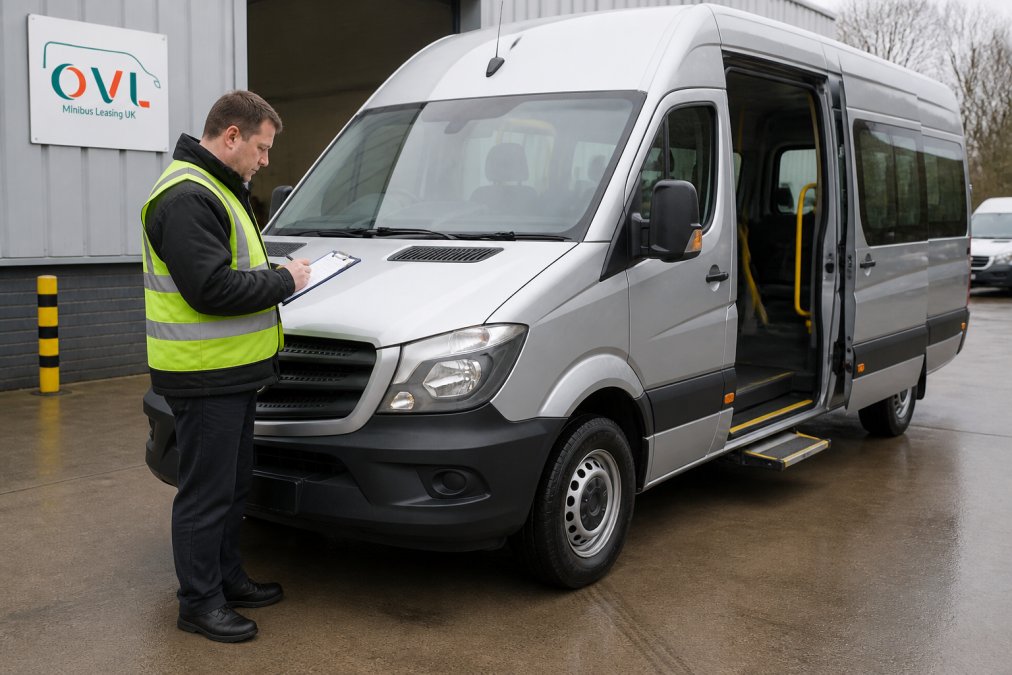
Pre-journey vehicle check:
In-transit checks:
Transport is an area of care home operations where the risks are often foreseeable and the controls are well understood, yet it can still generate inspection findings if documentation lags behind good practice. If your fleet is ageing, or your current vehicles need restraint retrofits to meet your own protocols, that may be the moment to look at replacement rather than repair.
Minibus Leasing UK provides brand-new accessible minibuses and crew vans with dedicated account managers who understand Section 19 permits, D1 licensing and the compliance evidence care homes need. Our consultative approach and whole life cost analysis are designed for providers in Northampton and across the United Kingdom who need vehicles that are safe, compliant and budgeted properly. Get a bespoke quote or speak to a sector specialist, and ask about our current minibus leasing special offers while you are at it.
Care home transport must comply with the Health and Safety at Work etc. Act 1974, the Management of Health and Safety at Work Regulations 1999, and CQC registration requirements. Vehicles need valid MOT, insurance, and tax. Drivers must hold the correct licence category, and accessible vehicles must meet DVSA standards for wheelchair restraints and ramps. Section 19 permits may apply for community transport. Operators should also follow LGA guidance on passenger safety and keep written records of all checks.
Start by identifying hazards specific to each journey and passenger group: mobility needs, medical conditions, boarding and alighting points, and route risks. Use a risk assessment template for care home transport that records the likelihood and severity of each hazard, the controls in place, and the responsible person. Review assessments before every new route or passenger type, and update them at least annually or after any incident. Keep signed copies for CQC inspection.
Driver training for care home transport should include induction training before any passenger journeys, then refresher sessions at least every 12 months. Additional training is needed when legislation changes, after an incident, or when new vehicle types or passenger needs are introduced. Training should cover wheelchair restraint use, emergency evacuation, safeguarding, and safe boarding procedures. Keep certificates and attendance records as evidence for CQC inspections.
Accessible minibuses used for care home transport must have a working tail lift or ramp, four-point wheelchair restraints, occupant lap and diagonal belts, and a fire extinguisher. A first aid kit, high-visibility vest, warning triangle, and emergency contact list are also expected. Vehicles should display the correct signage and carry a current MOT certificate. DVSA guidance recommends regular checks of all restraint systems before each journey.

