
Oct 05, 2026
Last Updated: October 4, 2026
Getting the most from your crew van cargo space is essential if you run a delivery business. Every trip counts. When your van is poorly organized, you waste time, fuel, and money. Drivers spend hours searching for parcels instead of making deliveries.
Poor cargo management also creates safety risks. Unsecured loads shift during braking, causing accidents and damage. Parcels fall out. Insurance claims spike.
This guide shows you exactly how to maximize crew van cargo space for deliveries, whether you're managing a single van or a fleet.
Not all crew vans are equal. The right size depends on your delivery volume, parcel types, and routes.
Small crew vans (3-4 cubic metres) suit couriers handling small packages and documents. They're fuel-efficient and easy to manoeuvre in city centres. But they fill quickly if you're carrying bulky items.
Medium crew vans (5-7 cubic metres) work well for mixed deliveries. You can fit parcels of various sizes without excessive empty space. Most delivery operators find this range offers the best balance.
Large crew vans (8-10+ cubic metres) handle high-volume operations. Furniture retailers, online retailers, and logistics companies need this capacity. The trade-off is higher fuel costs and difficulty parking in tight urban areas.
Choose based on your average daily load, not your peak days. With Minibus Leasing Special Offers, you can access flexible crew van leasing tailored to your seasonal peaks and operational needs, helping you avoid the cost of underutilized vehicles sitting idle.
Consider vehicle height as well. Taller vans maximize vertical space but may not fit under low bridges or in multi-storey car parks. Check your regular routes before committing.
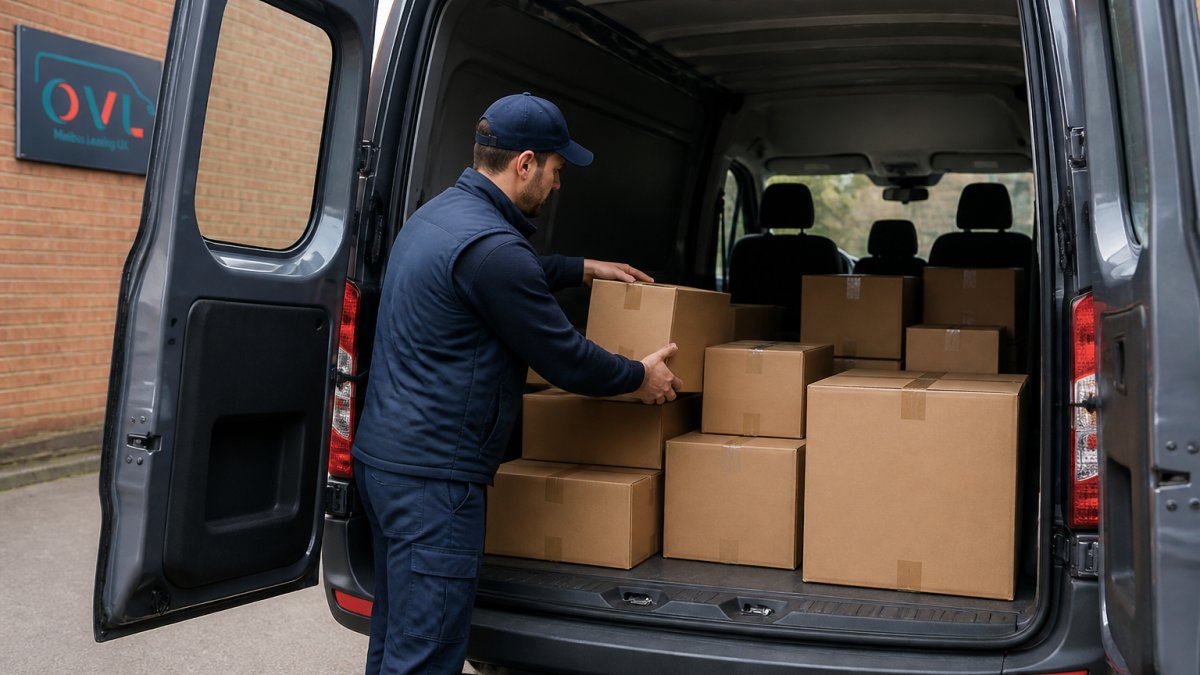
Proper load planning prevents wasted trips and safety issues. Follow this process before every shift.
Start by understanding what you're carrying. Sort parcels by destination and size. Group deliveries by area to reduce driving time.
Ask yourself these questions:
This assessment takes five minutes but saves thirty minutes in the van. You avoid backtracking. You load strategically instead of randomly throwing parcels in.
Load your van in reverse delivery order. The last delivery goes in first, at the back. The first delivery sits nearest the door.
This simple rule cuts loading and unloading time dramatically. You don't dig through the van searching for parcels. You grab what you need when you need it.
Use this sequence:
Mark parcels clearly with delivery numbers. Use colour-coded labels or tape. Drivers spot the right parcel instantly.
Unbalanced loads cause handling problems and increase fuel consumption. Distribute weight across the van's floor area.
Place heavy items low and central. Put lighter parcels on upper shelves. Never stack all weight to one side, the van will handle poorly and tyre wear accelerates.
Aim for roughly equal weight in front and back sections. If you're carrying one very heavy item, balance it with medium-weight parcels on the opposite side.
Check your van's maximum load rating. Most crew vans handle 500-1,000 kg depending on the model. Don't exceed this limit, it's a legal requirement and a safety issue.
Safety comes first. Loose parcels become projectiles during sudden stops or accidents.
Use tie-down straps or cargo nets to hold parcels in place. Secure items at multiple points, not just one strap across the top.
Follow these steps:
For fragile items, use blankets or foam padding between parcels. This prevents damage and reduces movement.
Before leaving, perform these checks:
These checks take three minutes and prevent costly accidents.
Purpose-built shelving transforms how you use crew van cargo space. It creates structure and makes loading faster.
Fixed racking bolts permanently to the van floor and walls. It's sturdy and maximizes space. The downside: you can't adjust it once installed. Choose this if your parcels are consistently similar sizes.
Modular shelving uses removable units. You reconfigure them as your needs change. This flexibility suits operators handling varied parcel types.
Fold-down shelving mounts on one side and folds away when not needed. Useful if you occasionally need to carry large items that require the full floor space.
Overhead racks mount near the ceiling. They're perfect for lightweight items like envelopes or small packages. They free up floor and shelf space for heavier parcels.
Get a Bespoke Quote or Speak to a Sector Specialist →
Choose shelving that matches your typical load. If 80% of your parcels are small, invest in shelving with multiple small compartments. If you carry mixed sizes, choose adjustable racking.
Professional installation ensures safety. Shelving must be bolted securely, loose racking is dangerous and voids your vehicle warranty.
Budget for proper installation. Many van specialists offer this service. The cost is modest compared to the efficiency gains.
Inspect shelving monthly:
Replace damaged shelving immediately. A failed shelf mid-journey creates safety hazards and delays deliveries.
Beyond basic loading, these techniques extract maximum capacity from your van.
Most delivery operators waste vertical space. They stack parcels only as high as they can reach comfortably.
Use step stools or small ladders to reach the top of your van safely. Stack items to within 15 centimetres of the ceiling. This nearly doubles your usable space.
Organize vertically by parcel type:
This arrangement keeps the van's centre of gravity low and improves handling.
Delivery vans often carry tools, equipment, and spare parts alongside parcels. Mixed storage creates chaos.
Dedicate one corner or compartment to tools and equipment. Use a tool bag or small cabinet. This prevents tools from shifting into parcels and damaging them.
Keep frequently used items (scanner, labels, tape) in an easily accessible spot near the driver's seat. Don't bury them under parcels.
Small investments pay dividends:
These items cost modest amounts but reduce damage claims, speed up deliveries, and improve safety.
Learning from others' errors saves time and money.
Mistake 1: Loading by weight alone. Heavy parcels go in first because they're easier to lift. But this creates poor weight distribution and makes finding parcels difficult. Always load by delivery sequence first, then balance weight.
Mistake 2: Ignoring fragile labels. Parcels marked "fragile" get crushed under heavier items. Sort fragile items separately and load them last (nearest the door where they're least likely to be crushed).
Mistake 3: Overstuffing the van. Cramming in one more parcel seems efficient until items shift, parcels get damaged, or the van becomes unstable. Respect your van's weight limit and volume capacity.
Mistake 4: Skipping pre-load checks. Drivers who skip safety checks end up with damaged goods, accidents, and insurance issues. The three-minute check prevents hours of problems.
Mistake 5: Using old tie-down straps. Worn straps slip or break under load. Replace straps annually and inspect them regularly.
As your delivery operation grows, fleet management becomes complex. The right leasing partner simplifies this.
Minibus Leasing UK specializes in crew van leasing for commercial operations. We handle vehicle procurement, maintenance, and compliance so you focus on deliveries.
With Minibus Leasing UK, you get:
Leasing eliminates the capital cost of buying vehicles outright. You avoid depreciation risk. Our Minibus Leasing Special Offers provide competitive rates for growing delivery businesses, helping you optimize fleet costs without compromising on vehicle quality or reliability.
Whether you need three vans or thirty, Minibus Leasing UK tailors solutions to your budget and operational requirements.
Optimizing crew van cargo space isn't just about fitting more parcels in. It's about running safer, faster, more profitable deliveries. The techniques in this guide, proper load planning, strategic organization, and secure fastening, transform how your team works.
As your delivery operation grows, managing multiple vans and drivers becomes increasingly complex. Minibus Leasing UK helps delivery operators across the region simplify their fleet management with brand-new vehicles, flexible leasing terms, and dedicated support.
Start by assessing your delivery route and parcel types. Place heavier items low and towards the front, lighter items higher and towards the rear. Use shelving or racking to create defined zones for tools, parcels, and equipment. Organize by delivery sequence so items needed last are loaded first. This approach maximizes crew van cargo space and reduces loading time at each stop.
Load in reverse delivery order: items for the last stop go in first, deepest in the van. Distribute weight evenly across the floor to maintain vehicle stability and handling. Secure all loads with straps, nets, or racking to prevent movement during transit. Keep frequently accessed items (tools, documentation) easily reachable. Always perform pre-load safety checks to confirm nothing obstructs the driver's view or access to emergency equipment.
Yes significantly. Van shelving and racking for deliveries creates vertical storage, doubling usable space without increasing the vehicle's footprint. Modular systems allow you to customize layouts for different parcel sizes and weights. They also keep tools and parcels separated, reducing damage and improving organization. Choose racking rated for your typical load weight and ensure proper installation to meet safety standards.
Assess your typical daily parcel volume, average parcel dimensions, and weight. Consider your delivery route frequency and whether you need dedicated tool storage. A medium crew van suits most small to mid-sized operations; larger fleets benefit from bigger models or multiple vehicles. Choosing the right van size for deliveries prevents overloading, improves fuel efficiency, and reduces wear. Leasing allows you to scale your fleet as demand changes without capital outlay.

