Jul 13, 2026
Last Updated: July 13, 2026
Safe transport for vulnerable passengers requires comprehensive accessibility standards, safety protocols, and understanding of individual needs. This guide covers wheelchair securement, driver training, legal compliance, and technology solutions for community transport, healthcare shuttles, and educational minibuses.
Vulnerable passengers include individuals with physical disabilities, cognitive impairments, sensory limitations, elderly passengers, and those with complex medical or mental health needs. According to the UK Department for Transport's accessibility guidelines, approximately 20% of the working-age population experience some form of disability and depend on specialised transport services for employment, healthcare, and community participation.
Safe transport encompasses physical accessibility, proper securement of mobility devices, staff competence in disability awareness, emergency preparedness, and legal compliance. Each element is critical: a vehicle with perfect wheelchair ramps but untrained staff creates risk; trained staff operating inaccessible vehicles creates exclusion.
Wheelchair securement anchors both the wheelchair and passenger, distributing deceleration forces safely during emergency braking or collision. An unsecured wheelchair becomes a projectile causing severe injury or death.
Modern accessible minibuses use four-point tie-down systems with fixed floor anchors spaced to accommodate standard wheelchair dimensions (approximately 70-75cm wide). Anchors must withstand forces of at least 3,000 pounds per anchor point during emergency stops.
Poor installation creates rust points and structural weakness. Maintenance should include:
Wheelchairs vary significantly: standard adult chairs, paediatric chairs, powered chairs, and bariatric chairs have different dimensions and weight distributions. Map anchor positions to accommodate the range of wheelchairs your service actually uses.
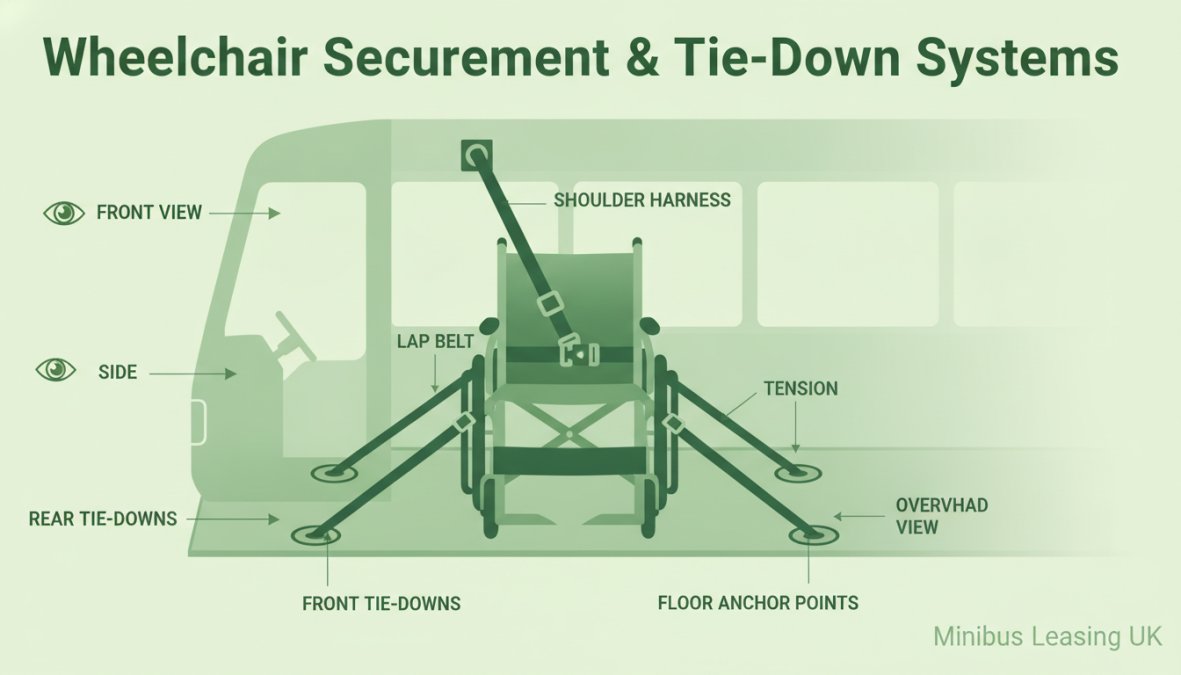
Passenger restraint systems secure the passenger to the chair. Both wheelchair securement and passenger restraints are essential. Proper restraint application follows these steps:
Passengers with cognitive disabilities, communication difficulties, or anxiety may resist restraints. Use calm, clear communication: explain why restraints are necessary, demonstrate them, allow adjustment time, and build trust through consistency. Never skip restraints to avoid conflict.
Vehicle design and securement systems are only as effective as the people operating them. Driver training is non-negotiable.
Many drivers have never received formal disability awareness training. Training should address understanding disability types, recognising individual variation, and communicating respectfully.
Understanding disability types means moving beyond stereotypes. Physical disability is visible; cognitive disability, mental health conditions, sensory disabilities, and invisible disabilities are not. A passenger who appears able-bodied may have severe pain, cognitive processing difficulties, or anxiety.
Individual variation is critical. Two passengers with the same diagnosis may have completely different functional abilities and support needs. Generic training that treats all passengers with a condition as identical creates poor service and safety risks.
Communication techniques should emphasise:
Emergency evacuation must account for passenger mobility limitations. Standard evacuation assumes passengers can walk, see, hear, and understand instructions. Vulnerable passengers may not meet these assumptions.
Evacuation training should cover:
Evacuation chairs, lightweight devices that allow safe lowering of wheelchair users down stairs, should be present on all multi-level vehicles. Annual evacuation drills, including actual use of evacuation equipment, should be mandatory.
Mental health considerations matter in evacuation scenarios. Passengers with anxiety, PTSD, or autism may experience severe distress. Evacuation procedures should include calming techniques, clear communication, and post-incident support.
Non-emergency medical transportation (NEMT) serves passengers travelling to medical appointments, dialysis, and healthcare services. NEMT passengers often have active medical conditions and may experience health changes during transport.
Before each journey, drivers should conduct a brief health assessment. This is not a medical examination but a structured check to identify passengers needing additional support.
Health screening should ask:
Passengers reporting concerning symptoms need further assessment. A passenger experiencing chest pain should not travel to a routine appointment; they need emergency services. Document health screening responses in a log. Over time, patterns emerge that inform vehicle selection and driver assignment.
NEMT passengers include those with communicable infections and compromised immune systems. Standard hygiene protocols should address:
According to the NHS infection prevention and control guidance, standard precautions applied consistently reduce healthcare-associated infection transmission by up to 30%.
Effective safe transport requires systematic risk assessment: identifying specific vulnerabilities, understanding how they could cause harm, and implementing controls to reduce risk.
Vulnerabilities exist at multiple levels: passenger vulnerabilities (mobility limitations, cognitive disabilities, communication difficulties, medical complexity), driver vulnerabilities (knowledge gaps, fatigue, stress), vehicle vulnerabilities (mechanical failures, accessibility limitations), and operational vulnerabilities (poor communication, unclear procedures, inadequate supervision).
Addressing these vulnerabilities requires training, reasonable workload limits, clear protocols, and accountability.
Key modifications include:
| Vehicle Feature | Benefit | Passenger Group |
|---|---|---|
| Wheelchair lift | Independent boarding for wheelchair users | Mobility disabilities |
| Climate control | Comfortable temperature maintenance | Temperature sensitivity, pain conditions |
| Grab handles | Safe movement during transit | Mobility limitations, balance difficulties |
| Wide aisles | Wheelchair and mobility aid access | Mobility disabilities |
| Priority seating | Reduced standing for those with fatigue or pain | Chronic illness, elderly passengers |
| Sound system clarity | Clear announcements for route information | Hearing loss, cognitive disabilities |
Mental health and cognitive disabilities are often overlooked in transport safety planning. Passengers with anxiety, autism, dementia, depression, or learning disabilities represent a significant proportion of vulnerable passenger populations.
Support strategies include:
A passenger with autism may become distressed by unexpected changes. A passenger with dementia may not remember the route. A passenger with an intellectual disability may not understand why the vehicle stopped. Anticipating these scenarios and planning support prevents crisis and builds passenger confidence.
Many vulnerable passengers experience transport anxiety: fear of unfamiliar environments, anxiety about communicating needs, worry about losing control, or trauma-related responses. Building passenger confidence requires:
Safe transport operates within a legal framework. In the UK, the Equality Act 2010 and the Public Sector Equality Duty require organisations providing transport to ensure accessibility and non-discrimination.
Community transport services require a Section 19 permit under the Transport Act 1985. This permit exempts community transport from requiring a public service vehicle (PSV) licence but carries conditions: the service must be provided not for profit, passengers must be members of the eligible group, and the organisation must meet safety and accessibility standards.
D1 licensing relates to vehicle category. A minibus with more than 8 passenger seats (excluding the driver) requires drivers to hold D1 entitlement on their driving licence.
Compliance requires:
Operating without valid permits or with drivers lacking appropriate licensing creates legal liability and removes protections for passengers.
Passengers have rights to accessibility, communication, privacy, respect, and complaint processes. Organisations should have clear policies addressing these rights, train staff on rights and responsibilities, and have processes to address complaints.
Emerging technologies improve safe transport for vulnerable passengers. Real-time monitoring systems allow drivers to track passenger location and enable rapid response if a passenger becomes unwell. Accessibility apps help passengers plan journeys and communicate with transport operators. Communication aids allow non-verbal passengers to communicate with drivers. Data systems that integrate passenger information, health screening, driver notes, and incident reports create organisational learning.
According to the Centre for Accessible Environments' technology guidance, thoughtfully implemented technology improves safety and accessibility when designed with end-users and when it enhances rather than replaces human interaction.
Safe transport for vulnerable passengers is fundamentally about removing barriers and creating systems where all passengers can travel safely and with dignity. This requires investment across vehicles, people, processes, and technology. When procuring or leasing minibuses for vulnerable passenger transport, exploring [Minibus Leasing Special Offers](https://www.minibusleasinguk.co.uk/page/minibus-leasing-offers) can help organisations access cost-effective, accessible vehicles tailored to their operational needs. Speak to a sector specialist today to discuss how tailored vehicle procurement and fleet management can strengthen your vulnerable passenger transport operation.
Vulnerable passengers include elderly individuals, people with mobility disabilities, those with cognitive or mental health conditions, and passengers with complex medical needs. Transportation disadvantaged populations may also include those with limited access to healthcare or community services. Safe transport for vulnerable passengers requires tailored accessibility features, trained personnel, and individualised risk assessments to address specific needs and ensure dignity throughout the journey.
Drivers require training in disability awareness, proper wheelchair securement techniques, passenger communication strategies, and emergency evacuation procedures. Training should cover recognising signs of distress, managing medical situations, and understanding how cognitive and mental health conditions affect passenger behaviour. Comprehensive vulnerable passenger safety training ensures staff can respond appropriately to diverse needs whilst maintaining professional standards and passenger confidentiality.
Non-emergency medical transportation protocols require documented health screening procedures, infection control measures, and clear communication with healthcare providers. Vehicles must be equipped with appropriate mobility assistance devices and emergency supplies. Regular audits, staff training, and passenger feedback mechanisms help maintain compliance. Protocols should address passenger dignity, privacy, and comfort whilst ensuring safe, timely transport to medical appointments and healthcare facilities.
Risk assessment for passenger transport involves identifying individual passenger vulnerabilities, evaluating vehicle accessibility features, assessing driver competency, and reviewing environmental factors. Organisations must document medical conditions, mobility requirements, cognitive considerations, and communication needs. Regular risk reviews should incorporate passenger feedback and incident data. A thorough assessment framework helps prevent transport barriers, reduces safety incidents, and ensures services meet legal obligations under accessibility legislation.

