Jul 16, 2026
Last Updated: July 16, 2026
School minibus compliance is a statutory duty affecting every aspect of fleet management, from driver qualifications to vehicle maintenance records. The regulatory framework rests on several key pillars: operator licensing, insurance obligations, Section 19 permits, driver training standards, vehicle safety protocols, and comprehensive record-keeping. Each element interconnects, meaning a gap in one area creates compliance risk across the entire operation.
School minibus operations fall under the Public Service Vehicle (PSV) licensing regime when transporting pupils. Most schools operate under a Section 19 permit exemption rather than full operator licensing. Understanding which category applies to your operation is the first critical step.
Your duty of care encompasses vehicle selection, driver competency, maintenance standards, risk assessment, incident response, and continuous monitoring. Schools that fail in any of these areas expose themselves to regulatory action, reputational damage, and student safety risks.
The key distinction: full operator licensing applies to commercial passenger transport services. Schools typically operate under Section 19 exemptions, which allow non-profit transport of pupils without full licensing but with stricter conditions around driver training, vehicle standards, and record-keeping.
Minibus insurance for schools must cover both liability and passenger protection. Standard motor insurance does not automatically cover passenger-carrying vehicles. You need specialist PSV (Public Service Vehicle) insurance that includes third-party liability, passenger indemnity coverage, driver cover for all qualified drivers, vehicle breakdown and recovery, and contingency cover for replacement transport.
Many schools discover mid-year that their insurance doesn't cover minibus operations because they've failed to declare the vehicle's use or driver composition. Insurance compliance requires annual review, especially when drivers change or vehicle usage patterns shift.
A Section 19 permit is the legal document that allows schools to operate minibuses for pupil transport without full operator licensing. This exemption exists specifically for educational institutions, but it comes with mandatory conditions you cannot ignore.
The D2 application form is your formal request for a Section 19 permit. It requires detailed information about your operation: vehicle specifications, driver details, routes, timetables, and safety measures. Incomplete or inaccurate D2 submissions are rejected, delaying your permit by weeks or months.
The D4 medical report is a formal medical assessment confirming that all drivers meet DVLA medical standards for minibus operation. This comprehensive assessment covers eyesight, hearing, cardiovascular fitness, neurological conditions, and medication effects. Drivers must be medically fit to hold a PCV (Passenger Carrying Vehicle) entitlement.
Common mistakes with D2/D4 submissions include listing drivers who don't meet medical standards, providing incomplete vehicle documentation, failing to include safety procedures, not updating permits when driver composition changes, and missing renewal deadlines.
Section 19 permits are typically issued for three years. The application process takes 4-8 weeks from submission to approval, assuming no deficiencies in your documentation.
Renewal must begin at least three months before expiry. Schools that wait until the last month often find themselves operating without valid permits because processing takes longer than expected. Once a permit expires, you cannot legally operate the minibus for pupil transport.
Minibus drivers carrying pupils must hold a D1 or D category driving licence with PCV (Passenger Carrying Vehicle) entitlement. This requires separate testing and ongoing competency checks beyond a standard car licence.
The Driver and Vehicle Standards Agency (DVSA) sets the standards for PCV licence testing. Drivers must pass a theory test, hazard perception test, and practical driving assessment. The practical test is significantly more demanding than standard car driving tests, with examiners assessing passenger safety awareness, vehicle control, and emergency response capability.
Medical requirements for PCV drivers are strict. Drivers must pass medical assessments covering eyesight (minimum 6/7.5 in each eye, 6/60 in the poorer eye), hearing, cardiovascular fitness, neurological conditions, mental health conditions affecting safe driving, and medication effects.
Schools often assume that a driver with a valid car licence is automatically fit for minibus operation. They're not. The medical bar is higher, and conditions that don't affect car driving can disqualify PCV drivers. Annual medical checks are mandatory for drivers over 65, and many authorities require checks every two years for all PCV drivers.
Initial driver training is the foundation, but competency doesn't remain static. Drivers need refresher training, scenario-based coaching, and periodic competency assessments.
Competency checks should assess vehicle pre-journey inspection knowledge, passenger loading and safety procedures, emergency response capability, route knowledge and hazard awareness, and defensive driving techniques.
Vehicle maintenance is non-negotiable in school transport. A breakdown on a route carrying pupils is more than an operational inconvenience, it's a safeguarding issue and a compliance failure.
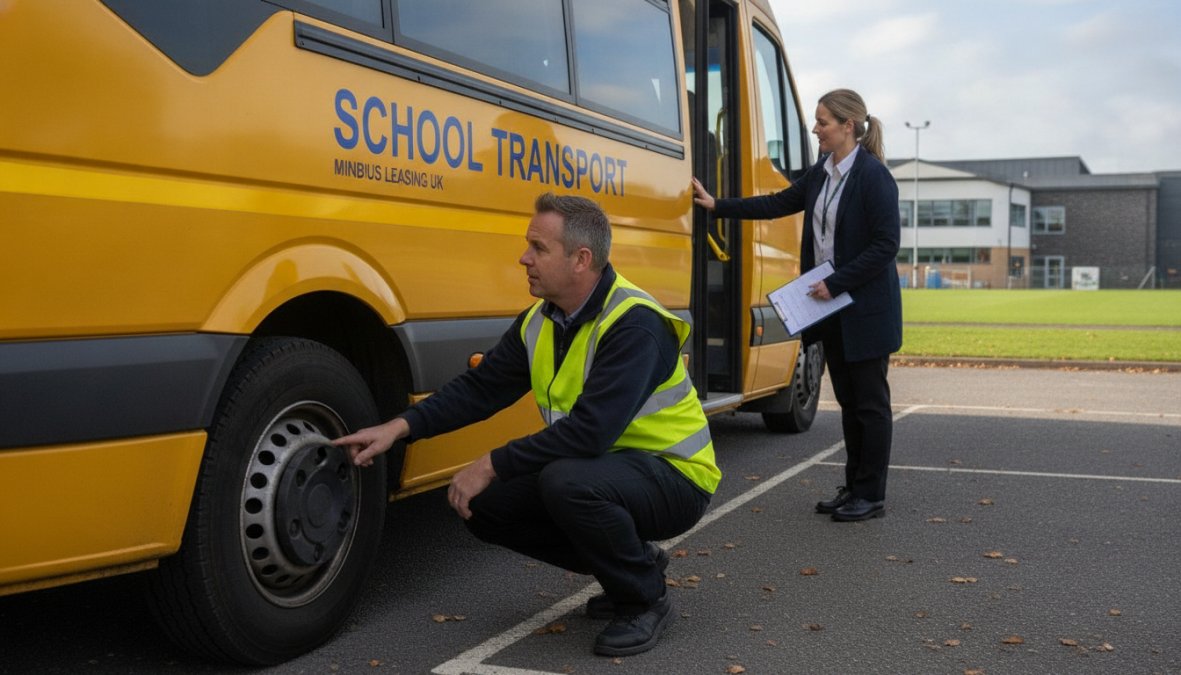
Roadworthiness is determined by systematic inspection against defined standards: tyre depth and condition, brake performance, lighting function, seatbelt integrity, emergency exits, and structural soundness.
Daily pre-journey inspections are driver responsibility. Before the minibus leaves the school, the driver must check all tyres for pressure, damage, and tread depth (minimum 1.6mm across the central three-quarters), lights, windscreen and mirrors, seatbelts and restraints, doors and emergency exits, fluid levels, brakes, horn, and wipers.
Weekly inspections go deeper. A designated staff member should conduct a structured check covering tyre tread depth measurement, brake pad thickness, fluid top-ups and leak detection, undercarriage inspection, seat and restraint system integrity, emergency equipment, and vehicle cleanliness.
Documentation of these checks is mandatory. A maintenance log must record every inspection, any defects found, and remedial action taken.
Preventative maintenance follows manufacturer schedules and legal requirements. Oil changes, filter replacements, brake inspections, and fluid flushes must occur on fixed intervals, typically every 10,000 miles or annually, whichever comes first.
Many schools operate minibuses beyond their optimal lifespan. Vehicles older than 10-12 years accumulate hidden wear: corroded brake lines, weakened suspension components, degraded electrical systems. Whilst there's no strict legal age limit, vehicles over 15 years old become increasingly unreliable and expensive to maintain.
| Maintenance Task | Frequency | Impact if Missed |
|---|---|---|
| Oil and filter change | Annually or 10,000 miles | Engine wear, potential failure |
| Tyre inspection | Weekly | Blowouts, reduced braking |
| Brake system check | Annually | Brake failure, safety risk |
| Seatbelt testing | Annually | Restraint failure in crash |
| Fluid level checks | Monthly | Overheating, brake failure |
| Full service | Annually | Multiple system failures |
A formal risk assessment is a legal requirement under the Health and Safety at Work Act. Schools must identify hazards in minibus transport, evaluate the likelihood and severity of harm, and implement control measures. Effective risk management is continuous, not a one-time exercise.
Your duty of care documentation must demonstrate systematic safety thinking. This includes a written school transport policy covering vehicle selection, driver requirements, passenger conduct, and emergency procedures; risk assessments for each route; driver training records; incident reporting procedures; emergency response plans; and safeguarding procedures specific to transport.
Safety protocols must cover pre-journey vehicle checks, passenger loading and seating with supervision, passenger conduct expectations, emergency procedures, breakdown procedures, and accident response.
Every incident, accident, near-miss, mechanical failure, passenger injury, or behaviour issue must be documented. After an incident, conduct a structured audit: assess immediate response, perform root cause analysis, identify system failures, determine corrective action, and document findings.
Schools that skip this process miss opportunities to prevent future incidents. Regulators reviewing incident patterns often identify schools with systemic failures.
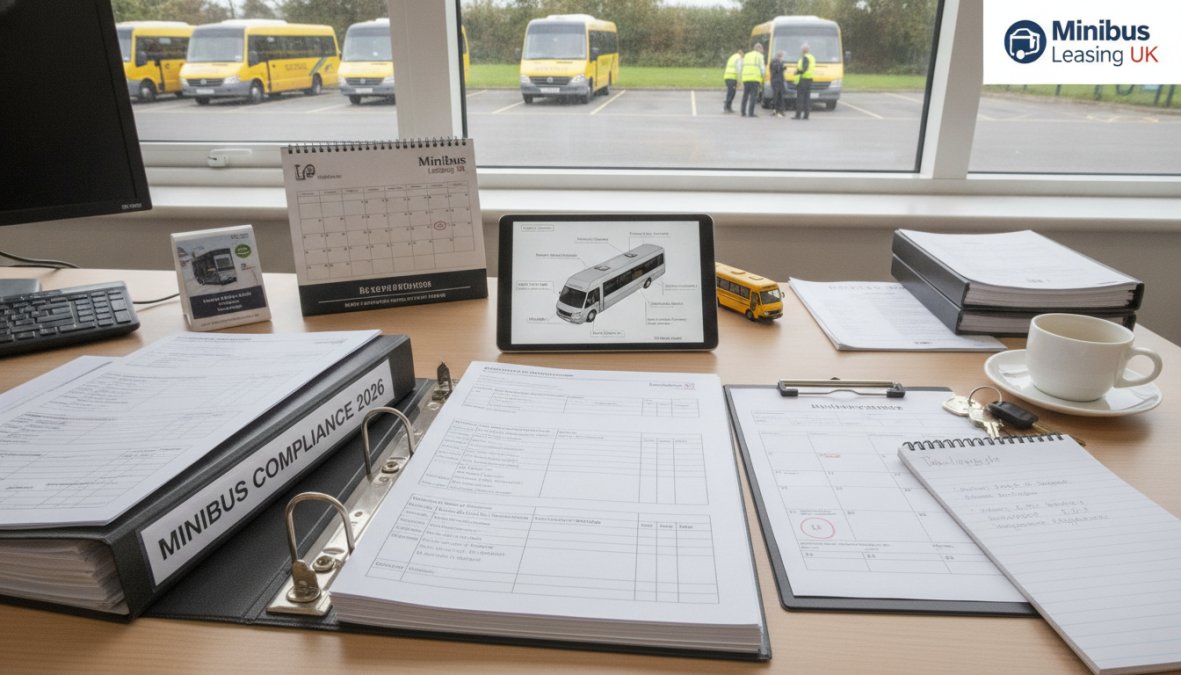
Compliance documentation creates administrative burden. Schools must maintain driver files, vehicle maintenance logs, inspection records, incident reports, training certificates, medical assessments, and permit documentation. Spreadsheets quickly become unwieldy.
Your compliance documentation must include vehicle logs recording every journey with date, driver, passengers, route, times, and incidents; tachograph records (for minibuses over 3.5 tonnes) kept for 28 days; driver files containing driving licence, medical assessment, safeguarding clearance, training records, competency assessments, incident history, and absence records; vehicle maintenance logs documenting every inspection, service, and repair; and Section 19 permit documentation.
Paper files create multiple problems: they're hard to search, easy to lose, difficult to audit, and time-consuming to update.
Digital compliance software centralizes all documentation, automates reminders, and creates audit trails. A proper system provides centralized storage, automated reminders for expiring medicals and training, audit trails showing who accessed what information and when, instant reporting capability, rapid search functionality, version control, and integration linking driver records to vehicle assignments and incident reports.
Schools using spreadsheets spend hours compiling compliance reports. Schools using proper software generate them in minutes. When a regulator requests documentation, digital systems provide complete, organized evidence immediately.
School minibus operations require budgeting discipline, staff continuity planning, and systems that prevent compliance drift.
A realistic transport budget includes vehicle acquisition, insurance, fuel, maintenance, driver wages, training, compliance administration, and contingency. Schools often discover mid-year that their budget is insufficient, then defer maintenance or skip training, creating compliance gaps and safety risks. Exploring [Minibus Leasing Special Offers](https://www.minibusleasinguk.co.uk/page/minibus-leasing-offers) can help schools manage vehicle costs more predictably through structured leasing arrangements that include maintenance and support.
Staff turnover is inevitable. Schools that don't plan for transitions lose compliance continuity. When drivers leave, their training records and route knowledge must transfer to replacements. When administrators leave, all compliance documentation must be properly handed over.
Establish continuity procedures: document all compliance processes in writing, maintain a compliance calendar showing all deadlines, cross-train at least two staff members on critical functions, maintain a compliance manual, and conduct annual compliance audits.
School minibus operations must comply with operator licensing, insurance obligations, and duty of care responsibilities. You'll need appropriate insurance coverage, a valid Section 19 permit (if applicable), trained drivers meeting DVSA medical standards, and comprehensive record-keeping systems. Compliance also requires regular vehicle safety inspections, preventative maintenance schedules, and documented risk assessments. These statutory requirements ensure passenger safety and legal operation across all school transport activities.
A Section 19 permit is required when you operate a minibus for school transport on a non-commercial basis. The application involves completing a D2 form (application), providing a D4 medical report from drivers, and demonstrating compliance with safety standards. Your transport manager must ensure all documentation is accurate and submitted to the relevant traffic commissioner. Approval typically takes several weeks, and permits require renewal. Minibus Leasing UK can advise on permit requirements specific to your operation.
A comprehensive maintenance checklist covers daily pre-journey checks (brakes, lights, tyres, mirrors) and weekly inspections of fluid levels, seatbelts, and emergency equipment. Monthly checks should include tachograph functionality and vehicle tracking systems. Annual MOT testing and preventative maintenance schedules keep vehicles roadworthy. Documentation of all inspections in a vehicle maintenance log is essential for compliance audits. Digital compliance tools streamline this process and reduce the risk of missed checks compared to manual spreadsheets.
A risk assessment identifies hazards, such as driver fatigue, vehicle mechanical failure, or passenger safety, and documents mitigation strategies. Document your duty of care responsibilities, establish safety protocols for emergency situations, and create incident reporting procedures. Include staff training records, vehicle safety data, and passenger-specific needs (such as special requirements). Post-incident compliance audit checklists help you review what went wrong and strengthen future operations. Regular updates ensure your assessment reflects current operational risks and regulatory changes.

