Aug 07, 2026
Last Updated: August 7, 2026
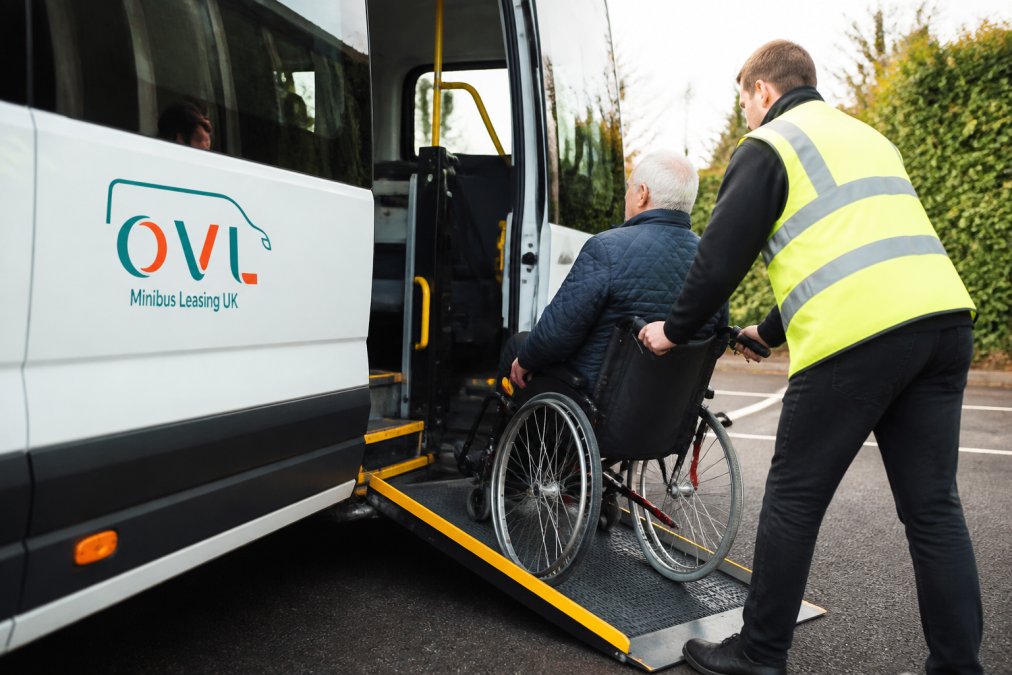
Wheelchair accessible minibus insurance is specialist cover designed for vehicles transporting passengers with mobility needs. Unlike standard van insurance, it protects the vehicle, wheelchair restraint systems, ramps or lifts, adapted interiors, and covers liability if a passenger is injured during transport, damage to mobility aids during loading, and replacement vehicle costs during repairs.
Standard car or van insurance explicitly excludes adapted vehicles and passenger transport, leaving you exposed to significant liability if a wheelchair is damaged or a passenger is injured due to restraint system failure.
Coverage extends to named drivers, carer support during transport, and public liability protection. Many policies include breakdown assistance trained to handle vehicles with wheelchair lifts or ramps.
Standard car or van insurance policies exclude commercial passenger transport. If your minibus is involved in an accident and a passenger's wheelchair is damaged, standard insurance won't cover the repair. If a wheelchair user is injured because a restraint system failed, you face a personal injury claim with no insurance backing. Professional adaptations like ramps or lifts aren't covered under regular policies.
Insurance companies treat adapted vehicles differently because they carry higher risk. A wheelchair restraint system failure during sudden braking could cause serious injury. A ramp malfunction during loading could trap someone or cause a fall.
The cost difference between standard and specialist cover is often smaller than expected. Insurers will assess your driver training, maintenance schedule for wheelchair restraint systems, and passenger safety procedures based on real accident data.
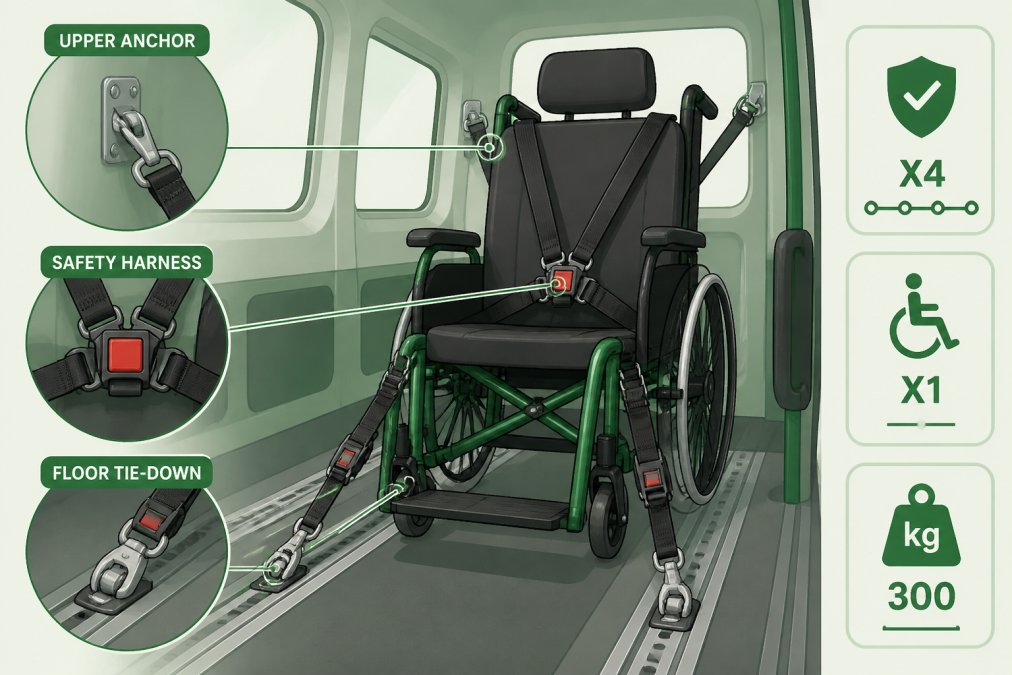
The UK safety standard BS 6109-1:2015 sets requirements for wheelchair restraint systems in passenger vehicles, specifying how restraints must be designed, tested, and installed to keep wheelchair users safe during normal driving, emergency braking, and collisions.
Insurance underwriters will ask whether your vehicle meets BS 6109-1:2015 compliance. If it doesn't, you'll be refused cover or quoted at significantly higher premiums. If leasing, request documentation proving compliance. If buying used, request proof before purchase.
The restraint system must be regularly inspected and maintained. Most insurance policies require annual certification that wheelchair restraints function correctly. Neglecting maintenance could invalidate your cover if an accident occurs.
For minibuses carrying multiple wheelchair users, each restraint point must be independently tested and certified. A common mistake is assuming that because one restraint is compliant, the others automatically are.
A D1 licence is required to drive a minibus carrying more than eight passengers (excluding the driver) in the UK. This is a separate category from standard car driving licences, and your insurance must reflect this.
Insurance underwriters will ask for proof of D1 licensing during quotation. If your driver has a D1 licence with suspension or penalty points, that affects the premium. If your driver lacks a D1 licence but drives a minibus with more than eight seats, your insurance is invalid and you're committing a driving offence.
For schools or care homes, you must ensure all drivers operating larger minibuses hold the appropriate licence. Insurance companies may require a list of named drivers with their licence categories.
The D1 licence requires medical check-ups every five years (or annually if over 65) and a Driver Certificate of Professional Competence (CPC). Insurers will verify these conditions.
A Section 19 permit (Community Bus Permit) is legally required if operating a minibus for passenger transport without charging a commercial fare. This applies to charities, schools, care homes, and community organisations providing free or subsidised transport.
The permit is issued by your local traffic authority and is specific to your organisation and vehicle. Insurance companies will ask whether you hold a Section 19 permit, and some refuse cover without one. The permit application typically takes 4-6 weeks.
Your insurance policy should explicitly state it covers vehicles operating under a Section 19 permit. Some general minibus policies exclude this coverage. When requesting a quote, ask directly: "Does this policy cover Section 19 permit operations?"
The permit must be displayed on your minibus, and you must carry a copy when operating. If stopped by a traffic officer without the permit, you're committing an offence. Insurance companies may refuse claims if you can't prove legal operation at the time of an incident.
For charities and community groups, Section 19 permits are typically free or low cost, but insurance implications are significant. Operating without a permit is illegal; operating without appropriate insurance is more serious.
Minibus insurance for charities is specialist because charities operate under different legal frameworks than commercial operators. You might run community transport schemes, day centre trips, or school transport, each with different insurance requirements.
Charities typically need Section 19 permits and insurance recognising their non-commercial nature. Standard commercial minibus insurance is designed for operators charging passengers, which changes the risk profile. Your insurer must understand you're providing a community service, not running a for-profit business.
Many charities operate on tight budgets, creating pressure for cheap insurance. This is false economy. Cheap mainstream policies often exclude key coverage you'll need, like protection for passengers with complex care needs or liability if a carer is injured.
Specialist insurers understand charity operations and typical accident patterns. They're more likely to offer flexible payment terms (monthly rather than annual upfront), helping with cash flow.
A typical claim might involve a passenger fall during boarding, wheelchair damage during loading, or driver injury helping a passenger. Mainstream insurance often denies these claims; specialist insurers expect them and have built them into pricing.
Get a Bespoke Quote or Speak to a Sector Specialist →
Insurance premiums for wheelchair accessible minibuses depend on multiple factors. Understanding these helps you anticipate costs and identify where you might reduce premiums.
Vehicle age and condition is primary. Brand-new vehicles with modern safety systems command lower premiums than older adapted minibuses. Leasing brand-new vehicles through Minibus Leasing Special Offers provides access to the latest models, typically reducing premiums compared to purchasing used adapted minibuses.
Driver experience and training significantly affects quotes. Drivers with professional transport qualifications, advanced driving courses, or clean records reduce premiums. Drivers with penalty points or previous accidents increase quotes. Insurers often offer discounts for wheelchair handling or passenger assistance training.
Annual mileage determines exposure. A minibus doing 5,000 miles annually costs less than one doing 50,000 miles for daily school transport. Be honest about expected mileage; underestimating could invalidate cover.
Number of passengers and seating configuration affects risk. A minibus with four wheelchair spaces and four standard seats differs from one with eight wheelchair spaces. Insurers want to know typical passenger numbers.
Wheelchair restraint system maintenance is often overlooked. Demonstrating professional annual inspections and certification often yields modest premium reductions. Neglecting maintenance increases premiums or results in refused cover.
Geographic location matters. Urban areas with frequent stops typically cost more than rural operations with longer main-road journeys. Your postcode and operating areas feature in calculations.
Claims history is crucial. Previous insurance claims increase premiums; no claims history improves terms. For new organisations, this is the most difficult factor to control.
| Factor | Impact on Premium | How to Reduce |
|---|---|---|
| Vehicle age | Older vehicles cost 20-30% more | Lease new vehicles instead of buying used |
| Driver experience | Clean records reduce cost 10-15% | Invest in driver training and qualifications |
| Annual mileage | Higher mileage increases cost proportionally | Consolidate trips or routes where possible |
| Wheelchair restraints | Certified systems reduce cost 5-10% | Schedule annual professional inspections |
| Geographic location | Urban areas cost 15-25% more | Consider route optimisation |
| Claims history | Previous claims increase cost 20%+ | Implement safety protocols to prevent incidents |
Obtaining insurance for a wheelchair accessible minibus requires a structured approach. Mainstream insurers often won't offer this type of cover.
Step 1: Gather vehicle documentation. Collect proof that your minibus meets UK safety standards, including the wheelchair restraint system compliance certificate (BS 6109-1:2015), vehicle registration documents, and adaptation details. If leasing, your leasing company should provide this.
Step 2: Identify specialist insurers. Search for insurers mentioning wheelchair accessible vehicles, adapted minibuses, or community transport cover. Specialist brokers focusing on minibus and community transport insurance are your best starting point.
Step 3: Prepare operational details. Document the number of passengers you'll typically carry, annual mileage, operating routes, and driver details (names, licence categories, driving history). Have this ready before contacting insurers.
Step 4: Request quotes from at least three providers. Different insurers price wheelchair accessible minibus cover very differently. Getting multiple quotes typically reveals a 20-40% range in premiums.
Step 5: Verify Section 19 permit coverage. Ask each insurer: "Does this policy cover Section 19 permit operations?" Get the answer in writing. Some policies exclude Section 19 operations entirely.
Step 6: Check driver requirements. Ask whether the insurer requires all drivers to hold a D1 licence (if your minibus has more than eight seats) or whether a standard car licence is acceptable. Ask about specific training qualifications or professional certificates.
Step 7: Review exclusions carefully. Check whether the policy covers damage to wheelchairs during loading, covers carers as well as drivers, and covers wheelchair restraint systems themselves. These exclusions vary significantly between insurers.

Step 8: Consider working with a specialist broker. Specialist minibus insurance brokers handle the legwork and already have relationships with insurers offering wheelchair accessible minibus cover, often negotiating better terms than direct approaches.
Step 9: Arrange annual reviews. Schedule annual reviews with your insurer. Circumstances change, mileage increases, drivers leave, vehicle age changes, and your insurance should reflect this. Annual reviews also give you opportunities to shop around and potentially reduce premiums.
Obtaining compliant wheelchair accessible minibus insurance requires understanding legal requirements and specialist underwriting realities. Proper insurance protects your organisation, drivers, and passengers.
If you're managing transport for a school, care home, charity, or community group, the complexity is solvable. Minibus Leasing UK specialises in helping organisations navigate these requirements. Our account managers have expertise in Section 19 permits, D1 licensing, wheelchair restraint standards, and insurance implications. We deliver brand-new, fully compliant vehicles with integrated insurance solutions, so you're not juggling multiple suppliers or worrying whether coverage matches your vehicle's specifications. Get a bespoke quote or speak to a sector specialist today to understand how we can simplify your fleet procurement and ensure your transport operation remains safe, legal, and cost-effective.
Yes, if your minibus carries more than eight passengers (excluding the driver), you need a D1 licence. This applies to most wheelchair accessible minibuses used for passenger transport. Your insurance provider must be informed of your D1 status, as this affects your cover and premium. Check your current driving licence category, if you only hold a standard car licence (category B), you cannot legally drive a minibus requiring D1 classification. Your insurer will verify this during underwriting.
Community minibuses require public liability insurance (compulsory), passenger liability cover, and comprehensive vehicle insurance. If operating under a Section 19 permit, your insurer must be notified and your policy must explicitly cover this use. You'll also need named driver cover for all regular operators and may require carer coverage if staff accompany passengers. Specialist insurers understand these requirements better than standard brokers and can ensure your policy includes all necessary protections.
Yes, wheelchair accessible minibuses typically cost more to insure than standard vehicles due to specialist adaptations, higher replacement costs, and increased liability exposure. The extent depends on the level of modification, the type of restraint systems fitted, and whether you're carrying passengers commercially or privately. Vehicles with professional conversions and certified wheelchair restraint systems may attract better premiums than self-converted vehicles, as they demonstrate compliance with safety standards.
When claiming for damage to wheelchair lifts, ramps, or restraint systems, your insurer must understand the replacement costs and technical specifications of these adaptations. Standard vehicle insurers often undervalue these components. Specialist insurers for adapted vehicles have established relationships with conversion specialists and can expedite repairs. Always document your vehicle's modifications and keep records of conversion certificates, this speeds up the claims process and ensures proper settlement for specialist parts.

