Aug 17, 2026
Last Updated: August 17, 2026
Wheelchair accessible minibus leasing has transformed how organisations across education, healthcare, and social care manage transport fleets. Leasing provides flexibility, compliance certainty, and predictable costs without capital commitment. The choice between leasing types depends on your operational model, cash flow position, and vehicle duration needs.
Understanding the core differences between finance leasing, operating leasing, and contract hire arrangements is essential before committing to any agreement.
A finance lease is a long-term arrangement where you essentially acquire the vehicle through the lease contract. You bear most risks and rewards of ownership: maintenance costs, insurance, and depreciation risk typically fall to you, though the lessor retains legal ownership.
An operating lease is a short-term rental arrangement. The lessor retains all ownership responsibilities, including maintenance, servicing, and insurance. Your payments cover vehicle use for a defined period, after which it's returned. Operating leases suit organisations needing flexibility or wanting to avoid maintenance responsibilities.
With a finance lease, you're committed to the full vehicle lifecycle, handling repairs and managing end-of-life disposal. With an operating lease, those concerns belong to the leasing company. For wheelchair accessible minibuses, this matters because accessible vehicles require specialist servicing and compliance checks that operating lease providers typically include in their service package.
Contract hire typically covers a 2-4 year term with fixed monthly payments. The leasing company retains ownership and includes maintenance, servicing, and roadside assistance. You're responsible for insurance and fuel.
Full-service leasing includes everything: maintenance, servicing, insurance, roadside assistance, and replacement vehicles during breakdowns. Your only variable cost is fuel. For care homes and educational institutions managing multiple vehicles, full-service leasing eliminates administrative burden and provides cost certainty.
The choice depends on your appetite for operational complexity. If your team prefers managing vehicle maintenance and insurance directly, contract hire works well. If you want specialists handling all vehicle management, full-service leasing is worth the premium.
Tax treatment of leasing differs fundamentally from ownership. When you lease a minibus, lease payments are generally treated as a business expense and offset against corporation tax, reducing your taxable profit. This applies across finance leases, operating leases, and contract hire arrangements.
According to HMRC's guidance on capital allowances for vehicles, leasing payments for business vehicles qualify as revenue expenditure, meaning they reduce your taxable income pound-for-pound in the year you incur them.
For organisations claiming corporation tax relief, this creates a meaningful advantage over ownership. When you buy a vehicle outright, you claim capital allowances over several years whilst carrying the asset on your balance sheet and managing depreciation. Leasing simplifies this: the payment is an expense, claimed in full in the year incurred.
Charities and non-profit organisations don't pay corporation tax, but still benefit from leasing's operational simplicity and the fact that lease payments are treated as legitimate charitable expenditure. The administrative burden of ownership, depreciation tracking, asset management, and disposal logistics is eliminated.
A D1 minibus licence is a legal requirement for anyone operating a minibus carrying more than 8 passengers in the UK. Understanding who needs one and when exemptions apply is essential for compliance and operational planning.
If your minibus carries 9-16 passengers (including the driver), you must hold a valid D1 minibus licence. This applies whether the vehicle is owned, leased, or hired. The DVLA issues D1 licences to drivers meeting medical standards, passing a practical driving test, and holding a valid car licence (category B).
Educational institutions transporting students, care homes moving residents, and charities operating community transport all need drivers with D1 licences. The responsibility sits with your organisation: you must ensure every driver operating the minibus holds the appropriate category.
If your lead driver leaves, you need a replacement driver with a D1 licence. Training a new driver takes time. Planning succession and maintaining a roster of qualified drivers is a hidden operational cost that leasing partners can help you navigate through their experience managing fleet compliance.
Exemptions exist but are narrower than many organisations assume. If your minibus carries exactly 8 passengers or fewer (excluding the driver), a standard car licence suffices. However, this severely limits operational capacity and isn't practical for most educational or care settings.
Community transport operations registered under Section 19 of the Transport Act 1985 can use standard car licences for certain journeys if they meet specific conditions, primarily operating on a not-for-profit basis and serving specific community groups. However, Section 19 registration itself is a regulatory requirement, and many organisations find the compliance burden substantial enough to justify professional leasing support.
According to DVLA guidance on minibus licences and exemptions, exemptions are tightly defined. If you operate a minibus carrying more than 8 passengers, assume you need D1 licensing unless you've explicitly registered for Section 19 exemption and documented your compliance with those conditions.
Whole life cost analysis compares the true cost of ownership versus leasing over the vehicle's operational lifetime. Most organisations focus only on monthly payments, missing hidden costs that ownership incurs.
When you purchase a minibus outright, costs include the capital purchase price, maintenance and repairs, servicing, insurance, MOT testing, depreciation, and disposal. For wheelchair accessible minibuses, maintenance costs are particularly significant because specialist servicing for lift mechanisms, accessible seating systems, and disability equipment adds 20-30% to typical servicing costs.
Leasing typically includes maintenance, servicing, and roadside assistance in the monthly payment. Your variable costs are fuel and insurance (in contract hire arrangements). This creates cost transparency: you know exactly what you're paying each month, with no surprise repair bills.
The whole life cost calculation depends on your specific circumstances. An organisation running a single minibus for 3 years might find leasing more expensive upfront but less risky operationally. An organisation running 10 minibuses for 5+ years might find ownership more economical, but only if they have in-house maintenance capability and accept the administrative burden.
When evaluating your options, Minibus Leasing Special Offers can help organisations model these scenarios using real operational data. The analysis typically reveals that leasing eliminates capital outlay, provides compliance certainty, and transfers operational risk to the leasing company. For most educational institutions and care providers, this trade-off justifies the arrangement.
Selecting the right leasing arrangement requires weighing multiple operational, financial, and compliance factors simultaneously. Getting this wrong can leave you with vehicles that don't meet your actual needs or leasing terms that create cash flow problems.
Get a Bespoke Quote or Speak to a Sector Specialist →
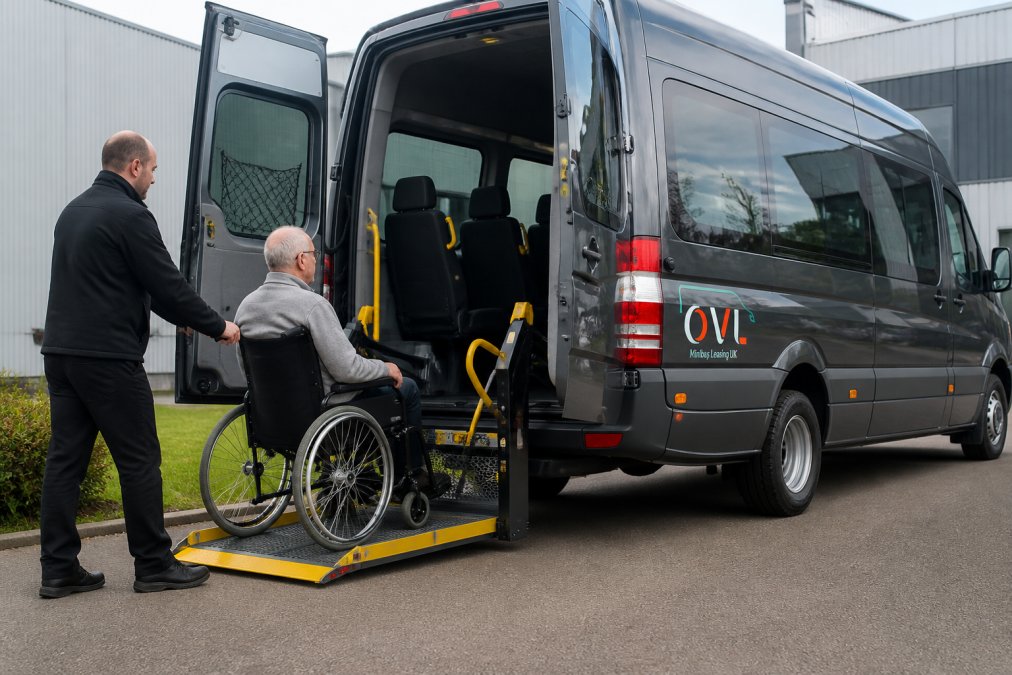
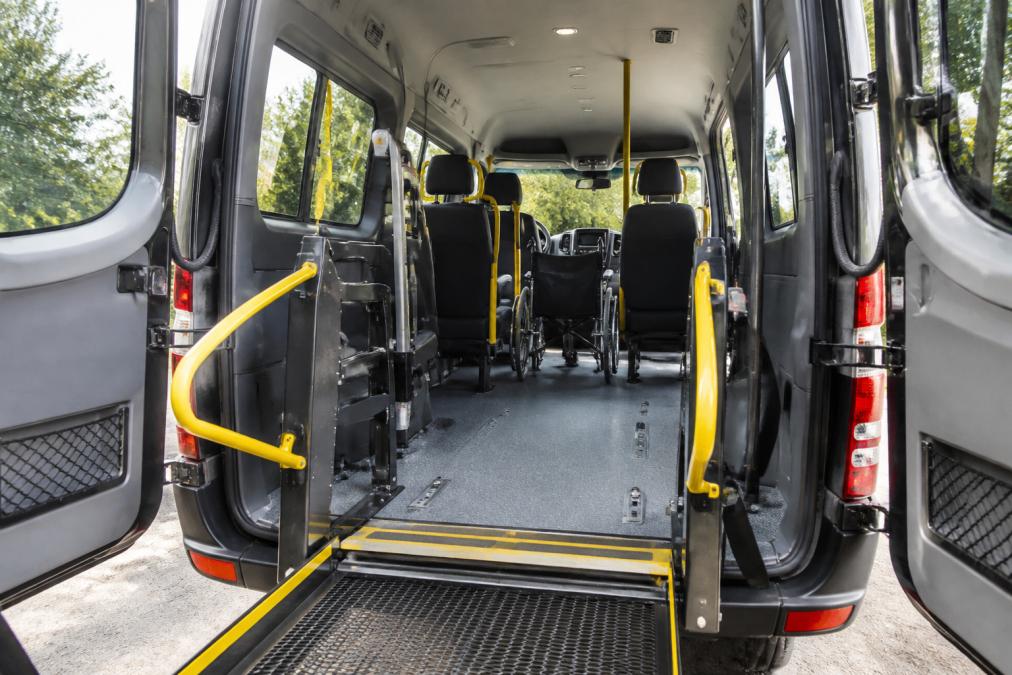
Wheelchair accessible minibuses vary significantly in their specifications. Some feature a rear-mounted lift; others use a side-mounted ramp. Some offer a single wheelchair space; others accommodate multiple chairs. Seating configurations, grab rail placement, and internal height clearance all affect usability for your specific passenger population.
Before committing to any leasing agreement, specify your accessibility requirements precisely. If you're transporting wheelchair users, define the number of spaces needed, preferred lift type, and any additional requirements like tail-lift height or internal width constraints. If you're transporting ambulatory passengers with mobility challenges, accessible seating height, grab rail positioning, and step-height become critical.

Compliance with the Equality Act 2010 requires that your vehicles don't discriminate against disabled passengers. A lift that's technically present but positioned incorrectly, or accessible seating that's uncomfortable or unsafe, creates legal exposure and operational failure.
Leasing companies experienced in wheelchair accessible minibus provision understand these nuances and can advise on which vehicle configurations work best for specific use cases.
A single minibus requires different leasing logic than a fleet of 10. With one vehicle, downtime due to maintenance or breakdown is catastrophic. With a fleet, you can absorb individual vehicle downtime.
Organisations running single vehicles often benefit from full-service leasing because it includes replacement vehicle provision during repairs. Organisations running larger fleets can absorb maintenance downtime more easily and might choose contract hire to reduce costs.
Your operational pattern also matters. If you run intensive scheduled routes (school runs, daily resident transport), you need high vehicle availability and rapid maintenance response. If you operate occasional journeys (community outings, specialist trips), you can tolerate longer repair windows.
Consider also your growth trajectory. If you're expanding from 2 minibuses to 5 over three years, a leasing partner who can scale with you, adjusting fleet size and maintaining consistent service quality, becomes valuable.
Leasing converts capital expenditure into operational expenditure. Instead of spending significant capital upfront per vehicle, you spread the cost across monthly payments. This preserves cash and improves balance sheet ratios, which matters if you're seeking funding or demonstrating financial stability to regulators.
However, leasing typically costs more in total than ownership over a long timeframe. The leasing company factors in their cost of capital, profit margin, and risk premium. If you have strong cash reserves and can absorb vehicle maintenance costs, ownership might be more economical. If you have constrained cash flow or prefer cost predictability, leasing is worth the premium.
Budget for variables beyond the lease payment. Insurance costs vary by vehicle specification and driver profile. Fuel consumption depends on route intensity and driving patterns. In full-service leasing, these variables are minimised. In contract hire, you're responsible for insurance, so factor that into your budgeting.
For organisations across the UK, leasing partnerships often include flexible payment terms and seasonal adjustment options. If your transport needs fluctuate (school holiday closures, summer camp periods), discuss whether your leasing agreement can accommodate temporary fleet size reductions.
Leasing companies assess eligibility based on organisational stability, credit history, and operational track record. The process is more simplified than vehicle financing but still requires documentation.
Most leasing providers require evidence of your organisation's legitimacy: registration documents for charities, company incorporation certificates for commercial entities, or establishment records for public sector organisations. They'll review your financial statements to assess stability and cash flow capacity.
For educational institutions and charities, the application process is typically straightforward if you're an established organisation with audited accounts. Newer organisations or those with inconsistent funding might face stricter requirements.
The application requires specification of exactly what you need: vehicle type, accessibility requirements, fleet size, lease term (typically 2-4 years), and preferred payment frequency.
According to FCA guidance on consumer credit for business leasing, some leasing arrangements fall under consumer credit regulation if they're structured as hire purchase agreements. If your arrangement includes a purchase option at lease end, ensure your leasing provider has appropriate FCA authorisation.
The timeline from application to vehicle delivery typically ranges from 2-6 weeks, depending on vehicle specification and leasing company workload. If you need vehicles urgently, discuss expedited delivery options upfront.
Choosing the right wheelchair accessible minibus leasing arrangement requires balancing compliance certainty, operational flexibility, and financial efficiency. The decision isn't one-size-fits-all: a school's needs differ fundamentally from a care home's, and a single-vehicle operation differs from a multi-site fleet.
The complexity of D1 licensing, Section 19 compliance, accessibility standards, and whole life cost modelling makes professional guidance valuable. Leasing partners with deep sector experience can navigate these requirements, ensure your vehicles meet actual operational needs, and structure agreements that protect your budget and operational capacity.
Get a bespoke quote from Minibus Leasing UK or speak to a sector specialist who understands education, care, and community transport. Our team combines regulatory expertise with practical operational knowledge to deliver wheelchair accessible minibus leasing solutions that work.
Contract hire is a fully managed leasing solution where the provider handles maintenance, insurance, and roadside assistance, ideal for organisations wanting predictable monthly costs with minimal administrative burden. Finance lease gives you greater control and potential tax advantages, as you own the vehicle at lease end, but you manage servicing and repairs. For wheelchair accessible minibuses, contract hire often suits care homes and charities prioritising operational simplicity, while finance lease appeals to larger operations with dedicated fleet management teams.
Tax relief on minibus leasing depends on your organisation type and lease structure. Operating leases typically allow businesses to claim the full lease payment as a tax-deductible expense against profits. Finance leases offer capital allowances on the vehicle's cost, reducing taxable income over time. Charities and non-profits may benefit from additional VAT exemptions on wheelchair accessible vehicles. HMRC rules vary by circumstance, so consulting your accountant before committing to a lease ensures you capture all available relief.
You need a D1 licence if the wheelchair accessible minibus carries more than eight passengers (excluding the driver) and is used for commercial purposes or public hire. Educational institutions, care homes, and charities transporting service users typically require D1 licensing for their drivers. Smaller organisations carrying eight passengers or fewer may operate under standard car licences (Category B), but must verify this with DVLA. Leasing providers familiar with wheelchair accessible minibuses can advise on your specific licensing requirements during the application process.
Whole life cost analysis compares the total expense of vehicle ownership or leasing over its lifetime, including purchase price, maintenance, fuel, insurance, tyres, depreciation, and potential downtime. For wheelchair accessible minibuses, factor in specialist servicing costs, accessibility feature maintenance, and potential modifications. Leasing typically simplifies this calculation because maintenance and repairs are included, making budgeting more predictable. Comparing whole life costs across leasing options helps identify the most cost-effective solution for your organisation's transport needs and cash flow position.

