
Aug 13, 2026
Last Updated: August 13, 2026
Minibus depreciation rates describe how quickly a vehicle loses its market value over time. For organisations operating school transport, care home services, or commercial fleets, depreciation directly impacts your bottom line.
Understanding depreciation matters because it determines your true cost of ownership. A minibus that costs £45,000 to purchase doesn't cost £45,000 to operate. The real expense includes the gap between what you paid and what you can eventually sell it for, spread across every year you own it. That gap is depreciation, and it's often larger than fuel, insurance, or maintenance combined.
Organisations that manage depreciation effectively by understanding what drives it, calculating its tax implications, and timing replacement cycles strategically consistently spend less per vehicle over its lifetime. Those that ignore it often discover too late that their "reliable old minibus" has become a liability disguised as an asset.
Depreciation affects your balance sheet, tax position, and operational budget. It shapes fleet replacement decisions and determines how much capital you can recover when you eventually exit a vehicle. The challenge is that minibus depreciation rates vary significantly based on factors you can control and factors you cannot. A well-maintained minibus with low mileage holds value far better than a neglected one. Understanding these variables lets you make decisions that minimise depreciation impact rather than simply accepting it as inevitable.
Depreciation isn't random. Specific, measurable factors determine how quickly your minibus loses value.
A new minibus depreciates fastest in its first year, typically losing 15-20% of its value immediately, reflecting the shift from "new" to "used" status. Mileage compounds this effect. A five-year-old minibus with 40,000 miles holds significantly more value than one with 120,000 miles. Vehicles exceeding 12,000-15,000 miles per year depreciate faster. For school transport and care home operations, mileage often stays moderate and predictable, whereas commercial crew vans typically accumulate higher mileage, accelerating depreciation.
The relationship between age and mileage creates a depreciation profile. A vehicle that's five years old but lightly used depreciates differently from one that's three years old but heavily used. Buyers assess both metrics together, and your fleet's actual usage patterns directly influence residual value.
Depreciation doesn't follow a straight line because vehicle demand fluctuates. When fuel prices spike, smaller vans become more desirable and hold value better. When the used minibus market is saturated, prices fall. Economic cycles affect demand: during recessions, organisations delay fleet replacement, flooding the market with older vehicles and depressing residual values.
The minibus market is particularly sensitive to regulatory changes. New accessibility requirements or emissions standards can suddenly make older models less desirable. Supply chain disruptions and new vehicle availability also influence the second-hand market. When new minibus production is constrained, used vehicles command higher prices. Seasonal demand matters too: school transport minibuses are in higher demand at the start of academic years.
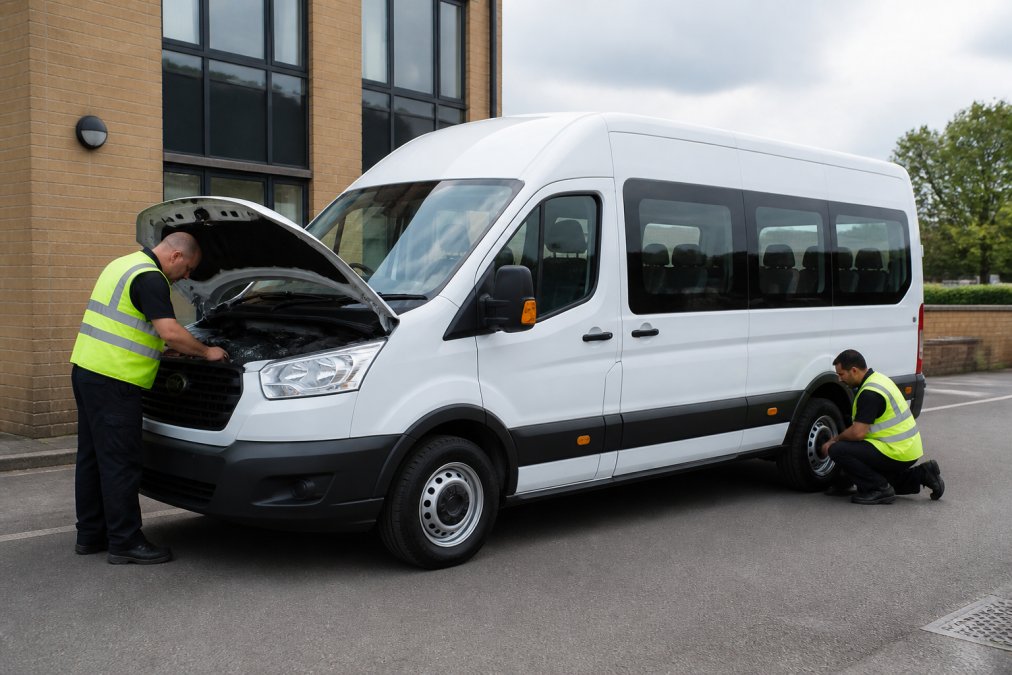
A meticulously maintained minibus depreciates slower than a neglected one, even if both are the same age and mileage. A vehicle with documented full-service history commands 10-15% higher residual value than one with patchy records. Preventative maintenance directly protects residual value by replacing components before failure and addressing corrosion promptly.
Accident history, even if repaired, reduces residual value. Buyers perceive repaired damage as a hidden risk. A minibus with a clean history holds value significantly better than one with disclosed damage. For care home and educational minibuses, accessibility features like wheelchair lifts and ramps require particular attention. A non-functional accessibility feature dramatically reduces residual value because potential buyers face expensive repairs.
Depreciation is the largest hidden cost in fleet ownership. Many organisations focus on purchase price and monthly running costs but underestimate depreciation's true impact.
Consider a minibus purchased outright for £50,000. Over five years, it depreciates to £18,000. The total cost of ownership isn't £50,000, it's £32,000 (the difference), spread across five years. That's £6,400 per year in depreciation alone. If the minibus actually depreciates to £15,000 instead, the true annual cost jumps to £7,000. That £600-per-year difference, multiplied across a fleet of ten vehicles, becomes £6,000 annually, a material budget variance.
Whole life cost analysis requires accounting for depreciation from day one. It's not just about purchase price or running costs. It's about the total economic impact of owning a vehicle from acquisition to disposal. Organisations that ignore depreciation in their financial planning consistently overspend.
Fleet whole life cost analysis is the practice of calculating the true economic cost of vehicle ownership across its entire operational lifespan. It includes purchase price, depreciation, fuel, maintenance, insurance, tax, and compliance costs.
Many organisations make fleet decisions based on purchase price alone. A minibus that costs £2,000 less upfront seems like a bargain, but if it depreciates faster, requires more maintenance, or fails to meet regulatory requirements, that initial saving evaporates within two years. Whole life cost analysis reveals the actual economics. A more expensive minibus with better residual value, lower maintenance costs, and superior fuel efficiency often delivers lower total cost of ownership than a cheaper alternative.
For education, care, and commercial sectors, whole life cost analysis is essential because fleet vehicles are operational assets. Depreciation is typically 40-50% of whole life cost for a minibus. If you're not accounting for it accurately, you're missing half the financial picture. Organisations that perform rigorous whole life cost analysis consistently make better fleet decisions.
In the United Kingdom, vehicle depreciation has direct tax consequences. The way you account for depreciation on your balance sheet and the tax relief available to you are governed by HMRC rules and your organisation's accounting treatment.
If your organisation purchases a minibus as a business asset, you may be eligible for capital allowances. The Annual Investment Allowance (AIA) allows businesses to claim tax relief on capital expenditure up to a threshold, meaning you can deduct the full cost of a minibus from your taxable profits in the year of purchase, rather than spreading the deduction across multiple years.
Get a Bespoke Quote or Speak to a Sector Specialist →
For vehicles exceeding the AIA threshold or when the allowance is fully utilised, writing-down allowances apply. These allow you to claim tax relief on the depreciation of the vehicle over its useful life. The useful life for minibuses is typically 5-10 years, depending on usage and condition. The HMRC guidance on capital allowances distinguishes between plant and machinery (which qualifies for allowances) and general assets. Most minibuses qualify as plant and machinery, making them eligible for relief.
Under UK Generally Accepted Accounting Practice (GAAP), you must record depreciation on the profit and loss account each year, reflecting the vehicle's declining value. The calculation typically follows this approach: take the vehicle's cost, subtract its estimated residual value, divide by the useful life in years. For example, a minibus costing £50,000 with an estimated residual value of £15,000 and a five-year useful life would record annual depreciation of £7,000.
The residual value estimate is critical. If you underestimate residual value, you'll overstate depreciation and claim excess tax relief. If you overestimate it, you'll understate depreciation and miss available relief. Using realistic residual values based on market data ensures accurate tax treatment.
For organisations subject to Corporation Tax, the depreciation recorded in your accounts doesn't directly reduce taxable profit. Instead, you claim capital allowances separately. These allowances follow HMRC rules, which may differ from your accounting depreciation. For unincorporated businesses, depreciation treatment varies. Consulting with an accountant familiar with HMRC rules for your business structure ensures you claim all available relief.
Depreciation is inevitable, but its impact on your budget isn't. Several strategies help organisations minimise depreciation losses and optimise fleet economics.
The strongest depreciation mitigation is preventative maintenance. A minibus that receives regular servicing, component replacement before failure, and prompt repairs depreciates slower and holds residual value better. Establish a maintenance schedule aligned with the manufacturer's recommendations. Document every service and repair. When you eventually sell the vehicle, a complete service history is worth 10-15% in additional residual value.
Address corrosion promptly. Regular undercarriage washing, prompt repair of paint chips, and protective coatings on vulnerable areas extend the vehicle's life and preserve appearance. Interior condition matters as much as mechanical condition. Regular cleaning, prompt repair of damage, and professional detailing before sale protect residual value. For care home and educational minibuses, accessibility features require particular attention. A non-functional accessibility feature dramatically reduces residual value.

Strategic timing of fleet replacement minimises depreciation impact. Vehicles depreciate fastest in their first 2-3 years, then more slowly thereafter. Selling a minibus at four to five years old, before major component failures become likely, often recovers better residual value than holding it until seven or eight years old.
Analyse your fleet's depreciation profile by tracking what vehicles are worth at various ages and mileages. Use this data to determine optimal replacement timing. Data-driven replacement cycles typically deliver better economics than fixed schedules. Consider market timing: selling during peak demand maximises residual value. Batch replacements can improve negotiating power with suppliers and potentially better pricing for disposal of older vehicles.
Leasing transfers depreciation risk from your organisation to the lessor. When you lease a minibus, you pay a fixed monthly fee that can include depreciation, maintenance, insurance, and roadside support. You avoid the uncertainty of residual value.
This matters because depreciation is unpredictable. Market conditions, regulatory changes, or unexpected damage can reduce residual value faster than anticipated. A lease insulates you from that risk. Your budget is fixed; costs are predictable. For organisations with limited capital, leasing preserves cash flow. Rather than investing £50,000 in a minibus that depreciates, you spread costs across the lease term. This is particularly valuable for charities, non-profits, and SMEs operating on tight budgets.
Leasing can also simplify fleet management. The lessor can handle maintenance, insurance, and vehicle replacement. Your organisation focuses on operations, not asset management. At Minibus Leasing UK, we structure leases to include maintenance and compliance management, removing the depreciation calculation burden from your team entirely. You know your monthly cost; we manage the vehicle's value and condition. Our Minibus Leasing Special Offers provide flexible terms tailored to education, care, and commercial sectors, helping you optimise fleet costs without the depreciation risk.
Understanding minibus depreciation rates transforms how you approach fleet decisions. Depreciation is the largest cost component in vehicle ownership. Organisations that account for it accurately, maintain vehicles proactively, and time replacements strategically spend significantly less per vehicle over its lifetime.
The question isn't whether depreciation matters. It's whether you're managing it strategically or simply accepting it as inevitable. Minibus Leasing UK specialises in whole life cost analysis and fleet management for education, care, and commercial sectors. We help organisations understand their true cost of ownership and make data-driven decisions about purchase versus lease. Get a bespoke quote or speak to a sector specialist to see how optimising depreciation strategy can reduce your fleet costs.
| Factor | Impact on Depreciation | Mitigation Strategy |
|---|---|---|
| Vehicle age | Fastest in first 2-3 years | Replace at optimal cycle (4-5 years) |
| Mileage | High-use vehicles depreciate faster | Monitor usage; align with expectations |
| Maintenance history | Well-maintained vehicles hold value | Document all servicing; perform preventative maintenance |
| Market demand | Fluctuates with economic conditions | Time sales during peak demand periods |
| Accident history | Significantly reduces value | Maintain safe driving standards; repair promptly |
| Regulatory compliance | Non-compliance reduces residual value | Update vehicles to meet current standards |
| Specification features | Care/education features vary in demand | Choose features aligned with buyer demand |
Minibuses typically depreciate fastest in their first year, losing 15-20% of purchase value immediately. Over three to five years, annual depreciation rates stabilise at 10-15% per year, depending on mileage, maintenance, and market demand. Commercial minibuses used in education and care sectors often hold value better than those with high mileage or poor maintenance records. Understanding these depreciation curves helps you plan accurate whole life cost forecasts for your fleet.
The primary factors are vehicle age, accumulated mileage, maintenance history, and market demand. A minibus with comprehensive service records and low mileage retains value far better than one with sporadic maintenance. Specialist features, such as wheelchair-accessible conversions or D1-licensed configurations, can either enhance or limit resale appeal depending on market conditions. Fuel type and emissions standards also affect residual value as regulations evolve.
HMRC allows businesses to claim capital allowances on vehicle purchases through the Annual Investment Allowance (AIA) or writing-down allowances. For minibuses, you can typically claim a first-year allowance followed by writing-down allowances on the reducing balance method. The actual depreciation you experience may differ from the tax relief available, which is why whole life cost analysis matters. Consult your accountant to ensure you're claiming all eligible allowances against your tax liability.
Yes. When you lease, depreciation risk transfers to the leasing company, and you avoid the uncertainty of residual value fluctuations. Your monthly costs are fixed and predictable, incorporating maintenance, servicing, and roadside assistance. For organisations with tight budgets or those needing regular fleet updates to meet compliance standards, leasing eliminates the capital outlay and the exposure to market-driven depreciation volatility. This approach often results in lower total cost of ownership over the lease term.

