Sep 21, 2026
Last Updated: September 20, 2026
A crew van interior built around how you actually work saves time on every job, and time is the one cost you cannot quote back to a customer. At Minibus Leasing UK, we procure and manage crew vans for commercial teams, and the pattern is consistent: the vans that earn their keep are the ones specified around the tools they carry, not the ones with the longest extras list.
Crew van interior customization is the process of adapting a van's load area, lining, lighting and security to suit a specific trade, rather than accepting the standard factory fit. For tradesmen, that means racking that matches your kit, a lining that survives knocks, and a layout that keeps the most-used tools within arm's reach.
Get it wrong and you pay twice: once for the fit-out, and again in lost minutes every single day.
Racking is the single highest-impact upgrade you can make. A well-planned system holds tools in fixed positions, so nothing shifts under braking and you can find a specific item without climbing into the load bay.
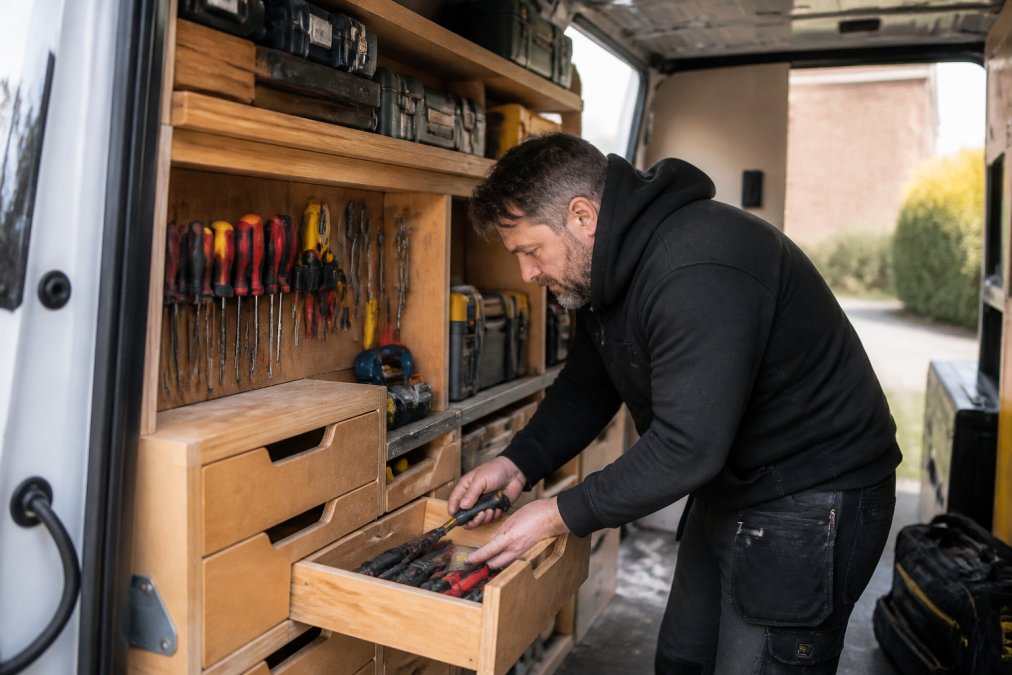
Shelving suits bulky, light items: conduit, pipework, cable drums, sheet material offcuts. Drawers suit small, heavy, high-value items that need to stay put and stay hidden. Modular systems let you reconfigure as your work changes, which matters if you take on different jobs season by season.
Load your heaviest items low and over the rear axle, never high and behind the bulkhead. An overloaded or badly balanced van handles poorly and puts you on the wrong side of the law.
Ply, plastic and composite linings each solve a different problem, and the right choice depends on what you carry. Ply is the traditional option: cheap, easy to fix to, and simple to replace panel by panel. It dents, and it soaks up moisture if it is not sealed.
Plastic linings resist water, oil and most chemicals, and they wipe clean, which suits wet trades. Composite panels cost more but hold their shape and take knocks better than either alternative.
| Lining | Best For | Trade-off |
|---|---|---|
| Plywood | General trades, easy fixing | Dents and absorbs moisture |
| Plastic | Wet trades, easy cleaning | Less rigid under impact |
| Composite | Heavy daily use | Higher upfront cost |
Whichever you choose, seal the edges and fix through the ribs, not just the panel face.
This is where a lot of tradesmen get caught out, and it is worth understanding before you spend anything. Broadly, HMRC treats a van as a goods vehicle, and the tax treatment of a van benefit depends on whether the vehicle is primarily for carrying goods rather than passengers. Racking, lining and internal fit-out are generally treated as part of the working vehicle rather than a separate benefit, but the position changes if the van is available for private use.
Check the current position directly with HMRC guidance on van benefits and expenses before you commit to a specification, because the rules on private use, fuel and benefit reporting are detailed and updated periodically.
If you lease rather than buy, the treatment can differ again, which is one reason a whole life cost analysis matters more than the headline rental figure.
Good lighting is not a luxury when you are working out of the back of a van in a Northampton winter at four in the afternoon. LED strip lights wired to the leisure battery draw very little and can run for hours without touching the starter battery.
Get a Bespoke Quote or Speak to a Sector Specialist →
For power, a split-charge system keeps a separate battery topped up while you drive, so you can run chargers, a kettle or test equipment on site. Add an inverter if you need mains voltage, and size it against the actual draw of your tools rather than the maximum rating on the box.
Tool theft is the risk that keeps tradesmen up at night, and standard factory locks are not the answer. Layer your security so that defeating one measure does not give access to everything.
Fit deadlocks to the cab and rear doors, add a lockable bulkhead or a steel mesh partition, and consider an alarm with a tilt sensor that triggers if the van is jacked up or towed. Mark your tools and record serial numbers; marking makes stolen equipment harder to sell on and easier to return.
Layout should follow frequency of use, not alphabetical order. The tools you reach for twenty times a day belong at waist height near the rear doors. The ones you use once a week can live higher or deeper.
A common mistake is filling every available space on day one. Leave roughly a fifth of your racking empty so the van can absorb the odd extra job, a new tool, or a customer's part that needs collecting.
For teams running several vans, standardising the layout across the fleet pays off: any driver can step into any vehicle and know where everything is. That is the kind of detail we build into fleet specifications at Minibus Leasing UK, alongside the compliance and cost analysis that sits behind a sensible vehicle choice.
If you are weighing up whether to lease or keep patching up an ageing van, our guidance on vehicle procurement and whole life cost approach is worth comparing against your current repair spend. It is also worth checking our Minibus Leasing Special Offers before you commit, as current leasing deals can change the maths on a new crew van considerably.
Specifying a crew van interior is a genuine operational decision, not a cosmetic one, and it is easy to get wrong when you are buying racking, lining and security separately. Minibus Leasing UK handles crew van procurement as a single, consultative process, with dedicated account managers, whole life cost analysis, and brand-new vehicles specified to your trade rather than to a generic template. If you want a fit-out that matches how your team actually works, get a bespoke quote or speak to a sector specialist and we will build the specification around your jobs.
Crew van conversions must comply with UK construction and use regulations. Any modifications should not compromise the vehicle's structural integrity or safety features. If you carry passengers, you may need a Section 19 permit or D1 licence depending on the vehicle and use case. Keep records of all modifications and ensure your insurance provider is informed. For tailored advice on compliant crew van leasing, speak to a specialist provider.
Use custom crew van racking systems that are bolted to the floor and walls, keeping heavy items low and secure. Avoid blocking windows or exits. Distribute weight evenly and ensure all tools are restrained. Modular shelving and drawers help you use vertical space without overloading one side. Always check that your layout does not affect the vehicle's payload capacity or handling.
HMRC van tax rules for modifications depend on whether the vehicle remains a commercial vehicle. If modifications change its classification, you may face different benefit-in-kind or VAT treatment. Generally, racking and lining that support the trade use are fine, but significant changes like adding windows or seats could alter its status. Consult HMRC guidance or a tax adviser to ensure compliance.
Ply lining is the most common choice for UK tradesmen because it is tough, easy to repair, and cost-effective. Plastic linings offer better water resistance and are easier to clean, ideal for wet trades. Composite panels provide a balance of light weight and strength. Choose based on your trade: ply for general use, plastic for food or wet work, and composites for high-impact environments.

