
Sep 22, 2026
Last Updated: September 21, 2026
Choosing between electric crew van leasing vs diesel comes down to three things: daily mileage, payload, and where you can charge or refuel. Electric crew vans win on running costs and tax treatment for short, predictable routes. Diesel still wins on range, towing, and rapid refuelling for long or unpredictable work.
At Minibus Leasing UK, we run whole life cost analysis for operators across Northampton and the wider United Kingdom, and the pattern is consistent: the vehicle that suits your routes beats the vehicle with the better brochure figures.
| Factor | Electric Crew Van | Diesel Crew Van |
|---|---|---|
| Energy cost per mile | Lower | Higher |
| Range per fill/charge | Shorter | Longer |
| Refuelling time | 30-60+ minutes | 5-10 minutes |
| Payload capacity | Often lower | Often higher |
| HMRC benefit-in-kind | Favourable rates | Higher rates |
| Clean Air Zone charges | Usually exempt | Daily charge applies |
| Best for | Fixed urban routes | Long or variable routes |
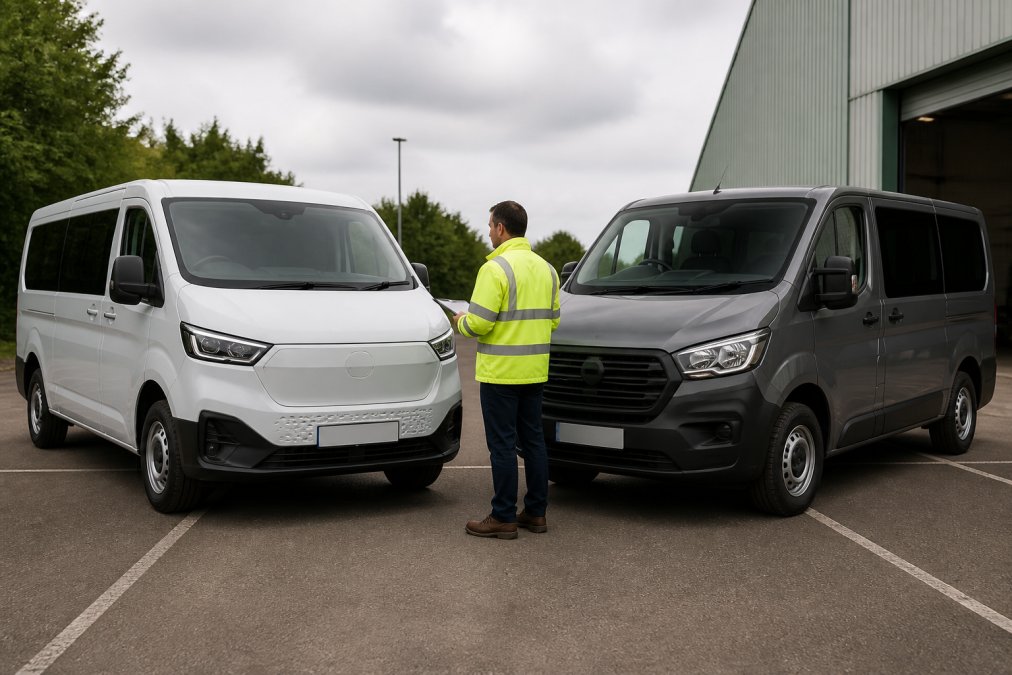
The table above is a starting point, not a verdict. The sections below break down each option honestly, including where each one falls short.
The strongest case for an electric crew van is cost per mile on short, repeatable routes. If your crews return to base each evening, charging becomes a scheduling task rather than a problem.
Pros:
Cons:
Electric crew vans suit operations with fixed daily routes under the vehicle's safe working range, a base where vans return overnight, and access to depot charging. Think school runs, care home transport, and local authority maintenance rounds. If your routes are predictable and your depot has power, the running cost case is strong.
Diesel remains the practical choice when range and refuelling speed matter more than energy cost. A diesel crew van refuels in minutes and holds its range under load, which matters for reactive or multi-site work.
Pros:
Cons:
Diesel still makes sense for long-distance crews, towing, high-payload work, and routes with no reliable charging. If a van cannot complete its daily round on a single charge with a safety margin, diesel removes that risk entirely.
Benefit-in-kind rules are where electric and diesel crew van leasing diverge most for UK businesses. HMRC applies a benefit-in-kind charge when a company van is available for an employee's private use, and the rates differ by fuel type.
For 2026, HMRC publishes separate benefit-in-kind values for zero-emission and conventionally fuelled vans, and the zero-emission figure is significantly lower. Because these rates change and depend on your specific circumstances, check the current figures directly with HMRC's guidance on van benefit and fuel benefit before you build them into a budget.
The practical point: the tax saving on an electric crew van is real, but it is one line in the whole life cost calculation, not the whole argument. Treat it as a factor, not a decision.
Get a Bespoke Quote or Speak to a Sector Specialist →
Whole life cost analysis compares everything a vehicle costs across the lease term, not just the monthly rental. For crew vans, that means energy or fuel, maintenance, tyres, insurance, tax, and downtime.
A simple framework we use with clients:
The mistake most operators make is comparing monthly rentals side by side. A cheaper rental can cost more over three years once energy, tax, and downtime are counted. This is exactly the analysis Minibus Leasing UK builds for education, care, and commercial fleets, so the decision rests on your numbers rather than a headline rate.
Clean Air Zones affect the diesel case directly. Several UK cities operate Clean Air Zones that charge non-compliant vans a daily fee to enter, and the rules and charge levels vary by city. You can check the current scheme and charges through GOV.UK's Clean Air Zone guidance.
For fleets running regular routes into a charging city, the daily charge stacks up fast across a lease term. Electric vans are generally exempt, which can shift the whole life cost calculation in their favour even when the rental is higher.
Northampton sits well placed for Midlands routes, but many operators here run into cities with active Clean Air Zones. If your crews cross into a charging zone daily, model that exposure before you sign. For Northampton-based fleets weighing electric crew van leasing against diesel, the deciding question is often which routes touch a charging zone and how often.
Match the fuel type to the route, then match the lease to the operation. Use this decision guide:
If you are unsure, the honest answer is that a mixed approach often works best, with electric vans on predictable local runs and diesel covering the long legs. Minibus Leasing UK can run that comparison for your specific routes and headcount, and our current Minibus Leasing Special Offers are worth checking before you decide.
The challenge with crew van leasing is that the right answer depends entirely on your routes, mileage, and payload, not on which fuel type is trending. Minibus Leasing UK specialises in tailored fleet procurement for education, care, community, and commercial operators, backed by whole life cost analysis, dedicated account managers, and compliance expertise including Section 19 permits and D1 licensing. Get a bespoke quote or speak to a sector specialist to find the crew van lease that fits your operation.
Fully electric crew vans meet the emission standards for every UK Clean Air Zone, including London's ULEZ, so they pay no daily compliance charge. Diesel crew vans must meet Euro 6 standards to avoid charges; older models that fail the standard face daily fees in cities like London, Birmingham, Bristol and Sheffield. For fleets running regular routes into these zones, electric crew van leasing removes that cost and the admin of checking compliance before each trip.
For 2025/26, HMRC sets the van benefit-in-kind charge at a fixed amount for diesel crew vans, while zero-emission vans are charged at 0% of that figure. Fully electric vans also qualify for the lowest company car tax bands if used for private mileage, and employers pay reduced Class 1A National Insurance on the benefit. Leasing an electric crew van therefore lowers both the employee's tax bill and the employer's NIC liability compared with diesel.
Most electric crew vans on the UK market cover roughly 150 to 250 miles on a full charge, depending on payload, weather and driving style. Diesel crew vans typically exceed 500 miles per tank and refuel in minutes. If your crews regularly cover long inter-site distances or work in areas with sparse charging, diesel remains the practical choice. For fixed local routes with depot charging, an electric crew van covers the working day comfortably.
Capital allowances apply to purchased vehicles, not leased ones. When you lease an electric crew van, you normally deduct the rental payments as a business expense instead. For diesel crew vans, the deductible amount is restricted if the vehicle's CO2 emissions exceed the HMRC threshold. Because electric vans have zero emissions, the full lease rental is generally allowable, which can improve your taxable position compared with a diesel lease.

