Oct 11, 2026
Last Updated: October 10, 2026
Electric crew vans for urban logistics fleets are becoming essential for businesses operating in cities. They cut emissions, reduce fuel costs, and help meet local air quality standards. At Minibus Leasing UK, we work with logistics operators who are making this transition.
Urban centres now face stricter emission regulations. Many cities impose congestion charges or access restrictions on older diesel vehicles. Electric crew vans sidestep these penalties entirely. They're also quieter, which matters when you're making early-morning deliveries in residential areas.
The real advantage isn't just environmental. Teams using electric crew vans report lower running costs and simpler maintenance. No oil changes, fewer moving parts, and predictable energy expenses. For operations based in Northampton or other urban areas, this means faster payback on the investment.
Key reasons fleets are switching:
But there's a catch: electric crew vans work best when you understand their limits. Range, payload, and charging infrastructure all matter. Get these wrong and your fleet sits idle.
Electric van range and payload capacity determine whether these vehicles suit your operation. Most modern electric crew vans deliver 200-300 miles of real-world range on a full charge. That's enough for typical urban logistics routes, but you need to plan carefully.
Payload is where many operators get surprised. Electric crew vans typically carry 1,000-1,500 kg of cargo, compared to 2,000+ kg for diesel equivalents. The battery adds weight, which cuts into what you can load. If your crews regularly max out a diesel van, you'll need more electric vehicles to move the same volume.
Real-world range drops in winter and with heavy loads. A van rated for 250 miles might deliver 200 miles in January with a full cargo bay. Plan routes with a 20% safety margin, and you'll avoid stranded crews.
Range and payload checklist:
The solution is matching vehicle specs to actual usage. A crew van rated for 250 miles works fine for 150-mile routes with regular charging stops. Northampton-based logistics teams often find that mid-range electric crew vans cover their city and suburban routes without stress.
Electric van fleet management requires different thinking than diesel operations. You're not just fuelling vehicles, you're managing charging schedules, battery health, and energy demand.
Start by auditing your current fleet usage. How many miles does each vehicle cover daily? When do crews return to base? These patterns determine your charging strategy. A crew that works 8am-5pm can charge overnight. A 24-hour operation needs different infrastructure.
Battery degradation is gradual and predictable. Most electric crew vans retain 80-90% capacity after five years of normal use. Plan for this when calculating whole-life costs. Minibus Leasing UK builds battery health monitoring into our fleet management approach.
Integration with existing systems matters too. Your telematics platform, maintenance schedules, and driver training all need updating. Crews need to understand charging protocols, and maintenance teams need training on electric drivetrains.
Fleet management essentials:
Many operators underestimate the organisational change required. It's not just plugging in vehicles, it's rethinking how you plan routes, schedule downtime, and track vehicle health.
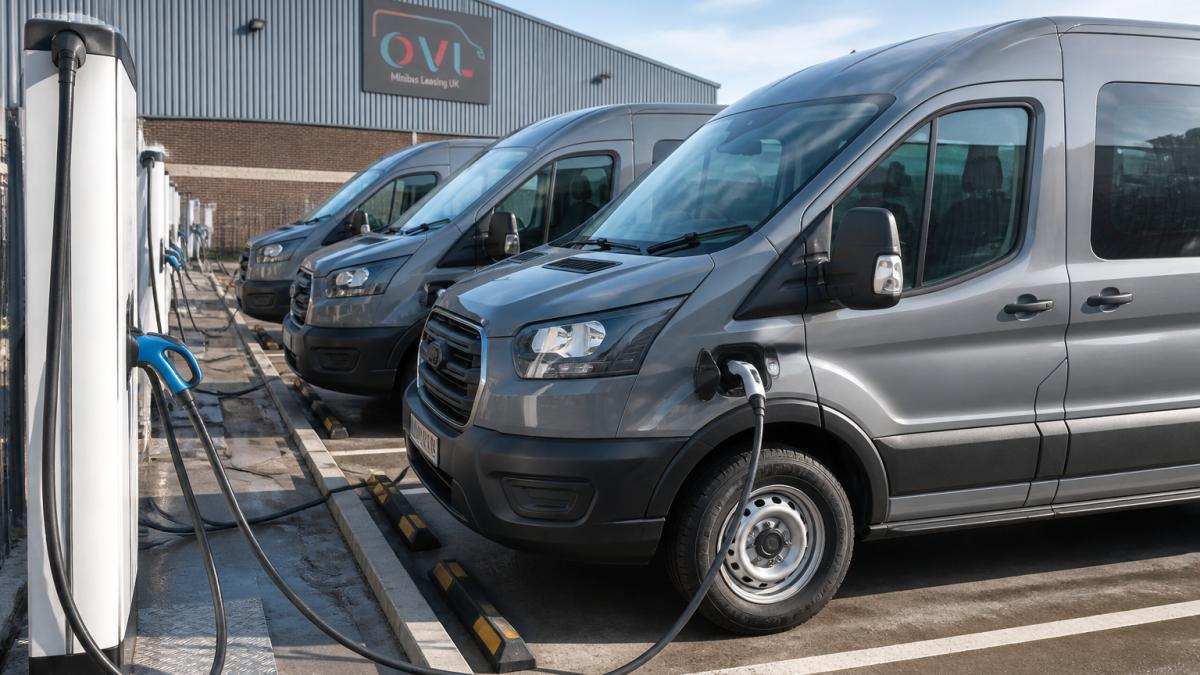
Electric van charging for fleets is the backbone of your operation. Without reliable charging, electric crew vans become expensive paperweights. You need a strategy that matches your fleet size, route patterns, and budget.
Three charging options exist: home charging (slow), workplace charging (medium), and public rapid charging (fast). For fleet operations, workplace charging at your depot is usually the foundation. Overnight charging tops up vehicles for the next day's work.
Rapid charging helps on longer routes. A 30-minute charge adds 100-150 miles to most electric crew vans. This works well for crews that drive to a site, work there, and return. It doesn't work for continuous multi-stop delivery routes where stopping for 30 minutes isn't practical.
Power demand is critical. Adding 20 electric crew vans to your depot means significant new electrical load. You may need to upgrade your supply or install a managed charging system that staggers charging to avoid peak demand spikes. This planning should happen before you order vehicles.
Charging infrastructure checklist:
Public charging networks across the UK are expanding, but coverage remains patchy outside major cities. Northampton has growing infrastructure, but you can't rely on it entirely. Build a strategy around your depot as the primary charging hub.
Crew van leasing offers a sensible path into electric vehicles without the capital risk of ownership. Rather than buying vehicles outright, you pay a monthly fee for brand-new equipment, maintenance, and support.
Leasing works particularly well for fleet transition. You can start with a small pilot, perhaps two or three electric crew vans, and test them alongside your existing diesel fleet. If they work, you scale up. If they don't suit your operation, you're not stuck with depreciating assets.
Get a Bespoke Quote or Speak to a Sector Specialist →
The financial model is cleaner too. Leasing spreads costs predictably. You know your monthly expense upfront. No surprises from battery degradation, unexpected repairs, or resale value uncertainty. Minibus Leasing UK provides whole-life cost analysis so you understand the true cost of each vehicle option.
Leasing also means access to the latest technology. As electric vans improve, longer range, faster charging, lower weight, you can upgrade your fleet without holding obsolete equipment. For rapidly evolving technology like electric vehicles, this flexibility matters.
Leasing advantages for electric crew vans:
Many operators worry about being locked into a long contract. Quality leasing partners offer flexibility. Check what happens if your business needs change, or if a vehicle doesn't suit your operation. Minibus Leasing UK works with logistics teams to build leasing arrangements that fit your actual needs, not a template.
Whole-life cost analysis compares the true cost of electric versus diesel crew vans over their entire working life. It's not just purchase price, it includes fuel, maintenance, taxes, and residual value.
Electric crew vans cost more upfront. But fuel costs are dramatically lower. Charging costs roughly one-third of diesel fuel per mile. Maintenance is simpler: no oil changes, spark plugs, or exhaust systems. Brake wear is reduced because electric motors do most of the stopping.
Over five years, the total cost of ownership often favours electric vehicles, even accounting for higher purchase price. The payback depends on your annual mileage, local electricity costs, and fuel prices. High-mileage fleets see faster payback.
Tax treatment matters too. Electric vehicles attract different rates and allowances under UK tax rules (Claim capital allowances: Business cars). Consult HMRC guidance on capital allowances and business use to understand your specific position. Leasing can simplify this, your provider handles the tax structure.
Whole-life cost factors:
The calculation gets complex quickly. This is where working with specialists helps. Minibus Leasing UK builds detailed cost models for each fleet, comparing real options against your actual usage patterns.
Before rolling out electric crew vans fleet-wide, run a structured pilot. Order two or three vehicles and operate them for 2-3 months alongside your existing fleet. Track fuel costs, maintenance, driver feedback, and actual range.
Driver training is essential. Electric vehicles handle differently. Acceleration is instant, braking feels different, and regenerative braking takes practice. Crews need to understand charging protocols and what to do if they run low on charge during a shift.
Route planning changes. You can't just swap a diesel van for an electric one and expect the same performance. Build in charging stops on long routes. Adjust workload expectations on days with heavy cargo. Plan for seasonal range loss in winter.
Charging reliability matters more than you might think. A single broken charger can disrupt your whole operation. Invest in redundancy. If you have 10 electric crew vans, don't install exactly 10 charging points, install 12 or 13 so one failure doesn't cascade.
Pre-deployment checklist:
The transition to electric crew vans is manageable if you approach it systematically. Start small, learn from pilots, and scale gradually. Northampton-based operators have good access to support and infrastructure for this transition.
Making the shift to electric crew vans for urban logistics fleets requires planning, but the benefits, lower emissions, reduced costs, and compliance with future regulations, make it worthwhile. The challenge is getting the infrastructure and operations right from the start.
At Minibus Leasing UK, we work with logistics operators to design fleet solutions that match their specific routes, cargo loads, and charging infrastructure. Our whole-life cost analysis shows you exactly how electric crew vans perform against your current operation. We provide brand-new vehicles, dedicated account managers, and the expertise to navigate compliance and operational change.
Ready to explore electric crew vans for your fleet? Get a bespoke quote from Minibus Leasing UK or speak to a sector specialist who understands urban logistics. Visit our minibus leasing special offers to see current options, or contact us directly to discuss your fleet needs.
An electric crew van is a battery-powered vehicle designed to transport workers and equipment for commercial operations. Unlike traditional diesel crew vans, electric models produce zero tailpipe emissions and operate more quietly, making them ideal for urban logistics where noise and air quality regulations apply. They typically carry 3-5 passengers plus cargo, with payload capacity ranging from 400 kg to 1,000 kg depending on the model and battery configuration.
Most modern electric crew vans achieve 150-250 miles per full charge, depending on driving conditions, payload, and ambient temperature. Urban logistics operations typically involve shorter, repetitive routes within city boundaries, which aligns well with electric range capabilities. For fleet planning, consider average daily mileage against available charging infrastructure to ensure operational continuity and avoid range anxiety on longer routes.
Fleet managers must evaluate depot charging capacity, grid supply limitations, and driver shift patterns. Overnight charging at base depots suits most urban logistics operations, while rapid chargers at strategic locations support mid-route top-ups. Calculate total charging time against vehicle utilisation schedules, and assess whether your electrical infrastructure requires upgrade. Working with experienced leasing providers ensures your charging plan aligns with operational demands and regulatory requirements.
Yes. Electric crew vans are purpose-built to transport both personnel and cargo, with flexible interior configurations to suit different tasks. Payload capacity—the weight of workers, tools, and materials combined—varies by model but typically ranges from 400 kg to 1,000 kg. Verify that your chosen vehicle meets both passenger capacity and payload requirements for your specific logistics operations before committing to a fleet.

