
Sep 07, 2026
Last Updated: September 7, 2026
A structured minibus maintenance checklist is the backbone of any care facility transport operation, directly protecting vulnerable passengers and your legal standing. This guide from Minibus Leasing UK covers the essential daily checks, service intervals, and compliance duties every transport coordinator in Northampton and across the United Kingdom needs to follow. We'll break down what the Driver and Vehicle Standards Agency expects, where most operators slip up, and how a proactive approach keeps your fleet legal and your residents safe.
The cost of neglect is rarely a surprise bill; it is the moment a vehicle fails an annual test or, worse, fails on the road. A simple daily walk-around takes ten minutes and prevents the majority of roadside breakdowns. Below, we show you exactly how to build that routine, what to record, and how to stay ahead of the paperwork.
A minibus maintenance checklist is more than a tick-box exercise; it is your primary defence against preventable incidents and enforcement action. For care homes, the stakes are higher because passengers often have reduced mobility, meaning a breakdown or defect is not just inconvenient, it is a safeguarding concern.
Proactive checks shift your mindset from fixing failures to preventing them. When you log tyre pressures weekly and catch a slow puncture early, you avoid a blowout on a dual carriageway. When you check coolant levels before a long journey, you avoid an overheating engine stranding residents mid-route. The Driver and Vehicle Standards Agency expects operators to run a "safe and fit" fleet, and their guidance is clear that preventative maintenance is a legal duty, not an optional extra.
Every driver should complete a daily walk-around before the first trip, using a standard template that takes under ten minutes. This is the first line of defence in your essential minibus maintenance checklist for care facilities, and it must be documented, even when no faults are found.
| Check Area | What to Look For | Action if Faulty |
|---|---|---|
| Exterior bodywork | Dents, sharp edges, loose panels | Report and remove from service |
| Lights & indicators | Clean lenses, all working | Replace bulbs immediately |
| Tyres | Pressure, tread depth, cuts, bulges | Adjust or replace before use |
| Fluids | Oil, coolant, screen wash levels | Top up and log usage |
| Doors & lifts | Smooth operation, emergency release | Isolate lift if faulty |
| Interior | Clean, secure seating, grab rails | Fix loose fittings |
A common mistake is treating this as a "visual only" check. You must physically touch the tyres for bulges, operate the wheelchair lift fully, and test the handbrake on an incline. Sign the sheet only when every item is verified.
Minibus service intervals UK operators must follow are dictated by the manufacturer's schedule, not guesswork. Most modern minibuses require a major service every 10,000 miles or 12 months, whichever comes first, but your specific vehicle handbook is the definitive source.
The legal requirement under UK law is that you maintain vehicles in a safe condition, and the DVSA assesses this through your maintenance records. Your service schedule should be planned, documented, and reviewed. For a care facility running a single vehicle, this means booking the annual service at the same time each year and never deferring it to save budget.
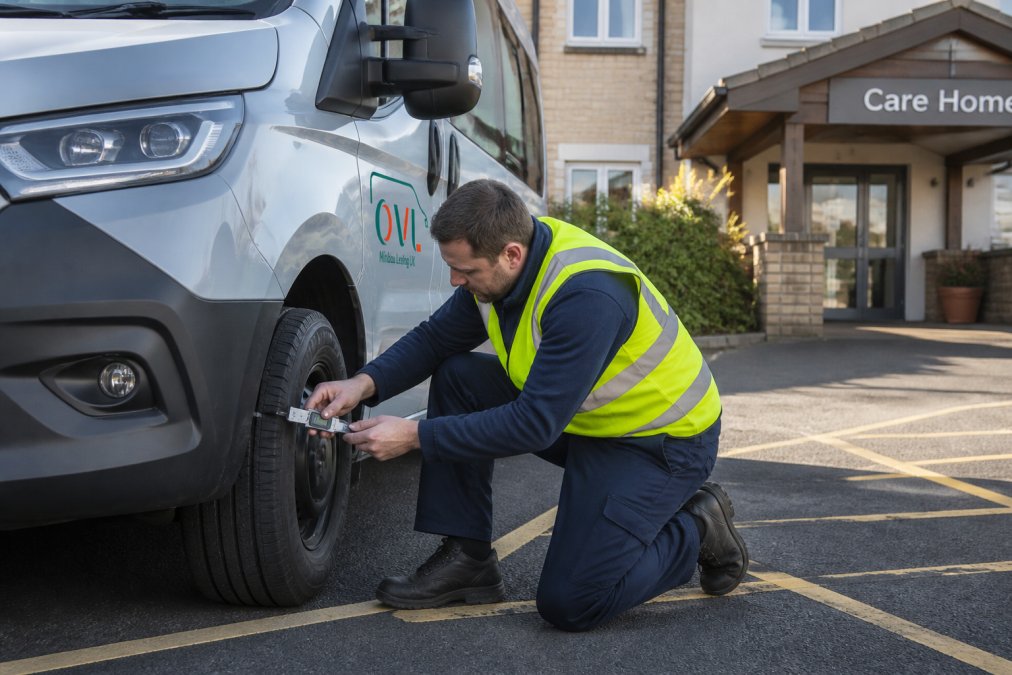
The daily walk-around focuses on four critical systems: fluids, tyres, brakes, and electrics. Each has a specific failure mode you are trying to catch early.
Fluids: Check engine oil on a level surface with the engine cold. Coolant should sit between the minimum and maximum marks. Screen wash is not a luxury; a blocked washer on a muddy winter road in Northampton is a genuine safety hazard.
Tyres: The legal minimum tread depth for minibuses is 1.6mm across the central three-quarters of the tyre (gov.uk). However, many operators replace at 3mm for better wet grip, a sensible policy for vehicles carrying passengers.
Brakes: Test the footbrake for firmness and the handbrake for holding power on a slope. Listen for unusual noises like grinding or squealing, which often indicate worn pads.
Electrics: Walk around the vehicle and check every light, including indicators, brake lights, and reverse lights. A blown bulb is a minor fix that becomes a major risk if missed.
Minibus fleet compliance for care homes goes beyond maintenance; it covers operator licensing, driver qualifications, and tachograph rules where applicable. The DVSA's guidance on driver and vehicle standards for operators is the authoritative source for your legal duties.
For most care facilities operating under a Section 19 permit, you must ensure the vehicle is not used for hire or reward, and that drivers hold the appropriate D1 entitlement on their licence (gov.uk). Your maintenance system must be proportionate to the size of your fleet. A single vehicle requires a simpler system than a fleet of five, but the standard of record-keeping is identical.
Get a Bespoke Quote or Speak to a Sector Specialist →
The key document is your safety inspection frequency. The DVSA expects you to set an interval based on mileage and usage, and to stick to it. If you use the vehicle daily, a six-weekly safety inspection is a common benchmark, with the annual service handled separately.
Most compliance failures stem from a handful of predictable errors. The most common is poor record-keeping; faults are found and fixed, but the paperwork is never updated. The DVSA wants to see a clear audit trail from defect to repair.
Another frequent mistake is relying on the driver's "it felt fine" rather than physical checks. Brake performance can deteriorate gradually, and drivers adapt without noticing. Scheduled inspections catch this; subjective judgement does not.
What should you ignore? Cosmetic issues that do not affect safety, such as minor scuffs on bumpers, are low priority. More importantly, ignore the temptation to defer repairs based on the vehicle's age. An old minibus that has been reliable for years is still subject to the same legal standards; sentiment does not exempt it from compliance.
Leasing removes the burden of old-vehicle maintenance entirely. When you lease a brand-new minibus through Minibus Leasing UK, the vehicle arrives with a full manufacturer warranty, meaning major mechanical failures are covered without unexpected repair bills. This transforms your essential minibus maintenance checklist for care facilities from a reactive cost centre into a predictable routine.
New vehicles also come with breakdown cover and, crucially, they meet current emission standards and safety regulations out of the box. For care home managers in Northampton, this means no more chasing parts for a ten-year-old vehicle or worrying whether it will pass its next annual test. Your whole life cost analysis is simplified because servicing costs are known and budgeted.
Leasing also addresses the urgency of replacement. If your current vehicle is beyond economic repair, a leasing provider can help put a compliant, accessible vehicle on the road. This is particularly valuable for care facilities needing wheelchair-accessible transport for residents without a prolonged gap in service. Be sure to check the Minibus Leasing Special Offers page to see current deals on new vehicles that could replace an ageing fleet.
A strong maintenance culture is built on daily discipline and honest record-keeping, not on hoping the vehicle holds together. The essential minibus maintenance checklist for care facilities we have outlined gives you a practical starting point, but the real work is consistency.
At Minibus Leasing UK, we help care homes and charities across the United Kingdom replace ageing fleets with brand-new, compliant vehicles through tailored leasing agreements. Our whole life cost analysis shows where ownership is draining your budget, and our dedicated account managers handle the procurement so you can focus on safe operations.
Get a bespoke quote or speak to a sector specialist to discuss how leasing simplifies your compliance burden.
Care homes operating a minibus must follow the same DVSA rules as any other vehicle operator. You need a documented maintenance system, regular safety inspections, and daily walk-around checks. The vehicle must be roadworthy at all times, and you must keep records of all checks and repairs. If you operate under a Section 19 permit or D1 licence, your maintenance system must satisfy the DVSA's 'Guide to Maintaining Roadworthiness'.
Most minibus manufacturers recommend a service every 10,000 miles or 12 months, whichever comes first. However, the DVSA requires you to determine the right safety inspection frequency based on usage. A care facility minibus used daily may need a more frequent safety inspection, potentially every 6 to 10 weeks. Your maintenance schedule must be documented and followed consistently to remain compliant.
A daily walk-around check covers the vehicle's safety-critical items. This includes checking the lights, indicators, tyres for pressure and tread depth, brakes, windscreen and wipers, mirrors, and fluid levels (coolant, oil, screen wash). You should also check for any fluid leaks, damage to the bodywork, and that all doors and emergency exits operate correctly. Documenting these checks protects your passengers and your legal compliance.
The ultimate responsibility lies with the operator, which in a care facility is typically the registered manager or the board of trustees. They must ensure a suitable maintenance system is in place. The designated transport coordinator usually manages the day-to-day tasks, and drivers are responsible for conducting the daily walk-around checks. Every person in this chain has a duty to report any defect immediately.

