Oct 24, 2026
Last Updated: 23 October 2026
Quick Summary
Essential safety upgrades for commercial delivery vans include reversing cameras, proximity sensors, load restraint systems, and driver assistance technology that work together to prevent accidents and protect your drivers. These upgrades address high-risk operations like reversing into tight spaces and securing heavy loads, whilst helping you meet Health and Safety at Work obligations and reduce insurance claims.
Essential safety upgrades for commercial delivery vans are no longer optional extras, they're fundamental investments that protect your drivers, cargo, and reputation. At Minibus Leasing UK, we work with operations managers across Northampton and the wider region to understand how safety directly impacts fleet efficiency and compliance.
A commercial delivery van operates in high-risk environments. Reversing into tight spaces, navigating busy city streets, and securing heavy loads all create opportunities for accidents. Modern safety upgrades address these vulnerabilities systematically.
The cost of a single incident, whether damage, injury, or regulatory penalty, far exceeds the investment in preventative technology. Beyond financial protection, safety upgrades reduce insurance claims, lower driver stress, and demonstrate duty of care to your workforce.
UK regulations governing commercial vehicles continue to tighten. The Health and Safety at Work etc. Act 1974 places clear responsibility on operators to provide safe working conditions (Health and Safety at Work etc Act 1974). Safety upgrades help you meet these obligations whilst protecting your bottom line.
Reversing remains one of the highest-risk manoeuvres in commercial delivery operations. Blind spots on larger vans can hide pedestrians, cyclists, or parked vehicles entirely. Visibility enhancements solve this directly.
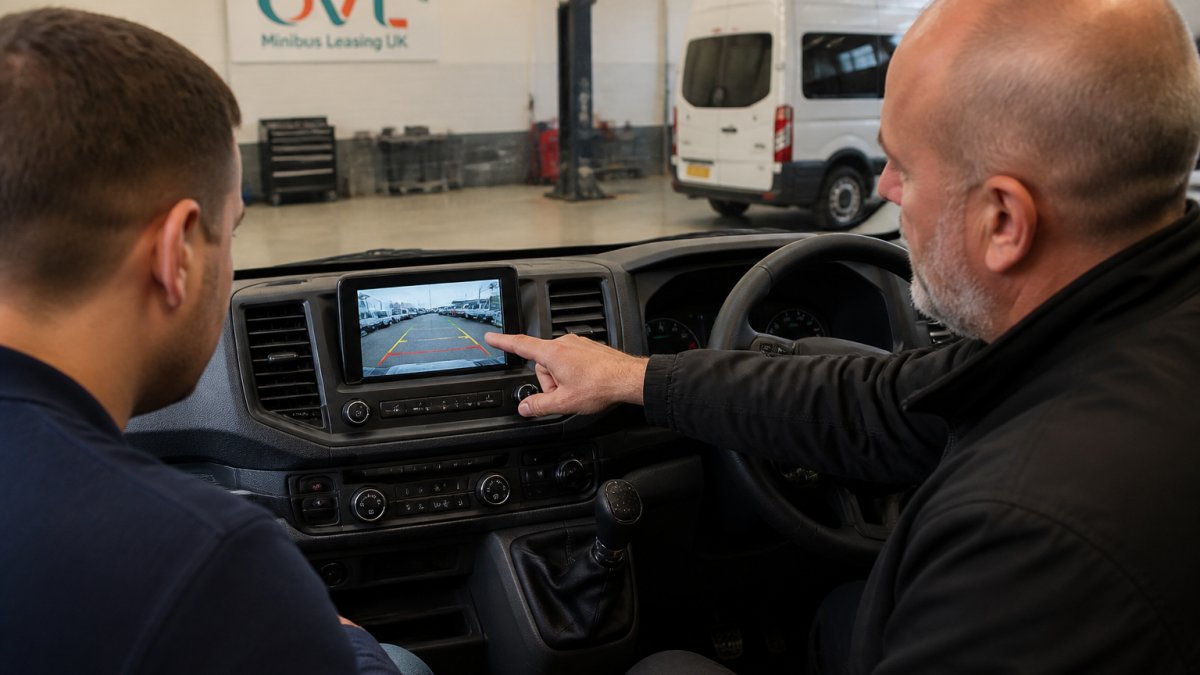
A reversing camera provides a clear rear view on the dashboard display, eliminating the guesswork of mirror-only reversing. The driver sees obstacles in real time, not after impact.
Modern systems include grid overlays that show the van's trajectory. This helps drivers align precisely with loading bays and tight parking spaces. The result: fewer scrapes, reduced reversing time, and fewer near-misses.
Quality matters here. Cameras with poor resolution or slow refresh rates create a false sense of security. Invest in systems with clear, lag-free displays. The difference between a 2-second and 5-second display delay is the difference between seeing a hazard and not seeing it.
Proximity sensors detect objects behind, beside, and in front of the van. When something enters the danger zone, an audible alert sounds, often a beeping that increases in frequency as the obstacle approaches.
These systems work in all weather. Rain, snow, and darkness don't degrade sensor performance the way they degrade camera visibility. Many operators use cameras and sensors together for layered protection.
Drivers quickly learn to trust these warnings. After a few weeks, the audible alert becomes second nature, like the seatbelt reminder in a car. The system becomes an extension of their awareness.
Unsecured cargo causes accidents, injuries, and regulatory fines. When a van brakes suddenly or takes a corner, loose items become projectiles. Proper load securing prevents this entirely.
Load securing systems include restraint straps, load bars, and side rails that anchor cargo in place. Different cargo types need different approaches. A pallet of boxes requires different securing than loose items or fragile goods.
Explore how to optimise crew van cargo space for deliveries to understand the full picture of safe, efficient loading.
Load bars run across the van width, creating anchor points for straps. They're adjustable, reusable, and suit most cargo types. For heavier loads, side rails provide additional stability.
Restraint straps come in various strengths. The working load limit (WLL) must match your typical cargo weight. Using a 500 kg strap for a 1,000 kg load is worse than using no strap at all, it creates false confidence.
Consider your loading patterns. If you frequently load different cargo types, a flexible system beats a fixed one. Some operators invest in multiple configurations.
Restraint systems degrade with use. Straps fray, bars develop rust, and attachment points loosen. Monthly inspections catch these issues early.
Check for visible wear. Replace any strap showing significant fraying or damage. Test attachment points by pulling hard, they should not move. A loose anchor point is a failed system.
Discover proven steps to reduce fleet maintenance costs to build a sustainable inspection routine into your operations.
Get a Bespoke Quote or Speak to a Sector Specialist →
Modern driver assistance systems (ADAS) actively prevent accidents rather than just detecting them. These systems monitor road conditions, lane positioning, and following distance, then alert or intervene if danger appears.
Advanced braking technology includes anti-lock braking systems (ABS) and electronic stability control (ESC). These prevent wheel lock-up during emergency stops and help maintain control on slippery surfaces.
Collision warning systems detect vehicles ahead and alert the driver if closing speed is too fast. Some systems apply gentle braking automatically. This technology has become standard on new commercial vehicles.
Lane departure warning alerts drivers who drift from their lane without signalling. For long-distance deliveries, this catches fatigue-related drift before it causes an accident.
These systems require clear windscreens and clean sensors. Rain, mud, or debris on camera lenses degrades performance. Include sensor cleaning in your regular maintenance routine.
A systematic approach to safety ensures nothing gets overlooked. Use this checklist weekly or before long routes.
| Safety Component | Check | Frequency |
|---|---|---|
| Reversing camera display | Clear image, no lag | Daily |
| Proximity sensors | Audible alert test | Daily |
| Load restraint straps | Visible wear or fraying | Daily |
| Attachment points | Secure, no movement | Weekly |
| Mirrors | Clean, properly adjusted | Daily |
| Lights and indicators | All functioning | Daily |
| Windscreen and sensors | Clean, no obstructions | Daily |
| Braking feel | Normal response, no spongy pedal | Daily |
| Tyre condition | Tread depth, no damage | Weekly |
| Horn | Audible from outside van | Weekly |
This checklist takes ten minutes. Done daily, it prevents most common safety failures.
When you lease a commercial vehicle through Minibus Leasing UK, safety features come standard. Explore commercial crew van leasing options with safety features built in to find vehicles configured to your operational requirements. Our Northampton-based team specifies every vehicle with your operational needs in mind.
New vehicles include modern reversing cameras, proximity sensors, ABS, and ESC as standard. You don't retrofit older technology, you get the latest systems from day one. This eliminates the guesswork of aftermarket installations and ensures your fleet meets current safety standards without capital investment.
Regular servicing keeps safety systems calibrated and functioning. You avoid the cost and complexity of managing these systems yourself, allowing your team to focus on operations rather than vehicle upkeep.
Check our Minibus Leasing Special Offers to see current deals on commercial vehicles equipped with comprehensive safety specifications. Our flexible leasing agreements let you scale your fleet up or down as your delivery operation grows, with every vehicle pre-configured to your safety requirements.
Our dedicated account managers work with operations teams to match vehicle specifications to your fleet's safety profile. Whether you need enhanced visibility systems for urban delivery or reinforced load securing for heavy cargo, we build the solution into your lease agreement. This approach means you're never stuck with outdated safety technology, as regulations evolve, your leased vehicles stay compliant.
The Health and Safety at Work etc. Act 1974 requires employers to ensure safe working conditions. For commercial drivers, this includes providing vehicles fit for purpose and properly maintained.
The Road Vehicles (Construction and Use) Regulations 1986 specify minimum safety standards for commercial vehicles (The Road Vehicles (Construction and Use) Regulations 1986). These include braking performance, lighting, and visibility requirements. Most new vehicles exceed these minimums, but older vehicles may not.
Operators have a duty to ensure drivers are trained on vehicle safety features. This includes reversing cameras, sensor systems, and load securing procedures. Document this training for compliance purposes.
Regular audits of your safety practices demonstrate compliance. Keep records of inspections, maintenance, and driver training. These documents protect you in the event of an incident.
Safety upgrades for commercial delivery vans aren't about perfection, they're about reducing risk systematically. Modern reversing cameras, proximity sensors, load securing systems, and driver assistance technology address the most common accident causes.
Minibus Leasing UK helps operations managers across Northampton and beyond build safety into their fleet from day one. When you lease a commercial vehicle with us, safety features are specified to your needs and maintained throughout the agreement. Our account managers understand the regulatory landscape and the operational pressures you face. Contact us for a bespoke quote tailored to your fleet's safety requirements and operational budget.
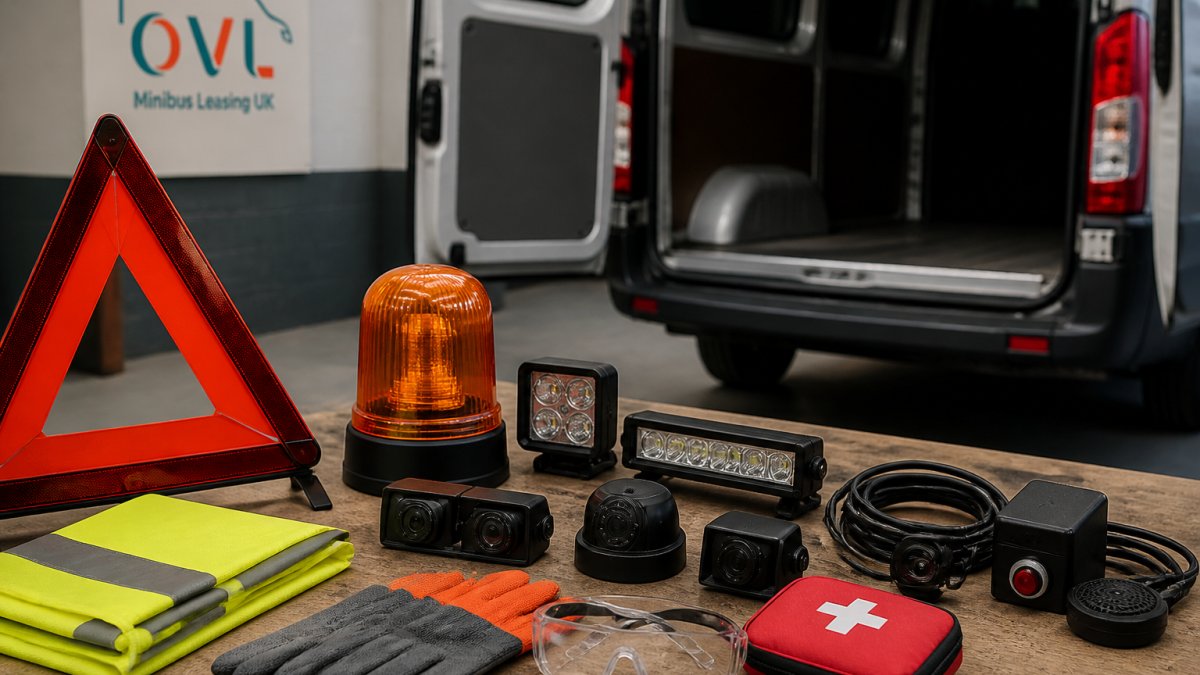
Essential safety equipment includes reversing cameras with clear display screens, proximity sensors with audible warnings, load restraint systems (straps, nets, or bars), modern braking systems with ABS, and adequate lighting including reversing lights and side markers. Vehicles should also have fire extinguishers, first aid kits, and warning triangles. When leasing commercial vans with safety features built in, you ensure all systems meet current standards and function properly from day one.
Proper load securing involves using appropriate restraint systems such as ratchet straps, cargo nets, or load bars designed for your van type. Distribute weight evenly across the vehicle, keeping heavier items low and forward. Never exceed the vehicle's maximum payload capacity. Inspect all securing equipment regularly for wear or damage. Commercial van load securing must comply with Health and Safety Executive guidance, and many operators find that newer leased vehicles come pre-fitted with secure anchor points and integrated systems that simplify this process.
Yes, significantly. Van reversing cameras and sensors reduce blind spots and help drivers detect obstacles, pedestrians, or other vehicles when reversing. Sensors provide audible or visual warnings when objects are detected nearby, whilst cameras offer a clear rear view on the dashboard. These systems substantially reduce reversing incidents, which account for a high proportion of workplace accidents. Modern commercial vehicles often include these as standard, making them a priority when selecting or leasing delivery vans.
Use a delivery van safety checklist before every journey: inspect tyres for damage and correct pressure, check all lights function properly, verify mirrors and camera displays are clean and aligned, test brakes and steering feel, confirm load is secure and within limits, and check fluid levels. Review the vehicle's condition report and report any defects immediately. Regular pre-journey checks catch problems early, reduce breakdowns, and keep your fleet safe. Leasing providers often supply checklists and maintenance support to ensure your vehicles remain in peak condition.


