Jul 09, 2026
Last Updated: July 9, 2026
Learning how to lower fleet operational costs is one of the most pressing challenges fleet managers face. At Minibus Leasing UK, we've worked with hundreds of organisations across education, care, and commercial sectors to identify what actually moves the needle. The difference between a fleet that bleeds money and one that operates efficiently often comes down to a handful of strategic decisions. Below, we'll show you exactly how to lower fleet operational costs through seven evidence-based strategies that have generated measurable results for real teams.
Effective fleet cost management rests on three pillars: visibility, prevention, and accountability. Without real-time visibility into what your vehicles are doing, you're making decisions blind. Without preventive maintenance, you're paying for emergencies instead of planning for them. Without accountability mechanisms, your best strategies fall apart when drivers aren't following them.
This framework explains why some fleets save 15-20% on operational costs while others see minimal improvement. The difference isn't the tools, it's how systematically they apply these three principles across their entire operation.
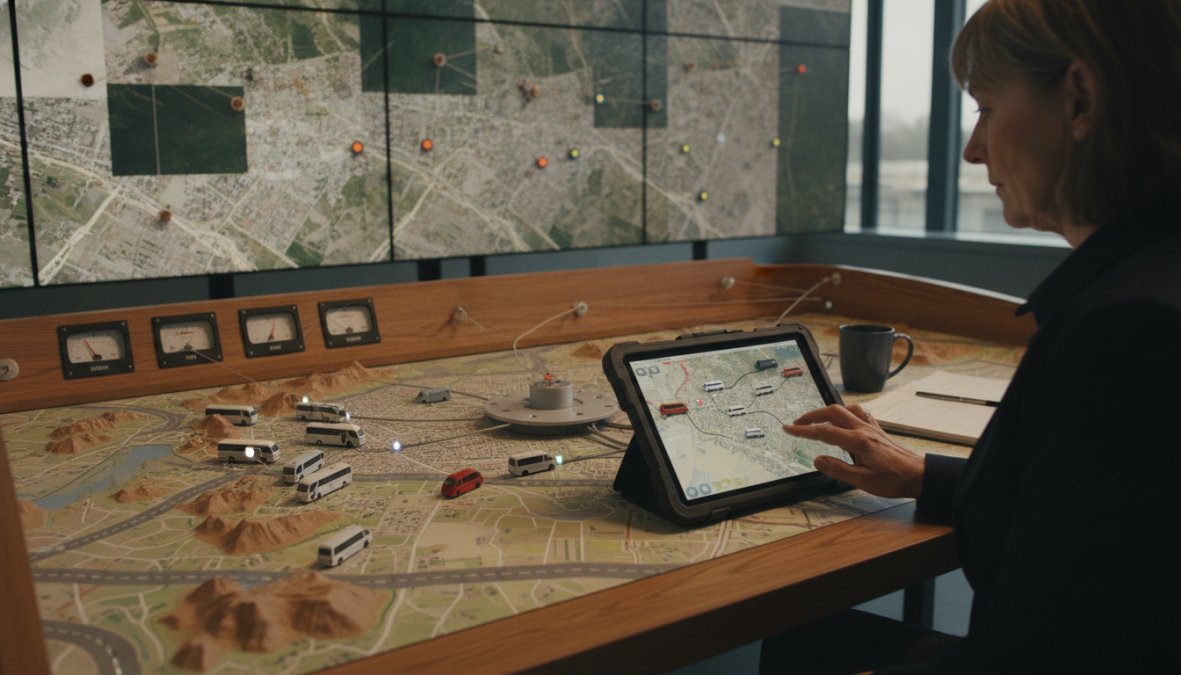
Fleet telematics systems are non-negotiable in 2026. These systems continuously collect data on vehicle location, speed, fuel consumption, engine diagnostics, and driver behaviour, providing complete operational visibility that turns guesswork into fact-based decision making.
GPS tracking prevents theft, unauthorised use, and route deviation that wastes fuel. Many fleet managers discover through GPS data that drivers are taking routes 15-20% longer than necessary or that vehicles sit idle for hours during the working day. Real-time GPS also protects your assets by alerting you immediately if a vehicle leaves its authorised route or service area.
Telematics data becomes powerful when you use it to identify patterns and make systemic changes. If data shows that three specific routes consistently see poor fuel efficiency, you can investigate the root cause and fix it across your entire fleet. Many organisations find that their highest-cost vehicles aren't the oldest ones, they're the ones driven by specific individuals or used on particular routes.
Preventive maintenance is the single most cost-effective investment you can make in fleet operations. A scheduled oil change costs £50-80. An engine failure from missed oil changes costs £3,000-8,000 in repairs plus downtime.
A proactive maintenance strategy means scheduling work based on manufacturer recommendations and vehicle usage patterns, not waiting for something to fail. This includes regular oil changes, filter replacements, brake inspections, tyre rotations, and fluid top-ups.
Build a maintenance schedule that accounts for your specific operating conditions. A vehicle used for heavy urban delivery needs more frequent brake service than one used mainly on motorways. Many organisations cut costs by 10-15% simply by moving from reactive to preventive maintenance.
Modern fleet management software sends automatic maintenance reminders based on mileage or time elapsed. This removes guesswork and ensures nothing gets overlooked. When maintenance is scheduled in advance, you can batch work across multiple vehicles, negotiate better rates with service providers, and plan around your operational calendar.
Fuel is typically the largest controllable cost in fleet operations. Even small improvements in fuel efficiency compound across dozens of vehicles. A 5% improvement in fuel consumption translates to real savings month after month.
Excessive idling wastes fuel and accelerates engine wear without moving a single kilometre. A vehicle idling for one hour burns roughly 0.5 litres of fuel. Many fleets discover through telematics data that their vehicles idle for 20-40 minutes per day on average.
Train drivers to avoid unnecessary idling and use telematics alerts to flag vehicles that consistently exceed idle thresholds. Similarly, harsh acceleration and braking increase fuel consumption and accelerate wear. Drivers who accelerate smoothly and brake gradually use 10-15% less fuel than aggressive drivers.
Fuel cards provide visibility into fuel purchases and prevent cash-only fuelling. Establish clear fuel card policies: drivers fuel at designated providers, fuel only when the tank reaches a specific level, and purchase the fuel grade specified for their vehicle. Monitor fuel card transactions for anomalies and implement restrictions that prevent drivers from purchasing items other than fuel.
Driver behaviour accounts for 20-30% of fleet operating costs. Two drivers operating identical vehicles on identical routes can have fuel consumption that differs by 15% or more based on driving style.
Effective driver training programmes use telematics data to identify specific behaviours to address. Rather than generic messaging, provide targeted feedback: "Your harsh braking events increased 20% last month, here's how to improve." This specificity drives real behaviour change.
Many organisations find that driver training programmes pay for themselves within 2-3 months through reduced fuel consumption and fewer accidents.
Fleet insurance is a significant fixed cost that many organisations treat as unchangeable. In reality, your insurance premiums are directly tied to your fleet's claims history, safety record, and risk profile. Organisations that proactively manage risk see insurance premiums drop 10-20% over 2-3 years.
Insurance companies reward fleets that demonstrate commitment to safety and loss prevention through maintained vehicles, trained drivers, and technology that monitors risky behaviour. Many insurers now offer telematics-based insurance programmes where premiums are tied to actual driving data.
Document your safety initiatives: maintenance records, driver training completion, and telematics data showing improved safety metrics. When it's time to renew insurance, present this evidence to your broker. Insurers recognise genuine risk reduction and reward it with lower premiums.
Many organisations carry more vehicles than they actually need. A fleet that's oversized by 10-15% is paying for vehicles that sit idle most of the time, with insurance, maintenance, depreciation, and storage costs adding up on vehicles generating no revenue.
Analyse telematics data to understand vehicle utilisation: which vehicles are used daily, which are used occasionally, which sit idle for weeks. This data often reveals significant excess capacity.
Total Cost of Ownership (TCO) analysis examines the full cost of operating a vehicle across its entire lifespan, including acquisition cost, fuel, maintenance, insurance, registration, and depreciation.
A vehicle with a lower purchase price but higher fuel consumption and maintenance costs may have a higher TCO than a more expensive vehicle that's more efficient and reliable. Many organisations discover that newer vehicles with better fuel efficiency and reliability have lower TCO than older vehicles they're trying to keep on the road.
When vehicles reach the end of their operational life, remarketing them effectively recovers value. A vehicle that costs £15,000 to operate annually but generates only £8,000 in revenue should be removed from service and sold. The money recovered can be reinvested in more productive assets.
Fleet costs don't remain static. Fuel prices fluctuate, insurance rates change, and vehicle acquisition costs shift with market conditions. Organisations that build flexibility into their fleet strategy weather economic volatility better than those locked into rigid long-term plans.
The best defence against economic volatility is operational efficiency. A fleet that's already running lean, with optimised routes, preventive maintenance, and efficient drivers, can absorb cost increases without major disruption.
Build scenario planning into your budget process. What happens to your costs if fuel prices increase 15%? If insurance rates rise? Having answers to these questions means you can respond quickly when conditions change.
Use a phased approach to avoid overwhelming your team:
Phase 1 (Months 1-2): Establish Visibility
Phase 2 (Months 2-4): Address Prevention
Phase 3 (Months 4-6): Drive Accountability
Phase 4 (Months 6+): Optimise and Adjust
| Phase | Focus | Timeline | Expected Impact |
|---|---|---|---|
| 1 | Visibility through telematics | Months 1-2 | Identify cost drivers |
| 2 | Prevention via maintenance | Months 2-4 | 5-8% cost reduction |
| 3 | Accountability via training | Months 4-6 | Additional 5-10% reduction |
| 4 | Optimisation & fleet sizing | Months 6+ | Further 5-15% reduction |
Fleet cost reduction isn't about finding one magic solution. It's about systematically addressing visibility, prevention, and accountability across your entire operation.
Teams that successfully lower fleet operational costs use telematics data to understand what's actually happening, invest in preventive maintenance instead of reacting to breakdowns, hold drivers accountable through training and monitoring, right-size their fleets based on actual utilisation, and build flexibility into their budgets.
The organisations we work with typically achieve 15-25% cost reductions over 12-18 months by implementing these strategies systematically. The payback period is measured in months, not years.
Reducing fleet operational costs is achievable without sacrificing safety, compliance, or service quality. In fact, the strategies that lower costs also improve safety and reliability.
Minibus Leasing UK helps organisations across education, care, and commercial sectors implement these strategies through our whole life cost analysis and fleet management expertise. We work with you to understand your specific cost drivers, identify opportunities for improvement, and plan a fleet composition that delivers both operational efficiency and compliance. Explore our Minibus Leasing Special Offers to see how flexible leasing arrangements can support your cost reduction goals.
Speak to one of our sector specialists to discuss how these strategies apply to your fleet.
Fleet operational costs rise through fuel consumption, maintenance and repairs, driver wages, insurance premiums, vehicle depreciation, and idle time. Unexpected breakdowns significantly inflate operating expenses. Fleet telematics and proactive maintenance strategies help identify cost drivers early. Additionally, poor route planning, excessive idle time, and inefficient driver behaviour increase fuel usage and wear and tear. Understanding your total cost of ownership across the vehicle lifecycle is essential to pinpointing where savings are possible.
Fleet management software provides real-time monitoring of vehicle utilisation, fuel consumption, and maintenance schedules. It enables data-driven decisions by collecting analytics on driver behaviour, route efficiency, and asset protection. Automated maintenance reminders prevent costly emergency repairs. GPS tracking reduces lost vehicles and improves route optimisation, cutting fuel costs. Integration with fuel card systems tracks consumption patterns. By centralising operational data, fleet management software helps identify inefficiencies and compliance risks, lowering both capital expenditure and operating expenses over time.
Combine multiple strategies: implement fleet fuel management best practices including route optimisation to reduce unnecessary mileage, reduce idle time through driver monitoring, and provide driver training on fuel-efficient techniques. Telematics systems identify excessive acceleration and speeding that waste fuel. Regular preventive maintenance, especially tyre pressure and engine tuning, improves fuel efficiency. Monitor fuel card data to spot anomalies. Analyse vehicle utilisation to right-size your fleet, eliminating underused vehicles. These combined approaches typically deliver the most significant fuel savings whilst maintaining operational efficiency and compliance.
Preventive maintenance reduces unexpected breakdowns that cause vehicle downtime, emergency repair costs, and lost productivity. Regular servicing catches worn components before failure, extending vehicle lifespan and reducing depreciation. Proactive maintenance strategies, such as scheduled oil changes, filter replacements, and tyre retreading, cost far less than reactive repairs. Fleet management software sends automated maintenance reminders, ensuring nothing is missed. A well-maintained fleet experiences fewer insurance claims, lower risk of compliance violations, and improved driver safety. By investing in planned maintenance now, you avoid expensive emergency repairs and unplanned vehicle withdrawals later.

