Jul 31, 2026
Last Updated: July 31, 2026
Understanding what are the benefits of minibus permits is essential for organisations looking to provide passenger transport services cost-effectively. At Minibus Leasing UK, we work with schools, care homes, charities, and community groups across the country to navigate the regulatory landscape and unlock the genuine operational advantages that permits provide. This guide breaks down the real benefits beyond the permit itself, showing how Section 19 and Section 22 permits enable organisations to deliver services that would otherwise be financially unviable.
Operational flexibility for non-profit organisations represents the primary advantage of minibus permits. A Section 19 permit allows registered charities, non-profit organisations, and community groups to operate passenger transport services without holding a Public Service Vehicle (PSV) operator licence.
The cost-recovery basis is where the real financial benefit emerges. Under a Section 19 permit, you can charge passengers only for the direct costs of operating the service: fuel, maintenance, driver wages, and insurance. You cannot make a profit on the service itself. This model works perfectly for schools transporting pupils, care homes moving residents, and community groups providing accessible transport. The Driver and Vehicle Standards Agency guidance on Section 19 permits confirms that this cost-recovery approach removes the commercial licensing burden entirely.
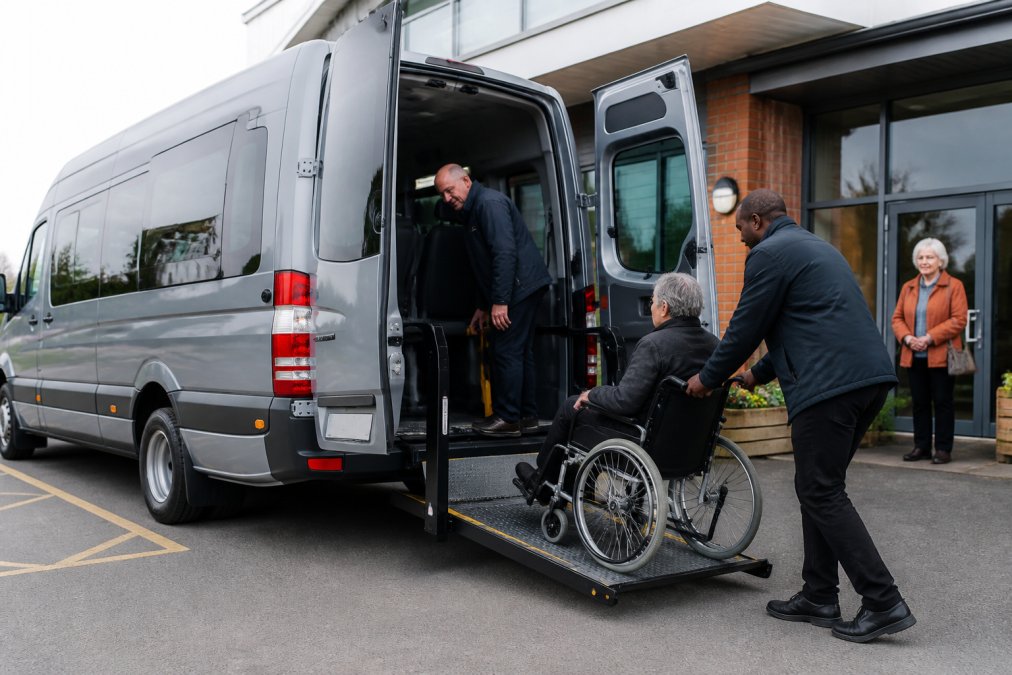
The flexibility extends to driver arrangements. Section 19 permits allow volunteer drivers to operate minibuses alongside paid staff, transforming options for charities with limited payroll budgets. Vehicle adaptation and accessibility represent another substantial benefit, organisations can invest in wheelchair-accessible minibuses and specialist seating without commercial pressure to maximise passenger numbers.
Only specific organisation types can apply for a Section 19 permit. Registered charities, non-profit organisations, education authorities, local authorities, and certain community groups qualify. The Transport Act 1985 framework defines eligible bodies, and the DVSA maintains the definitive list. Your organisation must be formally registered or recognised; informal community groups cannot hold permits.
Schools, care homes, hospices, healthcare providers, and charities providing community services represent the primary user groups. The key requirement is that your organisation must be non-profit and cannot use the permit if your primary purpose is commercial transport.
The application process requires specific documentation managed by the DVSA. You'll need to submit an application form alongside proof of your organisation's registration or status. Charities provide their Charity Commission registration; schools provide their establishment number; care homes provide their CQC registration.
Vehicle documentation is essential: the Vehicle Registration Document (V5C) for each minibus, proof of insurance, and the MOT certificate. Insurance must specifically cover the use you're proposing, as standard business insurance often excludes passenger transport.
Driver documentation requires Driving Licence photocopies for all drivers who will operate minibuses. Each driver must hold a valid licence with D1 entitlement (minibus category) or Category B with appropriate training.
Processing typically takes 4-6 weeks. Once approved, your permit is valid for five years from issue date. Renewal requires resubmission of documentation confirming your organisation's continued status and driver/vehicle details.
The D1 entitlement on a driving licence permits the holder to drive minibuses carrying up to 16 passengers. Most drivers who passed their test after 1997 hold Category B licences only, which do not include D1 entitlement. If your drivers only hold Category B, they cannot legally operate minibuses carrying passengers.
The solution is PCV (Passenger Carrying Vehicle) training. Drivers with Category B licences can complete a D1 training course, pass a practical test, and have D1 entitlement added to their licence. Many drivers holding older licences (pre-1997) automatically have D1 or full D (bus) entitlements. Always verify D1 entitlement by checking licence photocopies carefully.
Beyond the D1 entitlement, minibus drivers must complete specific training. The Driver Certificate of Professional Competence (CPC) applies to drivers of vehicles over 3.5 tonnes Maximum Authorised Mass. Most modern minibuses exceed this threshold, so CPC training is typically required.
CPC comprises initial training (35 hours) and periodic training (35 hours every five years). The DVSA guidance on driver CPC requirements sets out detailed requirements and approved training providers. Your organisation should ensure drivers receive induction training specific to your service. School transport drivers need training in pupil safeguarding; care home drivers need training in assisting passengers with mobility challenges.
Health and safety obligations apply to all drivers. Regular vehicle checks before each journey, lights, tyres, brakes, emergency equipment, are non-negotiable. Drivers must report defects immediately, and your organisation must maintain records of vehicle maintenance and driver training completion.
Section 19 and Section 22 permits serve different purposes, and understanding the distinction is crucial for choosing the right framework for your organisation.
A Section 19 permit is issued to registered non-profit organisations and allows operation of minibuses on a cost-recovery basis with volunteer drivers. The permit is held by the organisation, not individual drivers. This is the standard permit for schools, care homes, charities, and community groups.
A Section 22 permit is issued to individuals or small operators who are not registered charities or non-profit bodies. It's designed for self-employed operators, micro-businesses, or community interest companies. If your organisation is a registered charity, you must apply for Section 19. If you're an individual operator providing community transport, Section 22 may be appropriate.
Both Section 19 and Section 22 permits operate on a cost-recovery basis. You can only charge passengers for the direct costs of operating the service: fuel, vehicle maintenance, driver wages (if paid staff), insurance, and vehicle depreciation. You cannot make a profit.
This cost-recovery model is often misunderstood. Many organisations assume it means transport must be free. In practice, it means you can charge passengers a fare that reflects the actual cost of their journey. A school might charge per pupil per day for transport, calculated from total running costs divided by daily passenger numbers. A care home might charge residents per week for transport, based on fuel and driver costs. A community group might charge per journey for disabled passengers. All of these are legitimate under the cost-recovery principle.
The "hire or reward" restriction means you cannot accept payment for transport in a way that implies commercial operation. You cannot advertise "minibus hire" services or operate a booking system that takes ad-hoc passengers at market rates. However, you can accept donations or voluntary contributions.
Every minibus operating under a Section 19 permit must pass an MOT test annually (or more frequently depending on vehicle age). The MOT confirms the vehicle meets minimum safety and environmental standards. You cannot operate a minibus with an expired MOT.
Beyond MOT, your organisation should conduct regular maintenance. Brakes, tyres, lights, and emergency equipment require routine checks. A preventive maintenance schedule, typically monthly or quarterly depending on usage, keeps vehicles safe and reduces the risk of roadside breakdowns.
Insurance is mandatory and must specifically cover passenger transport. Standard van insurance does not cover minibus operation. You need a minibus insurance policy that covers third-party liability, passenger liability, and vehicle damage. The policy must name all drivers who will operate the minibus.
The physical permit disc must be displayed on the minibus windscreen at all times. The disc shows your organisation's name, permit number, and validity dates. Inside the vehicle, you must display passenger information including the maximum number of passengers the minibus can carry and emergency contact procedures.
Operational conditions typically require you to maintain records of journeys, passengers, and costs; keep insurance and maintenance records; report changes to your organisation's status or driver details to the DVSA; ensure all drivers hold appropriate licences and training; and comply with working time regulations for paid drivers.
The DVSA can inspect your records at any time. If they find breaches, expired MOT, unqualified driver, unmarked permit, inadequate insurance, they can issue prohibition notices or suspend your permit. Compliance is not optional.
When organisations compare minibus leasing to outright purchase, the financial picture extends far beyond the vehicle price. Within five years, depreciation, maintenance, repairs, and insurance can add substantially to the initial purchase cost. By year seven or eight, major component failures become likely. Leasing restructures these costs into predictable monthly payments that include maintenance, insurance, roadside assistance, and vehicle replacement. When you factor in avoided repair costs and guaranteed vehicle reliability, leasing often proves more cost-effective than ownership, particularly for organisations without dedicated fleet management expertise.
The operational advantage is more significant than the financial one. A leased minibus is always under warranty. Breakdowns are handled by the leasing company's support network. You don't manage vehicle maintenance; the provider does. For schools managing pupil transport or care homes managing resident journeys, this reliability is invaluable. For organisations operating under minibus permits, leasing also simplifies compliance by ensuring vehicles meet all regulatory requirements. If your organisation is exploring leasing options, Minibus Leasing Special Offers can help you compare flexible arrangements tailored to permit-based operations.
Minibus permits enable investment in specialist vehicles that commercial operators cannot justify economically. A wheelchair-accessible minibus with hydraulic lift, securing points, and internal handrails represents a significant investment. An organisation operating under permit can spread this cost across a smaller passenger base using the cost-recovery model.
For care homes, specialist vehicles are essential. Residents with mobility challenges, dementia, or complex healthcare needs require vehicles configured for their safety. Wheelchair spaces, grab rails, climate control, and secure seating are duty-of-care essentials. Schools increasingly invest in minibuses configured for pupils with additional needs, with specialist seating, interior padding, communication aids, and secure restraint systems specified without compromise.
A secondary school with 800 pupils needs to transport approximately 200 pupils daily from outlying villages. Commercial coach operators quote significant annual costs for this service. The school's transport budget is limited. Commercial transport is unaffordable.
Operating under a Section 19 permit, the school purchases a 16-seat minibus and employs one full-time driver. The school charges pupils per journey. With 200 pupils, revenue covers actual costs. The permit also allows the school to deploy volunteer drivers during peak periods. Parent volunteers, trained and vetted, operate additional minibuses during morning and afternoon peaks. This flexibility lets the school serve 300+ pupils across multiple routes without proportionally increasing costs. Without the permit, this service would be impossible.
A 60-bed care home provides residential care for older adults with dementia and mobility challenges. Residents require regular transport to medical appointments, day centre activities, and community outings. Operating under a Section 19 permit, the care home leases a wheelchair-accessible minibus and employs a dedicated driver. The vehicle is configured with wheelchair securing points, grab rails, and climate control. Residents contribute toward transport costs on a cost-recovery basis.
A community group providing support to disabled adults operates a Section 19 permit for community transport. The group runs routes three days per week, transporting 15-20 adults to day centres, leisure activities, and social groups. Volunteer drivers operate the minibus. Passengers contribute per journey on a cost-recovery basis. Without the permit, this community transport would be impossible.
The benefits of minibus permits extend far beyond regulatory compliance. They enable non-profit organisations to operate passenger transport services cost-effectively, deploy volunteer drivers, invest in specialist vehicles, and serve passenger groups that commercial operators cannot reach. For schools, care homes, charities, and community groups, permits unlock operational flexibility and financial models that would otherwise be impossible.
Operating a minibus fleet without clear understanding of permit benefits often means missing opportunities for cost savings, service expansion, and compliance certainty. Minibus Leasing UK specialises in helping educational institutions, care providers, and community organisations navigate permit requirements whilst optimising whole-life costs through strategic leasing solutions. Our dedicated account managers provide guidance on vehicle specification, driver compliance, and permit management, ensuring your fleet remains legally compliant, safe, and cost-effective. Get a bespoke quote from Minibus Leasing UK and speak to a sector specialist who understands the regulatory landscape and your operational priorities.
| Permit Type | Eligible Organisations | Cost-Recovery Basis | Volunteer Drivers | Vehicle Flexibility |
|---|---|---|---|---|
| Section 19 | Registered charities, non-profits, schools, local authorities | Yes | Yes | Specialist adaptations permitted |
| Section 22 | Individuals, small operators, community interest companies | Yes | Limited | Standard configurations |
| PSV Operator Licence | Commercial operators | No (profit-based) | No | Commercial focus |
A Section 19 permit allows non-profit organisations, charities, schools, and community groups to operate minibus services without a full Public Service Vehicle (PSV) operator licence. Eligible organisations must be established for purposes other than profit and operate on a cost-recovery basis, where fares cover fuel, maintenance, and driver costs only. The permit is issued by the Driver and Vehicle Standards Agency (DVSA) under the Transport Act 1985 and enables transport of passengers for charitable or community benefit.
A Section 19 permit is for non-profit organisations providing community transport on a cost-recovery basis, whilst a Section 22 permit is for larger bus services operated by local authorities or transport operators. Section 19 permits are restricted to organisations meeting charitable or community criteria, with lower passenger capacity requirements (typically 9-16 passengers). Section 22 permits apply to commercial or larger-scale operations. Both require compliance with safety regulations, vehicle inspections, and MOT certificates, but Section 19 offers a simplified regulatory route for smaller, non-profit providers.
Driver licence requirements depend on vehicle weight and passenger numbers. If your minibus has a Maximum Authorised Mass (MAM) under 3,500 kg and carries up to 8 passengers, a standard Category B car licence is sufficient. For vehicles carrying 9-16 passengers or heavier vehicles, drivers require a D1 entitlement on their licence. All drivers must comply with DVSA regulations, hold valid insurance, and meet any additional training requirements specified in your permit conditions. Regular refresher training is recommended for safety compliance.
Operating under a Section 19 permit reduces regulatory burden and associated costs compared to a full PSV operator licence. Permits allow cost-recovery operation where passenger fares cover only direct expenses, fuel, maintenance, driver wages, and insurance, without profit margin requirements. This makes transport accessible to members and passengers at lower cost. Additionally, leasing new, brand-new vehicles through specialist providers eliminates capital expenditure and spreads costs predictably across a lease term, improving budgetary certainty. Whole-life cost analysis ensures transparent forecasting of operational expenses, helping organisations allocate resources efficiently.