Jun 26, 2026
Last Updated: June 26, 2026
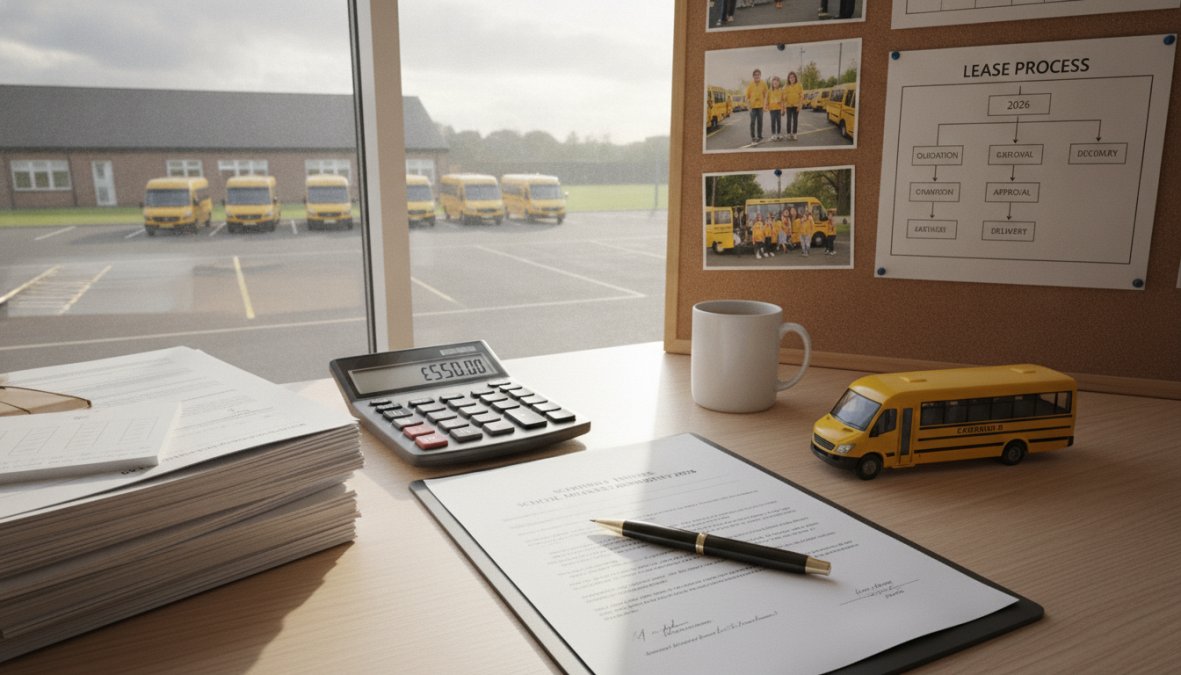
School minibus leasing has transformed how educational institutions manage transport logistics. Rather than committing capital to vehicle purchases, schools increasingly turn to flexible leasing arrangements that align operational needs with budgetary constraints. The shift toward leasing reflects a fundamental change in how forward-thinking institutions approach fleet management.
The decision between leasing and buying a minibus involves fixed costs, maintenance certainty, and regulatory compliance. Below, we'll show you exactly how school minibus leasing works, what requirements schools must meet, and how to evaluate whether this approach suits your institution.
School minibus leasing is a contractual arrangement where an educational institution rents a vehicle for a fixed period, typically three to five years, rather than purchasing it outright. The leasing company retains ownership while the school operates the minibus under agreed terms.
When you lease, you pay monthly for the right to use a vehicle. The leasing company handles depreciation, residual value risk, and often includes servicing and maintenance. You gain predictable costs and operational simplicity. Leasing works particularly well for schools because educational budgets operate on annual cycles, and a lease spreads costs predictably across monthly invoices, making financial planning far simpler for finance teams and governors.
According to guidance from the Department for Education transport best practice, schools managing fleet costs effectively tend to see improved operational resilience. Leasing eliminates the uncertainty of vehicle repairs, depreciation, and eventual disposal.
Leasing advantages:
Buying advantages:
Most schools find leasing superior because educational transport operates within predictable parameters. Routes are established, mileage is consistent, and compliance requirements are non-negotiable.
Fixed monthly payments represent one of leasing's most compelling benefits for school finance teams. Every month, you know exactly what the vehicle costs. No surprises. No emergency repair bills eating into contingency funds.
This predictability transforms budget planning. Finance officers can forecast transport costs years in advance with confidence. When a pump fails on a leased vehicle, the leasing company covers it. When tyres wear out, replacement is included. When the vehicle requires its annual MOT, the leasing company manages it.
Schools operating on tight budgets particularly value this certainty. Rather than setting aside contingency funds for potential repairs, you simply budget the fixed lease payment. The money saved on contingency planning often exceeds the lease cost difference versus buying. Many schools also benefit from Minibus Leasing Special Offers, which can further reduce monthly costs and improve budget efficiency.
Purchasing a minibus requires significant upfront investment, typically £40,000 to £60,000 for a quality school vehicle. This capital expenditure consumes budget that could fund teaching resources, facilities improvements, or staff development, and requires approval through lengthy procurement processes.
Leasing eliminates this burden entirely. No upfront payment. No capital budget consumption. Schools access modern vehicles immediately without the financial friction of ownership. This matters particularly for smaller schools or those in deprived areas where capital budgets are constrained. The freed capital can be deployed toward educational outcomes, the core mission of any school.
Leasing a school minibus isn't simply a commercial transaction. Educational transport operates within a strict regulatory framework. Several layers of regulation apply: vehicle safety standards, driver licensing requirements, operator licensing, and insurance obligations.
All school minibuses must meet stringent safety standards established by UK law. The DVSA guidance on minibus safety standards specifies that vehicles carrying more than eight passengers (excluding the driver) must comply with Public Service Vehicle (PSV) regulations. This means vehicles must undergo specialist testing beyond standard MOT requirements.
Safety compliance isn't optional. A vehicle operating without proper certification exposes the school to liability, regulatory enforcement, and puts students at risk. Minibus Leasing UK ensures all vehicles meet or exceed these standards before delivery. Every vehicle undergoes full compliance checks, with seatbelts tested, emergency equipment verified, and wheelchair securing systems certified.
A Section 19 permit, issued by the local traffic authority, authorises a school to operate a minibus for specific purposes, transporting students to educational activities. Without this permit, operating a school minibus is illegal.
Obtaining a Section 19 permit requires appointing a transport manager, someone responsible for ensuring compliance with all transport regulations. This person doesn't need to be full-time but must be competent and available.
The transport manager's responsibilities include:
The school, as the operator, holds legal responsibility. However, many leasing companies provide guidance and support to help schools establish compliant transport management systems. The permit application process typically takes 4-6 weeks.
Not every driver with a standard car licence can legally drive a school minibus. This is a critical compliance point that schools frequently misunderstand.
A B licence (standard car driving licence) authorises driving vehicles up to 3.5 tonnes maximum authorised mass carrying up to eight passengers including the driver.
A D1 licence authorises driving minibuses carrying between nine and sixteen passengers. A vehicle carrying nine or more passengers requires at least one occupant to hold a D1 licence.
Obtaining a D1 licence requires passing an additional practical driving test, medical examination, and extended theory test covering passenger-carrying regulations, typically taking 8-12 weeks. Schools should identify driver requirements before leasing a vehicle. If current staff cannot provide D1 licence drivers, recruitment becomes necessary. Some schools solve this by leasing smaller vehicles, 8-seaters that operate under B licence restrictions.
One of leasing's primary advantages is simplified maintenance. Rather than managing repairs independently, schools benefit from structured maintenance packages included in the lease.
A comprehensive school minibus maintenance contract typically includes:
Scheduled servicing - Oil changes, filter replacements, fluid top-ups, and component inspections occur at manufacturer-recommended intervals. The leasing company arranges and pays for this.
MOT testing - Annual MOT compliance testing is included. The leasing company manages scheduling and covers the test fee.
Tyre replacement - Worn tyres are replaced as needed. Schools don't budget separately for tyre costs.
Parts and labour - Covered repairs for mechanical failures are included. A faulty alternator, failed brake component, or electrical issue is fixed at no additional cost to the school.
Breakdown cover - If a vehicle breaks down, recovery and roadside assistance are included. A replacement vehicle may be provided while repairs occur, minimising disruption to school operations.
This all-inclusive approach transforms vehicle management. Schools don't need to maintain relationships with mechanics, budget for unpredictable repairs, or worry about warranty complications.
Wear and tear is the grey area in any lease. The leasing company expects normal, reasonable wear. Excessive damage becomes the school's financial responsibility.
Normal wear and tear includes tyre wear from regular use, interior fabric wear from student use, and paint fading from weather exposure. Excessive damage includes severe interior damage, accident damage, mechanical damage from misuse, and graffiti or vandalism.
Schools should establish clear policies about vehicle use. Students need to understand the minibus is a shared resource requiring respect. Most schools find that establishing simple vehicle-use guidelines prevents significant wear and tear issues.
Understanding the leasing process removes uncertainty and helps schools plan effectively. The journey from decision to vehicle delivery typically spans 6-8 weeks.
The process begins with vehicle selection. Schools specify their requirements: passenger capacity, wheelchair accessibility, fuel type, and any special features.
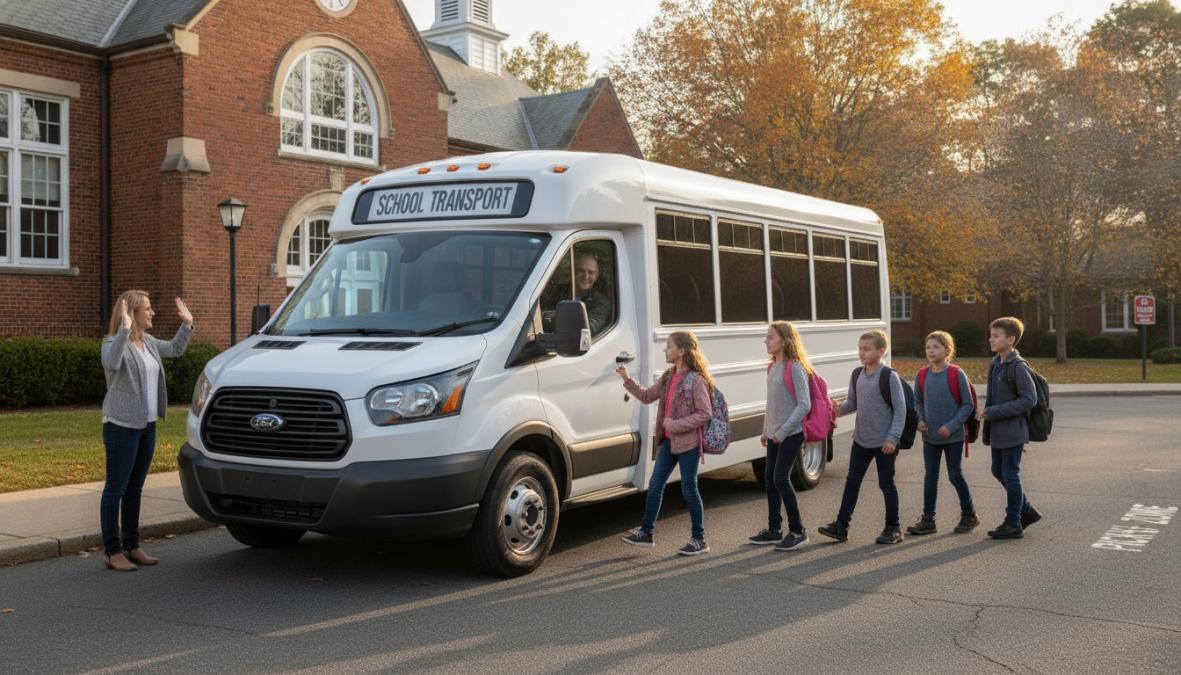
Leasing companies maintain stock of popular models, enabling relatively fast delivery, often within 4-6 weeks of contract signature. Schools can view available vehicles, inspect them, and confirm their choice. Fast delivery matters because schools often have transport needs tied to specific events or term dates.
The lease agreement specifies vehicle details, monthly payment amount, lease duration (typically 36-60 months), maintenance inclusions, mileage limits, wear and tear allowances, insurance requirements, and end-of-contract procedures.
Schools should carefully review these terms. Mileage allowances matter; if a school operates extensive routes, exceeding the agreed mileage incurs additional charges. Most leases include fixed mileage allowances (typically 30,000-50,000 miles annually for school use). The contract term affects monthly payments. Longer terms (60 months) mean lower monthly costs but commit the school longer. Shorter terms (36 months) provide flexibility to upgrade vehicles more frequently, though monthly payments are higher.
Insurance represents a critical but often overlooked aspect of school minibus operation. Schools operating minibuses need comprehensive coverage addressing vehicle damage, third-party liability, passenger liability, driver liability, and uninsured driver protection.
Many schools assume the leasing company provides insurance. Some leasing arrangements include insurance; others require the school to arrange it independently. This must be clarified in the lease agreement. The Financial Conduct Authority guidance on motor insurance requirements specifies that any vehicle carrying passengers must carry third-party insurance at minimum.
Schools should obtain specialist minibus insurance quotes from providers experienced in educational transport. Standard car insurance policies don't cover minibus operation.
When an accident occurs, clear procedures minimise chaos and ensure proper handling. The school's procedure should ensure immediate safety, contact the leasing company immediately, obtain accident details and witness information, document the scene with photographs, report to insurance within the required timeframe (usually 30 days), and cooperate with the leasing company's claims process.
The leasing company typically handles claims management. They liaise with insurers, arrange repairs, and manage the process. Schools should establish simple accident procedures and ensure all drivers understand them.
Educational inclusion means ensuring all students can access school transport. For students with mobility challenges, wheelchair-accessible minibuses are essential.
A wheelchair-accessible minibus includes wheelchair securing systems (certified to safety standards), ramps or lifts for wheelchair boarding, wide doors enabling wheelchair passage, suitable floor surfaces, adequate space for wheelchairs in the seating area, and grab handles and safety features.
Accessible minibuses cost slightly more to lease than standard vehicles, but the cost difference is modest. Schools should assess their accessibility needs early. If students currently use wheelchairs, or if the school anticipates future students with mobility challenges, accessible vehicles should be specified from the outset.
| Aspect | Standard Minibus | Wheelchair Accessible Minibus |
|---|---|---|
| Passenger capacity | 17 seats | 14-15 seats + 2-3 wheelchair spaces |
| Boarding | Standard doors | Ramps or lifts |
| Cost difference | Baseline | 8-12% higher monthly cost |
| Securing systems | Not applicable | Certified wheelchair restraints |
| Maintenance | Standard | Slightly higher (lift/ramp servicing) |
The modest cost increase for accessible vehicles reflects their additional complexity. However, the cost remains reasonable relative to the inclusion benefit provided.
School minibus leasing transforms how educational institutions manage transport. Fixed costs, regulatory compliance, and operational simplicity combine to make leasing the preferred option for most schools. Success requires understanding licensing requirements, maintenance obligations, and insurance responsibilities.
Minibus Leasing UK provides comprehensive support throughout the leasing journey. From initial vehicle selection through compliance guidance to end-of-contract procedures, our consultative approach ensures schools access reliable, compliant transport solutions. Our expertise in Section 19 permits and D1 licensing requirements prevents costly compliance failures.
Get a bespoke quote or speak to a sector specialist at Minibus Leasing UK. We'll help you identify the right vehicle, understand regulatory requirements, and establish transport arrangements that support your school's mission.
School minibus leasing eliminates large capital expenditure, provides fixed monthly costs for accurate financial planning, and includes maintenance, servicing, and MOT in most contracts. Leasing ensures your fleet remains compliant and road-ready without the burden of vehicle depreciation or unexpected repair costs. This approach optimises operational efficiency and allows schools to allocate budgets to educational priorities rather than vehicle ownership.
Yes, drivers of minibuses carrying more than eight passengers typically require a D1 licence. Schools must ensure all drivers hold the appropriate qualification. A standard B licence permits driving vehicles up to 3.5 tonnes with a maximum of eight passenger seats. If your school minibus exceeds these limits, D1 licensing is mandatory. Your transport manager and leasing provider can advise on specific requirements for your fleet.
Most school minibus leasing contracts include servicing, MOT testing, tyre replacement, and roadside assistance. Some providers offer comprehensive maintenance packages covering wear and tear, repairs, and accident management. This all-inclusive approach removes uncertainty from operational costs and ensures your minibus remains compliant and safe. Always review the specific lease agreement to confirm what servicing and maintenance responsibilities are covered.
Schools must obtain a Section 19 permit for passenger transport, employ a qualified transport manager, ensure all drivers hold appropriate licences (B or D1), and maintain vehicle safety and compliance standards. Your minibus must pass MOT testing and meet regulatory safety requirements. A professional leasing provider specialising in education will guide you through these requirements and ensure your fleet remains compliant, reducing operational risk and enhancing student safety.

