Aug 16, 2026
Last Updated: August 16, 2026
Minibus leasing vs buying comes down to a fundamental choice between operational flexibility and capital investment. At Minibus Leasing UK, we work with schools, charities, and care organisations across the country, and this decision shapes everything from your budget forecasting to your fleet management strategy.
Leasing means you pay a fixed monthly fee for a brand-new vehicle that you return at the end of the contract. Buying means you own the asset outright, managing maintenance, depreciation, and eventual disposal yourself. The choice isn't obvious, each approach solves different problems depending on your operational needs, budget constraints, and risk tolerance.
The real tension here is control versus predictability. Leasing locks in your costs and removes the burden of vehicle ownership. Buying gives you unlimited use and no mileage restrictions, but saddles you with depreciation risk and maintenance responsibility. Most organisations default to whichever approach they've always used, without properly calculating the true cost of ownership.
Understanding the difference between capital expenditure vs operational expenditure in schools is where the financial picture becomes clear. Capital expenditure (CapEx) is the upfront cost of purchasing an asset, in this case, a minibus. Operational expenditure (OpEx) covers the ongoing costs of running that asset: fuel, maintenance, insurance, and repairs.
When you buy a minibus outright, you're making a capital expenditure decision. That money comes out of your budget in one hit, reducing your available funds for other priorities. From an accounting perspective, it appears on your balance sheet as a fixed asset. Schools and charities with tight budgets often find this difficult to justify, especially when that capital could fund teaching resources, facilities improvements, or staff training.
Leasing, by contrast, is purely operational expenditure. Your monthly lease payment is a business expense, not an asset purchase. This distinction matters significantly for budget forecasting. With OpEx, you know exactly what you'll spend each month. With CapEx followed by variable maintenance costs, your expenses become unpredictable. A major repair can derail your annual budget.
The secondary benefit of treating vehicle costs as OpEx is cash flow management. Schools operating on tight margins appreciate the predictability of a fixed monthly payment over the volatility of ownership costs. You're not suddenly facing a £3,000 gearbox replacement that wasn't planned for.
Leasing a minibus offers genuine advantages for organisations that prioritise operational simplicity and cost certainty. The primary benefit is predictability. Your monthly payment covers the vehicle, and in most cases, maintenance is included in the lease package. You know your transport costs for the next three to five years.
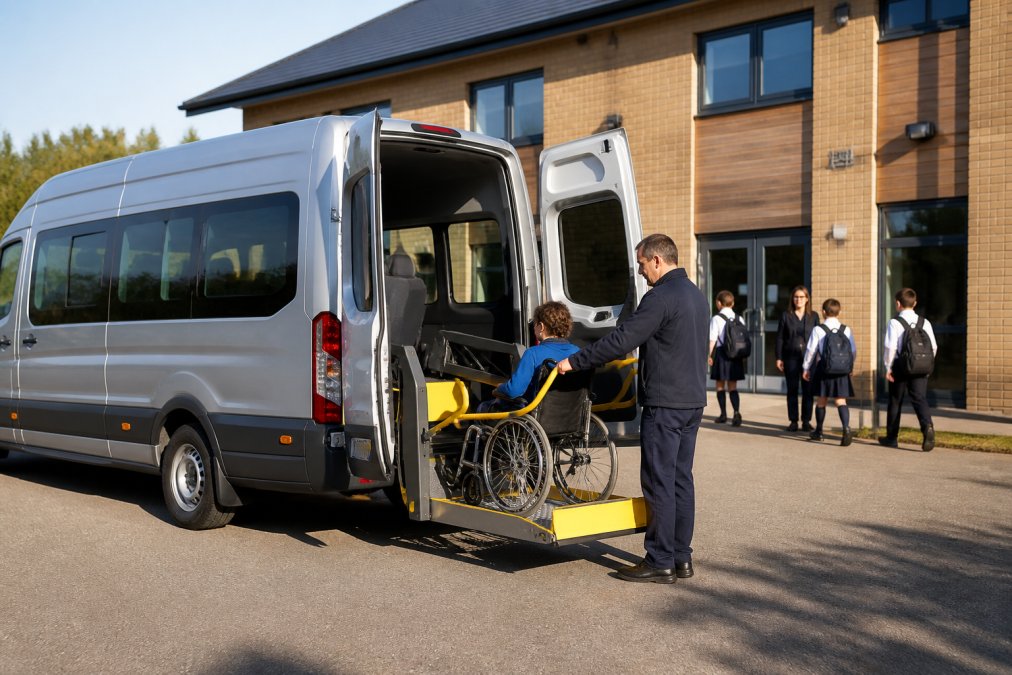
Brand-new vehicles are another significant advantage. You're never dealing with an old, unreliable minibus that breaks down mid-journey. New vehicles meet current safety standards, including the latest compliance requirements for accessible transport. For schools transporting vulnerable young people, that reliability matters enormously.
Leasing also removes the hassle of depreciation and residual value forecasting. You don't own the vehicle, so you're not exposed to market fluctuations in used minibus prices. When the contract ends, you simply hand the vehicle back. No disposal headaches, no unexpected loss of value.
The downsides are real, though. You're locked into a contract term, typically three to five years, with penalties for early termination. If your transport needs change dramatically, you're stuck paying for a vehicle you no longer need. Mileage allowances are another constraint. Most leases come with a fixed annual mileage limit. Exceed it, and you pay a per-mile overage charge. For schools running multiple routes or long-distance trips, this can add up quickly.
You also never build equity. Every payment is gone, you own nothing at the end. For organisations with long-term, stable transport requirements, this feels wasteful.
Buying a minibus outright gives you complete control and unlimited use. There are no mileage restrictions, no contract penalties, no monthly payments once the purchase is complete. If your transport needs expand, you use the vehicle more. The cost per journey decreases as you increase utilisation.
Ownership also builds equity. After you've paid for the vehicle, you own a tangible asset. If your circumstances change and you no longer need the minibus, you can sell it. Depending on the market and the vehicle's condition, you might recover a meaningful portion of your initial investment.
The operational flexibility is genuine. You can modify the vehicle to suit your needs, add wheelchair lifts, reconfigure seating, install specialist equipment, without needing anyone's permission. You control the maintenance schedule and can choose your own service provider.
The downsides, however, are substantial and often underestimated. The upfront capital cost is significant. For many schools and charities, this is simply not available without taking out a loan, which introduces interest costs and debt obligations. Even if you have the capital, using it for a vehicle means it's not available for other priorities.
Maintenance responsibility falls entirely on you. A major repair, engine failure, gearbox problems, structural rust, can cost thousands and disrupt your service. You need to budget for these unpredictable expenses and maintain a contingency reserve. Many organisations discover too late that an old minibus requires constant attention, turning a seemingly cheap purchase into an expensive liability.
Depreciation is another hidden cost. Minibuses lose value over time. A vehicle purchased for £40,000 might be worth £20,000 after five years, that's £4,000 per year in lost value, whether you use the vehicle or not. This depreciation is a real cost, even though it doesn't appear as a monthly payment.
You also carry the compliance and safety burden. As the owner, you're responsible for ensuring the vehicle meets all current safety standards, including MOT testing, servicing intervals, and regulatory updates. Failure to maintain compliance can result in fines or, worse, liability if an incident occurs.
School minibus maintenance contracts are a critical consideration, whether you lease or buy. If you lease, maintenance is typically included, that's one of the key advantages. The leasing company handles all servicing, repairs, and compliance updates. You simply use the vehicle and report any issues.
If you buy, you need to decide whether to purchase a maintenance contract separately or manage repairs as they arise. A maintenance contract provides predictability similar to leasing: a fixed monthly or annual fee covers servicing, repairs, and sometimes parts replacement. This converts an unpredictable ownership cost into a manageable operational expense.
The trade-off is that maintenance contracts usually cap what's covered. Major structural repairs, accident damage, or wear-and-tear beyond normal use might not be included. You need to read the terms carefully to understand what's covered and what isn't.
Get a Bespoke Quote or Speak to a Sector Specialist →
For schools, the reliability benefit of a maintenance contract is substantial. When your minibus breaks down, you need a replacement vehicle quickly, you can't simply cancel transport for the day. A good maintenance contract includes a replacement vehicle provision, ensuring you maintain service continuity.
Servicing intervals are another consideration. Modern minibuses require regular servicing to maintain compliance and reliability. A maintenance contract ensures these intervals are met on schedule. If you're managing repairs independently, it's easy to defer servicing when budget is tight, a decision that often leads to more expensive problems later.
D1 licence requirements for school staff represent a regulatory hurdle that many organisations underestimate. If you're operating a minibus with more than eight passenger seats, your drivers need a D1 category driving licence, not a standard car licence. This is a legal requirement, not optional.

A D1 licence requires additional training and a separate test. For existing drivers, obtaining a D1 can take several weeks and involves both theory and practical assessments. The cost falls on you as the organisation, typically several hundred pounds per driver. If you need multiple drivers qualified, this adds up quickly.
There's also the matter of driver CRB checks and safeguarding training. Staff transporting young people or vulnerable adults must pass enhanced background checks and complete safeguarding certification. This is non-negotiable for schools and care organisations.
The compliance burden extends beyond the driver. The vehicle itself must meet specific safety standards. Section 19 permits are required if you're operating the minibus for community or educational purposes beyond your own staff. These permits involve paperwork, insurance verification, and regular compliance checks.
Many organisations discover too late that their drivers aren't properly qualified or their insurance doesn't cover their actual use case. This creates liability exposure. If an incident occurs and your drivers weren't properly licensed, or your insurance was invalid, you face serious legal and financial consequences.
This is where working with a specialist provider becomes valuable. At Minibus Leasing UK, we handle the compliance complexity for you. We ensure vehicles meet all current standards, we advise on driver licensing requirements, and we help navigate Section 19 permits. Our account managers understand the regulatory landscape because we work with it constantly across the education and care sectors.
The true comparison between minibus leasing vs buying emerges when you calculate total cost of ownership (TCO) over the vehicle's lifetime. This is where many organisations make their decision based on incomplete information.
For leasing, the TCO calculation is straightforward. Multiply your monthly lease payment by the contract length. Add any overage charges for mileage beyond your allowance. That's roughly your total cost. There are no surprises because maintenance is included. If you're considering leasing, Minibus Leasing Special Offers may help you find competitive options tailored to your organisation's needs.
For buying, the calculation is more complex. Start with the purchase price. Add annual servicing and maintenance costs, budget conservatively here; old minibuses are expensive to fix. Add fuel, insurance, and any compliance upgrades needed to meet current standards. Factor in depreciation over the ownership period. For a vehicle you plan to keep for five years, that's a significant portion of the purchase price.
Here's where the numbers often surprise organisations. A minibus purchased for £35,000 might cost £8,000 per year in maintenance and depreciation combined, plus fuel and insurance. Over five years, that's £40,000-£50,000 in total ownership costs, not including the initial capital outlay. A comparable lease might cost £600-£800 per month, totalling £36,000-£48,000 over five years, with zero capital required upfront and zero residual value uncertainty.
The calculation changes if your organisation has very high utilisation. If you're running multiple routes daily and the minibus is generating revenue or delivering significant operational value, buying might make sense. The fixed ownership costs are spread across more journeys, lowering the per-journey cost.
But for many schools and charities with moderate, predictable transport needs, the TCO comparison favours leasing. You avoid the capital expenditure, you eliminate maintenance risk, and you get a brand-new vehicle that meets current compliance standards.
The decision also depends on your organisation's financial position. If you have capital available and prefer to own assets, buying might align with your strategy. If you're managing tight budgets and need flexibility, leasing is often the better choice.
The minibus leasing vs buying decision is ultimately about matching your transport solution to your operational reality. Leasing suits organisations that value predictability, compliance certainty, and operational flexibility. Buying suits those with stable, long-term needs and the capital to invest upfront.
At Minibus Leasing UK, we work with schools, care homes, and community organisations across the country to find the right solution. Our account managers provide whole life cost analysis, helping you understand the true financial impact of each option. We specialise in compliance, Section 19 permits, D1 licensing, safety standards, so you can focus on your core mission. Whether you're exploring leasing options or need guidance on fleet management, speak to a sector specialist at Minibus Leasing UK to discuss your specific requirements and get a bespoke quote tailored to your organisation's needs.
Leasing commits you to fixed monthly payments over a contract term, even if circumstances change. You cannot customise the vehicle to your specific needs, mileage allowances may be restrictive, and early termination often incurs substantial fees. Additionally, you bear responsibility for maintenance within agreed service levels, and you have no residual value or asset ownership at the end of the contract.
Most minibus leasing agreements include maintenance packages that cover servicing, MOT testing, and routine repairs, though the extent depends on your contract terms. Breakdown cover is often included or available as an add-on. Clarify what is covered in your maintenance contract before signing, as some repairs or damage may fall outside the agreement and become your responsibility.
D1 licence entitlement determines who can legally drive your minibus. If your staff hold only standard B licences, you must either lease or purchase minibuses with nine or fewer seats (including the driver), or invest in D1 driver training. This significantly impacts vehicle choice, operational flexibility, and overall procurement costs. Leasing providers can advise on compliant vehicle specifications that match your team's licensing.
This depends on your total cost of ownership calculation. Leasing offers fixed, predictable monthly costs with included maintenance, whilst buying a used minibus has lower upfront costs but unpredictable repair expenses and potential hidden safety issues. A new purchased vehicle may offer better residual value and reliability but requires significant capital expenditure. Compare your expected mileage, contract length, and maintenance risk tolerance to determine which suits your school's budget.

