Sep 16, 2026
Last Updated: September 16, 2026
Tax exemptions for charity owned vehicles depend on three things: who owns the vehicle, how it is used, and what kind of vehicle it is. Get any one of those wrong and HMRC will treat the vehicle as a standard commercial asset.
At Minibus Leasing UK, we work with charities, schools, care homes and community groups, and the same question comes up every time a fleet is renewed: which vehicles can legitimately be run tax-free, and which cannot?
The short answer is that a vehicle qualifies when a registered charity owns it, uses it wholly or mainly for charitable purposes, and it is not made available for private use in a way that triggers a benefit. A minibus used to carry elderly residents to a day centre qualifies. The same minibus lent to a trustee for a family holiday does not.
That distinction matters because HMRC guidance on charitable exemptions is applied to the facts of each case, not to the label on the vehicle. Below, we break down the eligibility rules, the minibus-specific permit requirements, the DVLA application process, and the mistakes that cost charities their exemption.
A charity minibus qualifies for vehicle tax exemption when it is owned by a charitable organisation, used for the transport of people connected to the charity's purposes, and not hired out for profit. The exemption is not automatic; it must be applied for and it can be withdrawn.
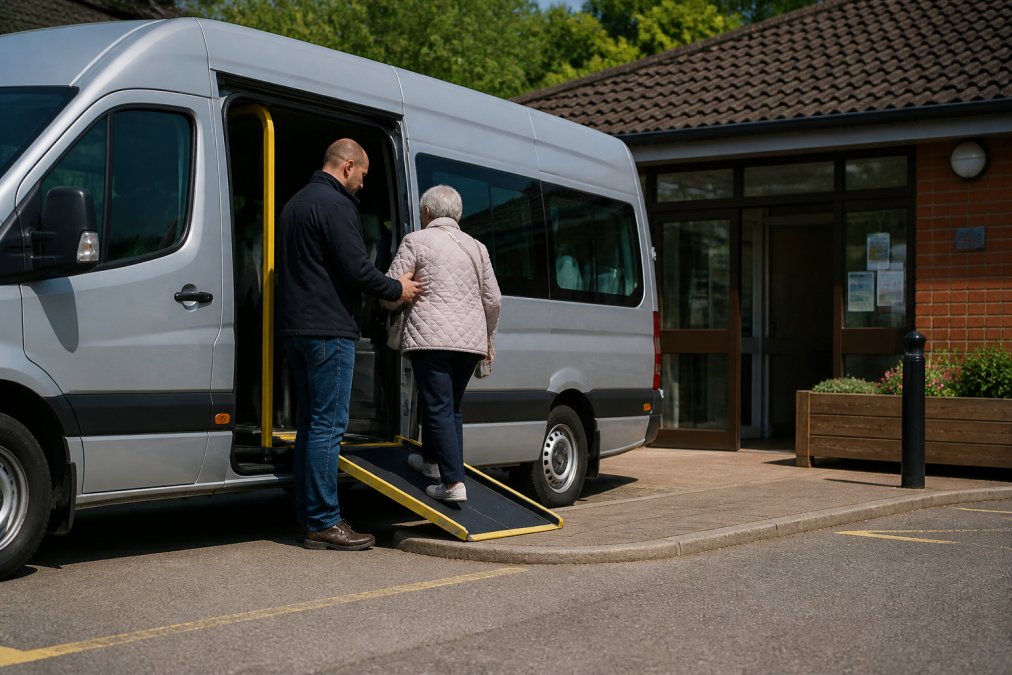
The types of vehicle that commonly qualify include:
What most organisations miss is that the vehicle does not need to be brand new, but it does need to be documented. HMRC and the DVLA both expect a clear paper trail linking the vehicle to the charity's purposes, and that trail is what an auditor will ask for.
A Section 19 permit allows a charity or community group to operate a minibus without a full public service vehicle licence, provided the service is not run for profit. The permit is issued under the Transport Act framework and is separate from the tax exemption, but the two are often checked together.
Here is where charities get caught out. A Section 19 permit does not remove the need for the correct driving entitlement. Drivers who passed their test after 1 January 1997 usually need category D1 on their licence to drive a minibus over 3.5 tonnes, or they must meet the conditions for driving under a Section 19 permit without D1.
If your drivers are not correctly licensed, your insurance can be void and your exemption position becomes far harder to defend. This is one of the most common reasons a charity's fleet ends up non-compliant.
Applying for vehicle tax exemption DVLA is handled at the point of taxing the vehicle, and for most charities it follows a predictable sequence. The application is made through the DVLA, with supporting evidence of charitable status.
DVLA guidance on vehicle tax exemptions
The DVLA will not process an exemption without the correct declaration. If the vehicle is leased rather than owned outright, the position changes, and that is covered further down.
HMRC sets out the treatment of vehicles for tax purposes, and charities should work from the official guidance rather than second-hand advice. The relevant material covers charitable exemptions, the treatment of benefits, and the conditions under which relief applies.
Keep the following on file:
A common mistake is treating the exemption as permanent. It is not. If the vehicle's use changes, the exemption can fall away, and you are responsible for telling the DVLA.
Get a Bespoke Quote or Speak to a Sector Specialist →
VAT relief on charity vehicles applies in narrower circumstances than most people assume. The relief is not a blanket exemption for any vehicle a charity buys or leases.
Broadly, relief can apply where a vehicle is designed or adapted for the transport of disabled people, and the charity meets the conditions set out in HMRC's guidance. A standard minibus bought for general community transport usually does not qualify for this relief on its own.
What you cannot do is assume that charitable status alone unlocks VAT relief. It does not. The vehicle's specification and its intended use both matter, and the supplier must apply the correct treatment at the point of sale or lease.
This is exactly where a consultative leasing partner earns its keep. Getting the specification right at the outset, rather than retrofitting after delivery, keeps the relief defensible.
Most failed claims come down to documentation and use, not to the vehicle itself. Charities that lose their exemption usually did one of four things.
The private use point is the one that catches people. A minibus that is "mostly" used for charitable transport but is regularly borrowed for personal trips is not wholly or mainly used for charitable purposes.
Leasing is often the more practical route for charities that need compliant, reliable vehicles without tying up capital. The key is structuring the agreement so the tax and permit position stays clean.
With a lease, the finance company owns the vehicle and the charity operates it. That means the vehicle tax exemption application needs to reflect the actual registered keeper, and your leasing partner should be able to confirm exactly how that is handled before you sign.
Minibus Leasing UK specialises in tailored minibus procurement and fleet management for the education, care, community and commercial sectors. Our team works with charities on whole life cost analysis, so you can compare the true cost of running an ageing vehicle against a brand-new one, factoring in maintenance, downtime and compliance risk rather than just the monthly figure.
For charities needing accessible transport for care home residents, or strong crew vans for operational teams, we provide brand-new vehicles matched to your specification. Our dedicated account managers handle the procurement, so your team is not chasing suppliers or second-guessing the paperwork.
| Route | Ownership | Tax Exemption Position | Best For |
|---|---|---|---|
| Outright purchase | Charity owns | Straightforward to claim | Well-funded charities with capital |
| Lease | Finance company owns | Depends on registered keeper | Charities preserving capital |
| Contract hire | Provider owns | Provider confirms treatment | Fleets needing predictable costs |
| Community hire | Third party owns | Not applicable to charity | Occasional transport needs |
GOV.UK guidance on community transport permits
The challenge for most charities is not understanding the rules in principle, it is keeping every vehicle, driver and permit aligned as the fleet changes.
No. You must apply to the DVLA and meet specific criteria. The vehicle must be solely for charitable purposes, such as transporting disabled passengers or providing transport for a charity's beneficiaries. You will need to provide proof of your charity status and the vehicle's use. If the vehicle is used for non-charitable purposes, it will not qualify.
Yes, a charity minibus can qualify for tax relief if it is used for charitable purposes and meets the DVLA's criteria. This often includes vehicles with more than eight passenger seats used by a charity. You must apply for the exemption and may need to provide evidence of your Section 19 permit if applicable. The rules on charity minibus tax rules are specific, so check HMRC guidance.
You apply for vehicle tax exemption by completing the relevant DVLA form, usually a V55/4 or V10, and providing proof of your charity's status and the vehicle's charitable use. You can apply at a Post Office that handles vehicle tax or by post. The DVLA will review your application and may request further evidence. The process for applying for vehicle tax exemption DVLA is straightforward if you have the right documents.
A common mistake is assuming all vehicles qualify for VAT relief. Relief is often limited to vehicles adapted for disabled passengers or those used solely for charitable purposes. Another error is not keeping proper records of the vehicle's use. Also, failing to check if you can reclaim VAT on leasing or maintenance costs can lead to missed savings. Always consult HMRC guidance for VAT relief on charity vehicles.

