Jul 06, 2026
Last Updated: July 6, 2026
Choosing the right crew van makes the difference between smooth logistics operations and constant headaches. This guide examines leading crew van models available in 2026, showing which vans suit different fleet scenarios, what specifications matter most, and how to calculate true cost of ownership.
A crew van differs fundamentally from a standard cargo van in seating configuration and space allocation. Crew vans prioritise passenger comfort with dedicated seating for 4-6 people, integrated safety partitions between crew and cargo, independent climate control, and structural reinforcement for weight distribution. Cargo vans maximise cargo volume by removing rear seating entirely, built for single drivers or two-person teams.
For logistics operations, crew van configuration matters because your team spends hours in the vehicle. Poor seating ergonomics lead to driver fatigue, increasing accident risk and reducing efficiency. Proper crew vans address this with adjustable seating, better visibility, and noise insulation.
Research from the National Safety Council's commercial vehicle safety guidelines emphasises that driver comfort directly correlates with accident prevention. Teams using properly configured crew vans report fewer incidents during high-frequency delivery routes.
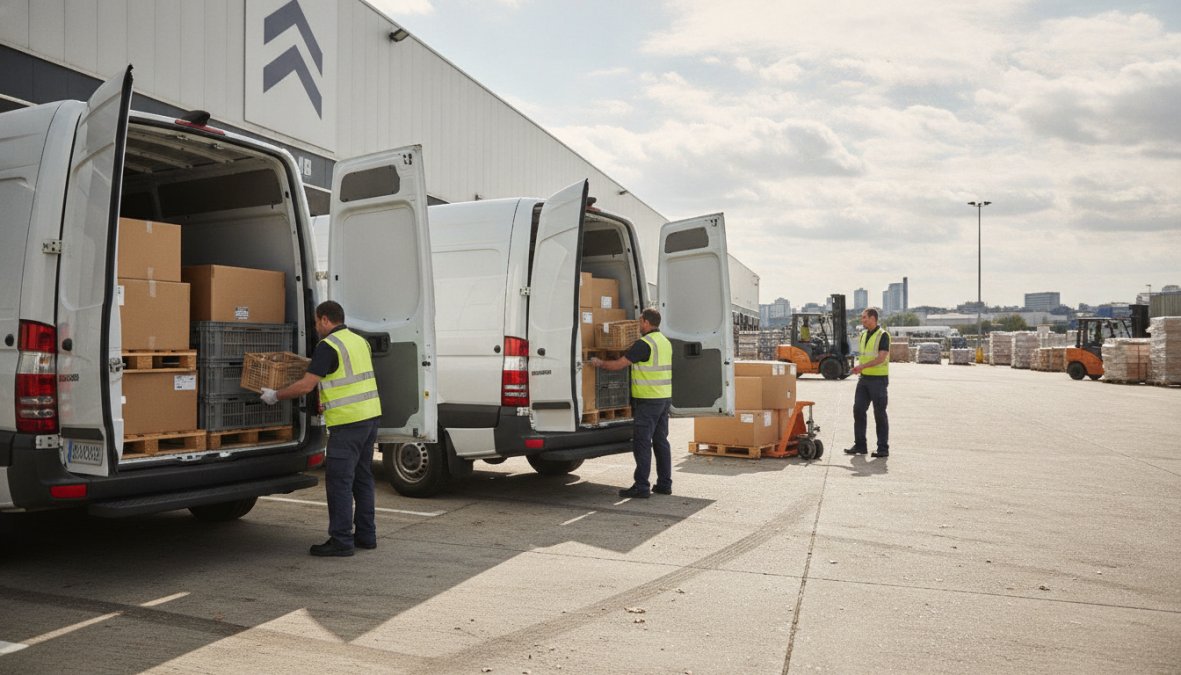
The crew van market in 2026 offers several proven options, each with distinct strengths for different logistics scenarios.
The Sprinter remains the premium choice for logistics operations prioritising reliability and long-term durability. It seats up to five passengers, includes available All-Wheel Drive, and offers multiple roof heights and wheelbase configurations. The diesel engine delivers high torque suitable for heavy loads.
The Sprinter's strength lies in its aftermarket upfitting ecosystem. Thousands of specialist companies manufacture shelving, partitions, and storage solutions specifically for Sprinter dimensions. The trade-off is cost, Sprinter pricing sits at the premium end of the market.
Best for: Logistics companies requiring a premium, reliable, and highly customisable fleet vehicle with long service life expectations.
The Transit balances cargo capacity with passenger flexibility, backed by an extensive service network. Ford offers flexible powertrain options including gas and electric (E-Transit), available in multiple lengths and roof heights, advanced driver-assist technology, and Ford Pro telematics for fleet management integration.
The E-Transit appeals to urban logistics operations facing emissions restrictions, though electric range limitations (approximately 170 miles per charge) constrain long-haul routes. For city delivery networks, this works perfectly.
Best for: Businesses needing a dependable, widely supported fleet vehicle with strong cargo and passenger flexibility, particularly for urban and regional delivery networks.
The ProMaster's front-wheel drive delivers practical advantages for logistics work. The lower load floor simplifies cargo handling, reducing fatigue and back injuries. It offers best-in-class standard cargo width and height, crew package seating up to six passengers, integrated safety partition, and improved traction in challenging conditions.
Front-wheel drive provides less towing capacity than rear-wheel-drive alternatives, limiting options if you need to pull trailers occasionally.
Best for: Logistics operations that prioritise maximum interior cargo volume and easy loading/unloading, particularly teams handling bulky or awkwardly shaped items.
The Crafter excels in ergonomics, with seating designed for crews spending full shifts in the vehicle. Features include ergonomic seating with under-seat storage, advanced safety systems like Automatic Post-Collision Braking, multiple roof and length configurations, and efficient 2.0-litre TDI diesel engines. Sound insulation and interior quality exceed most competitors in the same price bracket.
The Crafter commands a cost premium and complex driveline options can make specification difficult.
Best for: Companies looking for a premium, durable, and driver-focused van for intensive daily use, particularly teams prioritising long-term reliability and comfort.
The Transit Custom occupies the mid-size segment, offering balance between the full-size Transit and compact alternatives. It provides benchmark comfort and driving experience with advanced connectivity and safety technology. The driving dynamics feel more car-like than larger vans, which matters for crews navigating urban environments.
The trade-off is cargo volume, you're sacrificing interior space compared to full-size vans.
Best for: Logistics fleets that need a balance of passenger comfort and cargo utility for daily operations, particularly urban delivery services.
The NV200 serves compact urban logistics operations where manoeuvrability matters more than maximum cargo volume. It features a three-seat sliding bench in the second row, integrated safety partition wall, compact footprint for easy city navigation, and foldable rear seating to maximise cargo volume when needed.
The vehicle excels in congested city traffic where larger vans struggle to park. Fuel efficiency significantly exceeds full-size alternatives. However, cargo space limitations mean this van isn't suitable for heavy-duty long-haul logistics.
Best for: Urban delivery services and small businesses needing a compact, efficient crew-carrying solution for city-based operations.
Driver safety in crew vans extends beyond standard airbags and stability control. High-frequency delivery operations create specific risks: fatigue from repetitive routes, distraction in congested environments, and physical strain from loading/unloading cycles.
Modern crew vans address these through integrated safety partitions that prevent cargo shifting into the passenger area during sudden stops, advanced driver-assist systems that monitor lane position and alert drivers to unintended drift, and electronic stability control that prevents jackknifing with heavy loads.
Ergonomic seating design reduces back strain and neck fatigue, directly impacting reaction time and decision-making. Visibility matters significantly, crew vans with larger windows, integrated blind-spot cameras, and lower load floors improve situational awareness. Some models include 360-degree camera systems that eliminate blind spots common in traditional vans.
According to the Health and Safety Executive's guidance on commercial vehicle safety, proper seating configuration and visibility systems reduce accident rates by up to 30% in delivery operations, translating directly to insurance premiums and team wellbeing.
Three metrics matter most: cargo volume (interior space), payload capacity (weight the van can safely carry), and wheelbase (distance between front and rear axles).
Cargo volume measures interior space in cubic metres. A full-size crew van typically offers 8-12 cubic metres depending on roof height and wheelbase length. However, payload capacity often becomes the limiting factor before you fill the space.
Payload capacity determines how much weight you can load after accounting for fuel, passengers, and equipment. Calculation: Maximum Gross Vehicle Weight Rating minus the vehicle's kerb weight. A crew van with six passengers (approximately 600 kg combined) leaves significantly less payload capacity than a two-person cargo van.
Wheelbase affects handling and manoeuvrability. Longer wheelbases provide more cargo space but reduce turning radius. In urban logistics, a long-wheelbase van might not fit in tight delivery zones, forcing you to park further away and manually carry cargo.
| Van Model | Typical Cargo Volume | Typical Payload | Wheelbase Options | Best For |
|---|---|---|---|---|
| Mercedes-Benz Sprinter | 10-17 m³ | 1,200-1,600 kg | 3,665-4,325 mm | Heavy cargo, long routes |
| Ford Transit | 9-15 m³ | 1,100-1,500 kg | 3,600-4,200 mm | Mixed cargo, flexibility |
| Ram ProMaster | 11-16 m³ | 1,400-1,700 kg | 3,600-4,000 mm | Bulky items, easy loading |
| Volkswagen Crafter | 10-18 m³ | 1,200-1,550 kg | 3,640-4,325 mm | Long-distance, comfort |
| Ford Transit Custom | 7-11 m³ | 900-1,200 kg | 3,200-3,800 mm | Urban delivery, balance |
| Nissan NV200 | 4-6 m³ | 600-800 kg | 2,725 mm | City delivery, compact |
Purchase price represents only the starting point of crew van costs. Maintenance, fuel, insurance, and depreciation accumulate significantly over the vehicle's service life.
Maintenance schedules vary by manufacturer. Mercedes-Benz Sprinters typically require servicing every 20,000 miles or annually. Preventive maintenance costs less than emergency repairs, a £150 oil change interval prevents £2,000+ engine damage from neglect.
Fuel efficiency directly impacts operational budgets. A Ford Transit diesel achieves approximately 35-40 miles per gallon under typical delivery conditions. An electric E-Transit costs roughly 3-4 pence per mile in electricity versus 12-15 pence per mile for diesel. For urban operations running 200+ miles daily, electric vehicles reduce fuel costs by 70-80%.
Insurance premiums reflect the van's value, repair costs, and accident history. Crew vans typically cost 15-20% more to insure than equivalent cargo vans due to higher replacement value and more complex safety systems.
Depreciation represents a significant cost. A £45,000 crew van depreciates approximately 50% over five years, a £22,500 loss that should factor into your lease-versus-buy analysis. Many logistics operations find that leasing options, including Minibus Leasing Special Offers, provide more predictable budgeting by spreading costs across the contract period rather than absorbing large depreciation hits.
A base crew van becomes a logistics tool through strategic upfitting. Shelving systems, partition walls, climate control modifications, and specialised storage transform generic vans into efficient mobile depots.
Upfitting decisions should match your specific cargo type. A team delivering small parcels benefits from modular shelving allowing quick configuration changes. A team hauling heavy tools needs reinforced racks and secure mounting systems.
Common upfitting options include: safety partition walls (£800-2,000) that prevent shifting loads from injuring passengers; shelving systems (£1,500-4,000) that organise cargo and maximise vertical space; tool storage lockers (£600-1,500); and climate control modifications (£2,000-5,000) for temperature-sensitive cargo.
The Mercedes-Benz Sprinter dominates the upfitting market because thousands of specialist companies manufacture solutions specifically for Sprinter dimensions. Ford Transit vans have nearly equivalent aftermarket support. Smaller models like the Nissan NV200 have limited options.
Engine choice significantly affects operational costs and environmental compliance. Modern crew vans offer diesel, petrol, and electric powertrains, each with distinct advantages.
Diesel engines dominate commercial logistics because they deliver superior torque and fuel efficiency. A typical crew van diesel engine produces 150-210 horsepower with 350-450 Newton-metres of torque. This torque matters when accelerating with full payload on motorways or climbing steep gradients.
Fuel consumption varies by driving pattern. Steady motorway cruising achieves 40+ miles per gallon. Stop-start urban delivery reduces efficiency to 25-30 miles per gallon. Most logistics operations run mixed profiles, averaging 30-35 miles per gallon with diesel.
Electric crew vans (primarily the Ford E-Transit in 2026) offer dramatically lower per-mile costs but with range limitations. The E-Transit achieves approximately 170 miles per full charge, sufficient for urban delivery networks but inadequate for regional operations. Charging infrastructure remains sparse outside major cities.
Hybrid powertrains (available on some Transit Custom models) provide compromise solutions, improving efficiency over pure diesel while avoiding range anxiety. However, hybrid systems add complexity and cost without delivering the efficiency gains of full electric for urban operations.
The Society of Motor Manufacturers and Traders' commercial vehicle efficiency data shows that 2026 crew van models achieve 15-20% better fuel efficiency than 2020 equivalents through incremental engineering improvements.
Choosing the right crew van for your logistics operation requires balancing competing priorities: cargo capacity, passenger comfort, fuel efficiency, maintenance costs, and upfitting potential. The vehicle that works perfectly for urban parcel delivery differs fundamentally from one suited to regional heavy-goods distribution.
Minibus Leasing UK helps logistics teams navigate this complexity through consultative analysis of your specific operational requirements. Rather than recommending a generic "best" van, we examine your actual route profiles, cargo patterns, team size, and budget constraints to identify the optimal vehicle configuration. Our whole-life cost analysis accounts for maintenance, fuel, insurance, and depreciation, revealing which crew vans deliver genuine value over their operational life.
A crew van prioritises passenger seating alongside cargo space, making it ideal for transporting work teams to job sites. Cargo vans maximise load volume with minimal seating. For logistics operations requiring both crew transport and cargo delivery, crew vans offer superior flexibility. The trade-off is slightly reduced cargo volume compared to purpose-built cargo vans, but the ability to carry personnel makes crew vans essential for most commercial logistics teams.
The Ford Transit Custom and Nissan NV200 Crew Van lead in fuel efficiency, particularly with diesel and hybrid options. Modern crew vans typically achieve 25-35 mpg depending on engine type and load. For high-mileage logistics fleets, choosing a van with efficient diesel engines or hybrid powertrains significantly reduces operational costs. Total cost of ownership calculations should factor in fuel consumption across your typical delivery routes.
Essential safety features include advanced driver-assist technology, automatic post-collision braking, integrated safety partitions between crew and cargo areas, and robust stability control. The Mercedes-Benz Sprinter and Volkswagen Crafter excel in ergonomic seating and visibility. For drivers spending extended hours on delivery routes, features like adaptive cruise control, blind-spot monitoring, and high-quality sound insulation reduce fatigue and improve safety outcomes.
Total cost of ownership includes purchase price, fuel consumption, maintenance schedules, insurance, depreciation, and downtime costs. Crew vans with simpler mechanical designs (like the Ford Transit) typically have lower maintenance costs. Warranty coverage and parts availability also affect long-term expenses. A data-driven whole life cost analysis comparing models across your expected usage patterns, including mileage, terrain, and payload requirements, ensures you select the most cost-effective option for your logistics operations.

