
Jul 18, 2026
Last Updated: July 18, 2026
Ensuring safe, legally compliant student transport is critical for UK schools and local authorities. Whether managing mainstream home-to-school routes or specialist SEND transport, the regulatory landscape demands rigorous safeguarding, vehicle compliance, and operational oversight. This guide covers everything you need to know about compliant student transport solutions UK, from DBS checks and vehicle standards to technology platforms and cost-effective fleet strategies.
Compliant student transport solutions are end-to-end systems combining vehicle standards, driver vetting, safeguarding protocols, real-time tracking, and administrative processes to meet UK regulatory requirements for moving students safely between home and school.
True compliance means verified drivers with Enhanced DBS clearance, vehicles passing regular MOT and maintenance checks, appropriate insurance, risk-assessed routes, and transparent parent communication. Compliant operations require documented risk assessments, incident reporting procedures, contract management systems, and clear audit trails. Technology, GPS tracking, parent apps, and dispatch software, now forms the backbone of modern transport management, but only when combined with strong processes and trained staff.
Local authorities have a statutory duty to provide free home-to-school transport for eligible children under the Education Act 1996. This extends to pupils with Special Educational Needs and Disabilities (SEND), who may require specialist transport. Vehicle standards, driver licensing, insurance, and safeguarding fall under the Public Passenger Vehicles Act 1981 and the Health and Safety at Work etc. Act 1974.
A Section 19 permit is the legal authorisation allowing non-profit organisations (schools, charities, councils) to operate minibuses for educational purposes. Without it, operating a minibus for school transport is illegal.
Obtaining a Section 19 permit requires demonstrating:
The permit is free but requires careful documentation and is valid for five years, with annual declaration of operational changes required. Larger operators or those running commercial services may require a full operator's licence instead, which involves ongoing traffic commissioner monitoring.
Every vehicle used for student transport must pass annual MOT testing and maintain documented maintenance records. Best-practice operations conduct daily walkaround checks before every journey, documenting tyre condition, lights, brakes, and general vehicle condition.
Maintenance records must be kept and made available for inspection, including servicing schedules, repairs, and modifications. Fleet management software can track maintenance automatically, generating alerts when services are due.
For specialist SEND transport, additional modifications may be required: wheelchair lifts, secure harnesses, accessible doors, and interior safety features. These must be installed by certified providers and regularly inspected.
Every adult with unsupervised access to children must undergo an Enhanced Disclosure and Barring Service (DBS) check. This is mandatory and non-negotiable. Organisations failing to conduct these checks face prosecution, loss of operating permits, and civil liability.
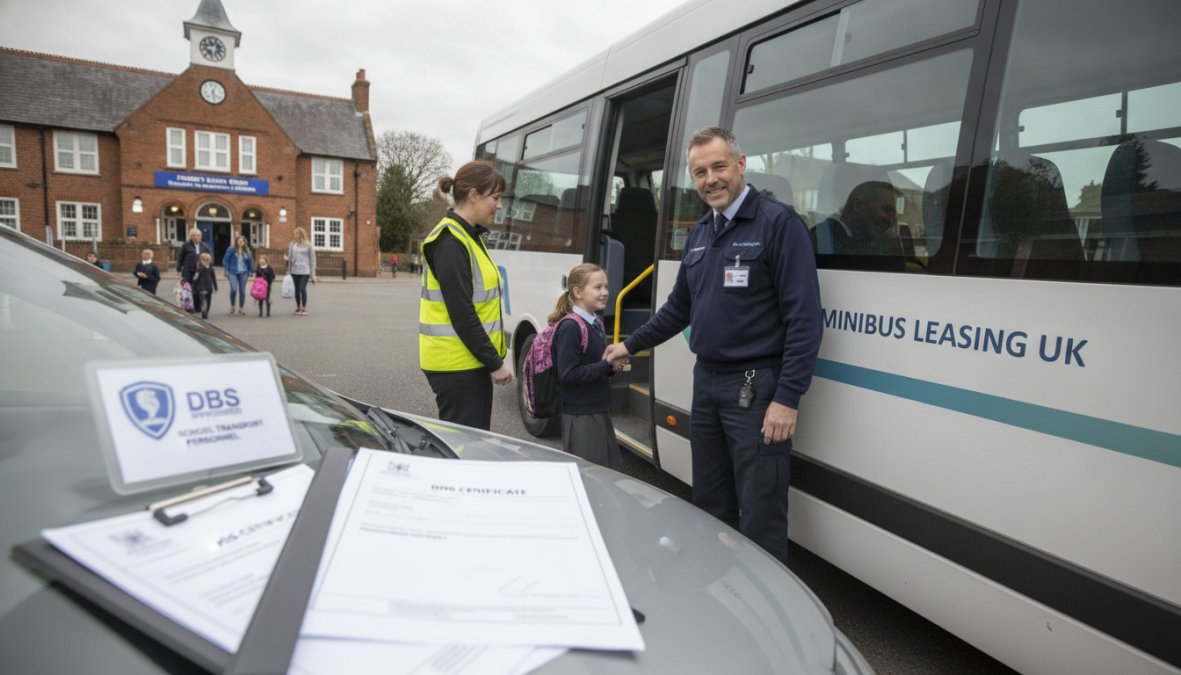
The Enhanced DBS process involves the individual completing an application form with personal details and address history. The DBS searches multiple databases including police records and the sex offender register. Processing typically takes 2-4 weeks.
Beyond the DBS, best-practice vetting includes:
All transport staff must receive annual safeguarding training covering:
Incident reporting is critical. Any concern, a student disclosing abuse, a driver noticing suspicious injuries, a passenger assistant observing inappropriate behaviour, must be reported to the designated safeguarding lead immediately. Organisations must have clear procedures for recording, investigating, and acting on reports.
Local authorities have a statutory duty to provide free transport for eligible SEND pupils as defined by Education, Health and Care (EHC) plans. Some students can access mainstream buses with support; others require fully specialist transport with adapted vehicles, trained escorts, and individualised risk assessments.
Wheelchair-accessible minibuses are equipped with hydraulic or electric lifts, securing systems, and interior space to accommodate wheelchairs safely. These vehicles must meet strict safety standards:
SEND vehicles often require additional safety equipment: secure harnesses for students unable to sit independently, grab rails, emergency communication systems, and climate control for medical needs. Each piece of equipment must be appropriate to individual student needs and regularly checked.
An Education, Health and Care (EHC) plan specifies whether a student is eligible for free transport, any specific transport requirements (wheelchair access, medical equipment, escort support), journey patterns, and behavioural or medical considerations relevant to transport.
Transport operators must read and understand each student's EHC plan before that student uses the service. A plan might specify that a student requires a consistent escort for continuity, has seizure risk requiring trained adult supervision, or has severe anxiety requiring a calming environment.
Individualised transport planning means conducting a risk assessment for each student, identifying potential hazards, and putting control measures in place. For some students, this means 1:1 escort support; for others, it means a specially trained driver understanding the student's communication style and needs.
Risk assessment is the systematic process of identifying hazards in your transport operation and putting controls in place to minimise harm. It's ongoing, not a one-time exercise.
A transport risk assessment should cover vehicle safety, driver competence, route hazards, student-specific risks, operational procedures, and safeguarding and supervision.
Potential hazards include vehicle breakdown, driver fatigue or illness, aggressive student behaviour, road traffic collision, student elopement, medical emergencies, and safeguarding concerns.
For each hazard, assess likelihood and severity. Vehicle breakdown is likely but usually manageable; serious collision is less likely but catastrophic. Control measures should be proportionate: for breakdowns, implement regular maintenance, pre-journey checks, breakdown cover, and contingency transport; for driver fatigue, set maximum shift lengths, conduct medical fitness checks, and provide awareness training; for student behaviour, conduct pre-journey risk assessments, train escorts in de-escalation, and establish clear behaviour policies.
Every incident should be recorded, documenting what happened, when and where, who was involved, immediate actions taken, injuries or damage, contributing factors, and follow-up actions required.
Review incident data regularly. A pattern of similar incidents indicates a control measure isn't working and needs strengthening. If repeated near-misses occur at a particular pick-up point, change the location, adjust arrival times, or provide additional driver training. If a student's behaviour escalates, increase escort support or review whether transport arrangements meet their needs.
GPS tracking, real-time parent apps, dispatch software, and fleet management systems are increasingly essential for compliance, efficiency, and parent confidence. Technology serves safety, efficiency, communication, compliance, and data analysis purposes.
GPS tracking monitors vehicle location in real-time, allowing dispatch teams to track journeys and respond to delays or emergencies. Parent apps provide visibility to families, showing arrival times, delay notifications, and pick-up confirmation.
Real-time tracking also serves safeguarding purposes. Vehicle route deviations trigger immediate investigation. Consistent speeding or harsh-braking data provides evidence for training or disciplinary action. Some systems use AI to flag unsafe driving behaviours automatically.
However, technology is only effective when supported by clear processes. A parent app is useful only if parents know how to use it and trust the data. GPS data showing speeding is valuable only if there's a clear process for addressing unsafe driving.
Route optimisation software analyses pick-up and drop-off locations and creates efficient routes minimising journey time and fuel consumption. For SEND transport with multiple destinations, optimisation is particularly valuable.
Dispatch software manages operational aspects: assigning drivers to routes, managing absences and late calls, communicating changes to parents, and tracking journey completion. Integration between dispatch and real-time tracking creates a complete operational picture.
Research shows councils using integrated transport management systems typically see 15-20% reductions in transport costs through route optimisation and better resource utilisation, while improving safeguarding through documented audit trails and automated compliance checks.
Student transport is expensive. A typical school minibus costs £35,000-£50,000, requires annual maintenance of £2,000-£3,500, and needs replacing every 8-10 years. For local authorities running dozens of routes, transport can consume 10-15% of the education budget.
Cost efficiency means getting maximum value without compromising safety or compliance, requiring understanding of true costs: fuel, driver wages, maintenance, insurance, vehicle replacement, administration, and technology.
A whole life cost analysis calculates the true cost of owning or leasing a vehicle over its entire lifecycle, including purchase price, financing costs, fuel, maintenance, insurance, road tax, vehicle replacement, and administration time.
The total cost of owning a minibus over 8 years often exceeds £60,000-£70,000. Leasing with fixed monthly payments can be more cost-effective and predictable. Leasing offers advantages: predictable monthly costs with no surprise repair bills, brand-new reliable vehicles, included maintenance and servicing, flexibility to adjust fleet size, and access to specialist vehicles without large capital outlay. Exploring [Minibus Leasing Special Offers](https://www.minibusleasinguk.co.uk/page/minibus-leasing-offers) can help identify cost-effective leasing solutions tailored to your transport needs.
Electric minibuses produce zero tailpipe emissions, cost roughly a third of diesel to fuel, and have lower maintenance costs. However, they require charging infrastructure costing £3,000-£8,000 per charging point.
Switching from diesel to electric reduces carbon emissions by approximately 50-70% over the vehicle's lifetime. Government grants through the Green Bus Fund and other schemes provide capital funding, making electric vehicles financially attractive within 5-7 years for many organisations.
Procuring student transport requires balancing cost, compliance, capacity, and quality. Procurements focused only on cost often result in poor-quality services and compliance failures. The best procurements are clear about requirements, set realistic timescales, and evaluate quality alongside cost.
If contracting with external operators, the tender should specify vehicle standards, driver requirements (DBS clearance, CPC, safeguarding training), insurance coverage, technology and tracking systems, communication protocols, incident reporting and safeguarding procedures, performance standards, and contract monitoring arrangements.
Evaluating tenders should involve multiple criteria: price (important but not sole factor), compliance capability, experience with similar services, technology systems, and safeguarding approach. A tender weighting cost at 40% and compliance/quality at 60% typically results in better outcomes than cost-focused evaluation.
Managing contracts means regular communication about performance and issues, monitoring compliance through spot checks and audits, reviewing incident data and driving behaviour analytics, holding regular performance meetings, and acting quickly on concerns.
Digital contract management platforms track performance data automatically. Real-time tracking feeds into dashboards showing punctuality, driver behaviour, and vehicle condition. Incident reports are logged and monitored, creating transparency and enabling early problem identification.
Compliant student transport solutions UK require attention to detail, investment in the right systems and training, and genuine commitment to safeguarding and continuous improvement. Whether you're a school running your own minibus, a local authority managing dozens of routes, or a care provider operating specialist SEND transport, the principles are the same: verify drivers, maintain vehicles, track operations, and respond to incidents. The right technology, training, and governance structures make this manageable.
| Element | Best Practice | Impact |
|---|---|---|
| DBS Checks | Enhanced clearance, renewed every 3 years | Prevents unsuitable staff accessing children |
| Vehicle Maintenance | Daily walkaround checks + annual MOT | Reduces breakdowns and safety incidents |
| Risk Assessment | Documented, reviewed annually, incident-driven updates | Identifies and controls hazards proactively |
| Technology | Real-time tracking + parent app + dispatch software | Improves safety, efficiency, and transparency |
| SEND Planning | Individual risk assessment per student, documented | Ensures specialist transport meets needs safely |
| Cost Management | Whole life cost analysis, consider leasing | Optimises budget without compromising quality |
| Incident Response | Clear reporting procedure, root cause analysis | Drives continuous improvement |
Compliant student transport solutions must meet several legal requirements including operating licences (Section 19 permits for smaller operators), enhanced DBS checks for all drivers, vehicle compliance with MOT standards and safety regulations, and comprehensive safeguarding policies. Local authorities hold statutory duty to provide free home-to-school transport for eligible pupils. All operators must maintain insurance, conduct risk assessments, and ensure vehicles meet accessibility standards where required for SEND pupils.
DBS checks for school transport UK are essential because they verify that drivers and staff have no criminal convictions or safeguarding concerns that would make them unsuitable to work with children. Enhanced DBS clearance goes beyond standard checks to include local police records. Combined with ongoing safeguarding training, DBS checks form the foundation of child protection in student transport, ensuring parents and schools can trust that their pupils are in safe hands throughout their journey.
SEND transport UK guidance requires tailored solutions for pupils with Special Educational Needs and Disabilities. This includes wheelchair-accessible vehicles, specialist equipment like hoists and harnesses, trained passenger assistants, and individualised journey planning aligned with EHC (Education, Health and Care) plans. Operators must understand specific medical or behavioural needs and provide appropriately trained staff. Risk assessments must account for individual vulnerabilities, and vehicles must meet additional accessibility standards beyond standard minibus requirements.
A school transport risk assessment UK should identify hazards such as vehicle breakdowns, driver fatigue, route safety, and passenger behaviour. Control measures might include daily vehicle walkaround checks, driver training and CPC certification, route planning avoiding dangerous roads, and safeguarding protocols. The assessment must document incident reporting procedures, emergency protocols, and regular review cycles. Risk assessments should be documented with clear audit trails, reviewed annually or when circumstances change, and involve input from drivers, schools, and local authorities.

