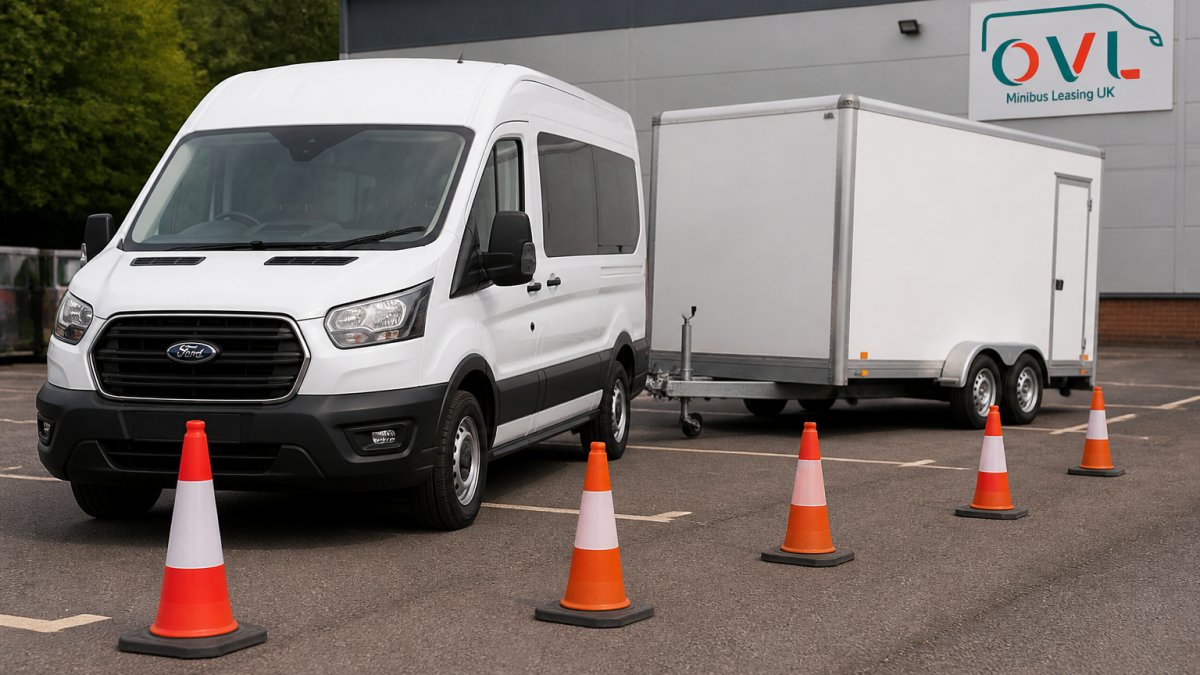
Oct 20, 2026
Last Updated: 20 October 2026
A D1 licence minibus towing rules question trips up more fleet managers than almost any other driving entitlement issue. The short answer: your standard D1 category lets you drive a minibus, but it does not automatically let you pull a trailer behind it. This guide from Minibus Leasing UK sets out exactly what your licence covers, when you need the extra D1E category, and how to stay legal when towing from your Northampton base or anywhere else in the United Kingdom.
Get this wrong and you risk invalid insurance, a fine, and a vehicle off the road. The rules are not complicated once you see them laid out.
D1 entitlement is the category that lets you drive a minibus with between 9 and 16 passenger seats, provided you passed your car test before 1 January 1997 or gained the category separately. It does not, on its own, include trailer towing rights.
Here is what D1 alone allows:
Anything heavier than a small trailer needs D1E. That is the distinction most people miss.
The quickest way to confirm what you can legally drive is the official government service. Use the DVLA view driving licence service to see your categories instantly. It shows every entitlement, including D1 and D1E, plus any expiry dates on your photocard.
Check this before you sign any lease. It takes two minutes and prevents a costly mistake.
D1E is the category that adds trailer towing to your minibus entitlement. You need it whenever the combined weight of minibus and trailer exceeds the limits D1 allows, or when the trailer itself is over 750kg.
The D1E licence minibus and trailer combination typically covers:
To gain D1E you must pass a separate practical driving test in the relevant vehicle and trailer combination. There is no theory-only route.
For organisations running accessible transport, a trailer often carries ramps or equipment. That makes D1E a practical necessity, not a nice-to-have.
Weight is where towing rules get strict. Every minibus has a gross vehicle weight, a gross train weight, and a maximum towing capacity. Exceeding any of them is an offence, regardless of your licence category.
The figures that matter:
You will find all three on the vehicle's weight plate and in the handbook. Load your passengers, fuel, and kit first, then work out how much trailer weight you have left.
A common mistake is loading the trailer to its own limit without checking the train weight. The trailer may be legal on its own but push the combination over the GTW.
Get a Bespoke Quote or Speak to a Sector Specialist →
Minibus trailer safety checks are not optional paperwork. A trailer that detaches or loses a light at speed is a serious hazard, and the driver is responsible for the vehicle's roadworthiness.
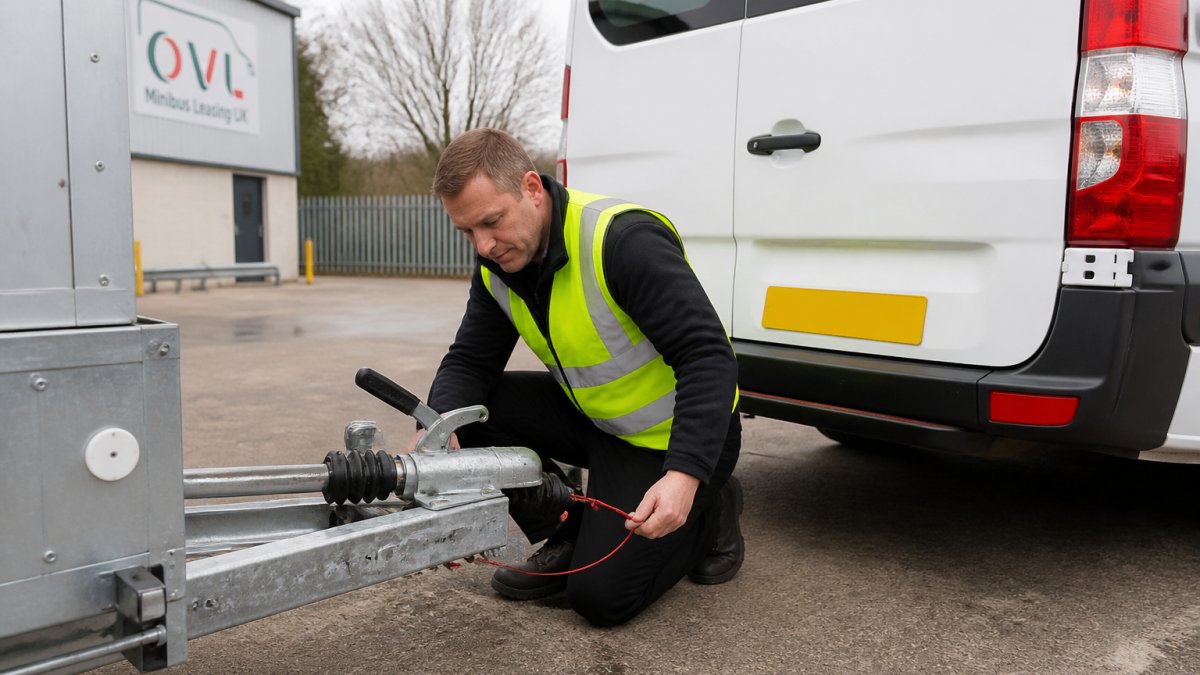
Run these checks every time you hitch up, not just on the first trip.
The moment you charge passengers or accept payment for transport, you move into "hire or reward" territory, and the rules tighten. Schools, care homes, and charities running minibus services must understand this.
If you operate for hire or reward, you generally need a section 19 permit or a full operator licence, depending on your status. The DVSA guidance on minibus and bus operator licensing explains which applies. Towing a trailer does not change your permit obligations, but it does affect your insurance and your vehicle specification.
For a Northampton care home moving residents with a trailer of mobility equipment, the permit and insurance questions come first. Get those settled, then confirm the D1E entitlement of every driver on the rota.
Specification decides whether towing is even possible. Some minibuses are simply not rated to pull a trailer, and no licence category changes that. When you are comparing vehicles, check the towing capacity before anything else.
A compliant towing minibus needs:
At Minibus Leasing UK, we match vehicles to your actual duties, not a generic spec sheet. Our whole-life cost analysis weighs the tow bar, the correct category of vehicle, and the drivers' entitlements so the fleet stays legal and cost-effective. We also handle Section 19 permit and D1 licensing questions as part of the consultative process, which matters for education, care, and community operators.
You can browse current Minibus Leasing Special Offers to see vehicles suited to towing and accessible transport, and our team can talk you through which models on offer carry the right towing ratings for your trailer.
The gap between D1 and D1E catches out experienced fleet managers every year, and the consequences land on insurance and compliance. Confirm your drivers' entitlements, match the vehicle's towing capacity to your trailer, and run the pre-departure checks every time.
Minibus Leasing UK can take the guesswork out of the vehicle side. Our account managers specialise in compliant minibus procurement for education, care, and community fleets, backed by whole life cost analysis and brand-new vehicles. Get a bespoke quote or speak to a sector specialist, and we will help you build a fleet that tows legally and runs reliably.
It depends on your specific D1 licence entitlement. A standard D1 licence allows you to drive a minibus with a trailer up to 750kg. To tow a heavier trailer, you generally need the D1E extension on your licence. You must also ensure the combined weight of the vehicle and trailer does not exceed the limits for your licence category. Always perform a D1 licence entitlement check on the DVLA website to confirm your exact permissions before planning to tow.
The key difference is the trailer weight you are permitted to tow. A D1 licence allows you to drive a minibus (up to 16 passenger seats) and tow a trailer weighing up to 750kg. The D1E licence is an extension that permits you to tow a trailer over 750kg, provided the combined weight of the minibus and trailer does not exceed 12,000kg. For organisations planning to tow equipment or luggage, confirming you have the correct D1E licence minibus and trailer entitlement is essential for legal compliance.
You only need a D1E licence if you intend to tow a trailer that weighs more than 750kg. If you are using a small, lightweight trailer for luggage or equipment, a standard D1 entitlement is sufficient. However, for towing larger trailers, such as those carrying wheelchairs or significant cargo, the D1E category is required. It is crucial to check your licence and the trailer's Maximum Authorised Mass (MAM) to ensure you are driving legally.
Before towing, a driver should conduct several vital minibus trailer safety checks. This includes verifying the trailer's coupling is secure, the safety breakaway cable is correctly attached, and the trailer lights (indicators, brakes, and running lights) are all functioning. You should also check tyre pressures and tread on both the minibus and trailer, ensure the load is evenly distributed and secured, and confirm the trailer's jockey wheel is raised and stowed. A documented pre-departure checklist helps ensure no step is missed.

