Aug 01, 2026
Last Updated: August 1, 2026
Understanding how to verify minibus accessibility standards is essential for any organisation operating passenger transport vehicles in the UK. Whether you're purchasing a new minibus, auditing an existing fleet, or preparing for regulatory inspection, the standards are non-negotiable. Transport accessibility ensures every passenger, regardless of mobility needs, can travel safely and with dignity.
The Public Service Vehicle Accessibility Regulations (PSVAR) establish mandatory standards for wheelchair accessible vehicles used for passenger transport in the United Kingdom. These regulations apply to minibuses classified as public service vehicles, any vehicle designed to carry more than eight passengers for hire or reward.
PSVAR compliance requires vehicles to have designated wheelchair spaces, accessible boarding equipment, priority seating, and emergency procedures that accommodate passengers with disabilities. The regulations are enforced by the Driver and Vehicle Standards Agency (DVSA) and form part of the broader Equality Act 2010 framework.
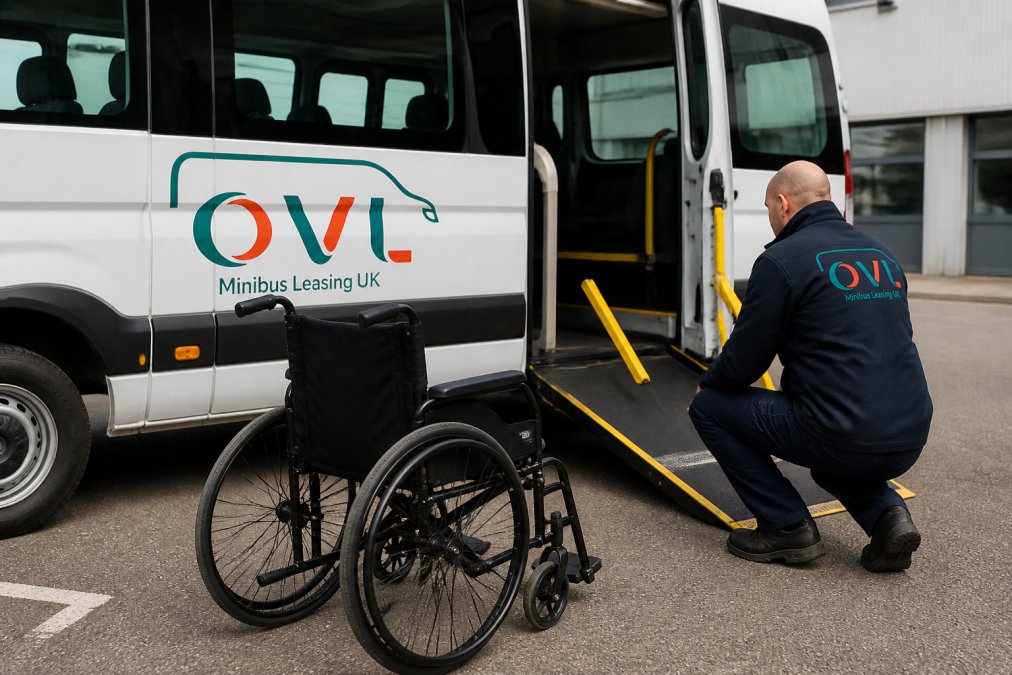
A PSVAR-compliant minibus must feature a wheelchair accessible boarding ramp or lift platform that deploys safely from ground level. The vehicle needs at least one designated wheelchair space with appropriate securing systems to restrain mobility devices during transit. Interior layouts must include priority seating clearly marked for elderly and disabled passengers, with sufficient space for movement and emergency egress.
The regulations also mandate that drivers understand accessibility procedures and can operate boarding equipment correctly. Emergency exit routes must remain clear and accessible to all passengers, including those with mobility impairments. Signage inside the vehicle must indicate wheelchair spaces, emergency procedures, and accessible facilities in clear, legible text.
Any organisation operating a minibus for passenger transport requires a PSV Accessibility Certificate. This applies to school transport operators, care home providers, community transport schemes, and commercial shuttle services.
Before committing to a minibus purchase or lease, conduct a detailed assessment of the wheelchair accessible features. Request the vehicle's technical specification sheet and PSVAR compliance documentation from the supplier. Examine the boarding equipment personally rather than relying solely on paperwork. If you're exploring leasing options, Minibus Leasing Special Offers can help you find vehicles that already meet these accessibility standards, saving time on verification.
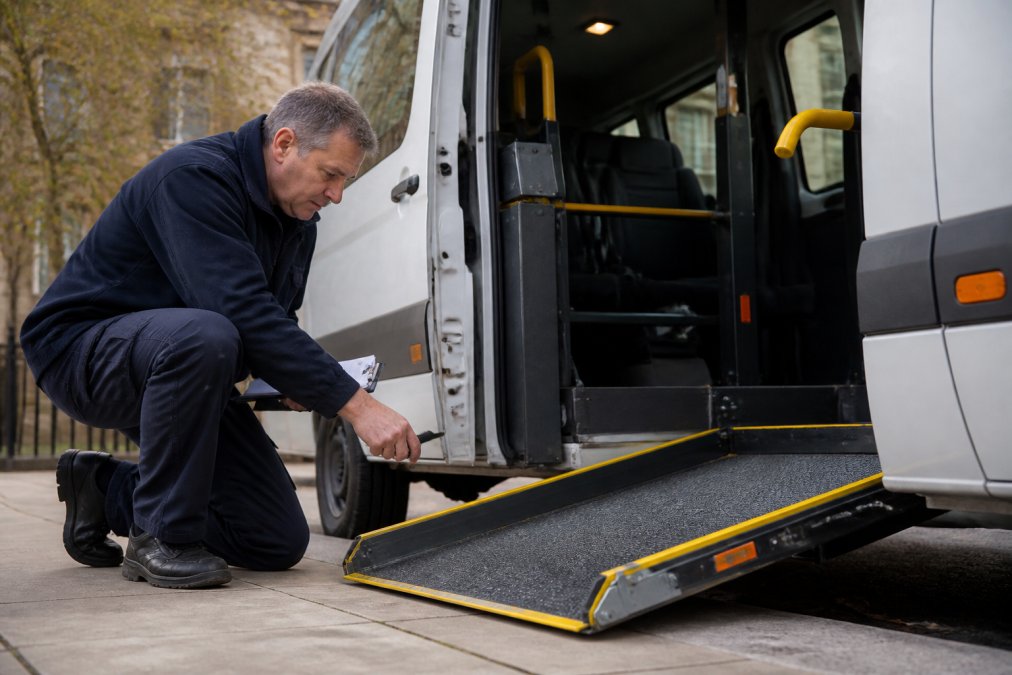
Inspect the ramp or lift platform for visible damage, rust, or mechanical wear. Operate the equipment yourself to confirm smooth deployment and retraction. Check that the ramp surface provides adequate grip and that safety railings are secure and undamaged. Verify that the equipment deploys to ground level without gaps that could trap a wheelchair.
Test the control mechanisms, buttons, switches, or manual levers, to ensure they function smoothly. Confirm that the equipment has emergency manual operation in case of power failure. Examine the securing points where the ramp attaches to the vehicle body for signs of corrosion or stress fractures. Ask the supplier for maintenance records covering the past 12 months.
Measure the designated wheelchair space to confirm it meets minimum dimensions: typically 1.3 metres long and 0.8 metres wide, with a clear height of at least 1.9 metres. Check that the space is positioned to allow the wheelchair user to face forward during transit and to see the driver and exit routes.
Examine the wheelchair securing system, typically four-point straps or clamps. Test the securing mechanism by applying firm pressure; it should hold without slipping. Confirm that the system can accommodate different wheelchair widths and depths. Verify that securing points are positioned to prevent the wheelchair from tipping during acceleration, braking, or cornering.
Inspect priority seating in the accessible area. These seats should have armrests or grab handles for stability, and the space should allow easy transfer from a wheelchair. Confirm that the seating is clearly marked with accessibility symbols and signage.
The Lifting Operations and Lifting Equipment Regulations (LOLER) govern all lifting equipment used in the workplace, including minibus boarding lifts. LOLER compliance is separate from PSVAR but equally mandatory. Any lifting platform or ramp system must meet LOLER standards and undergo regular inspection and maintenance.
LOLER requires that all lifting equipment is inspected by a competent person at least every six months, or more frequently if the manufacturer specifies. Request copies of the most recent LOLER inspection certificate before purchasing or leasing the vehicle. The certificate should confirm that the equipment has been tested, found safe, and documented with a unique identification number.
Examine the mechanical components of the lift, hydraulic cylinders, motor drives, bearings, and control systems. Look for signs of leakage, rust, or mechanical damage. Confirm that safety devices such as overload limiters, descent control valves, and emergency stops are present and functional. Test the emergency descent function; if power fails, the lift should lower gradually and safely to the ground.
A competent person for LOLER inspection is someone with technical knowledge and practical experience of lifting equipment. They should hold relevant qualifications or certifications.
Maintain a comprehensive maintenance log for all lifting equipment on your minibus. This log should record every inspection, test, repair, and replacement. Document the date of each LOLER inspection, the name and qualifications of the competent person who performed it, and any defects identified. Record all repairs and replacements with dates and parts used.
Keep records for at least five years. Digital records are acceptable provided they're backed up and retrievable.
Driver training and awareness are fundamental to accessibility compliance. The Minibus and Coach Driver Awareness Scheme (MiDAS) includes modules on passenger assistance and accessible transport. Drivers must understand how to operate boarding equipment safely, assist passengers with disabilities, and respond to emergency situations involving passengers with different needs.
MiDAS is a voluntary scheme operated by the Confederation of Passenger Transport (CPT) and endorsed by the DVSA. The accessibility module covers recognising different disabilities, communicating effectively with passengers who have hearing or visual impairments, operating ramps and lifts, and assisting passengers with mobility aids. Training emphasises dignity and respect, ensuring drivers understand that assistance should be offered without assumption or condescension.
Before hiring a driver or assigning them to an accessible minibus route, verify their training qualifications. Request evidence of MiDAS completion or equivalent accessibility training. Document the training date and certificate number.
Conduct practical assessments to confirm drivers can operate boarding equipment correctly. Observe them deploying a ramp, securing a wheelchair, and responding to a simulated emergency. Maintain a driver training register listing each driver, their qualifications, training dates, and any refresher training completed.
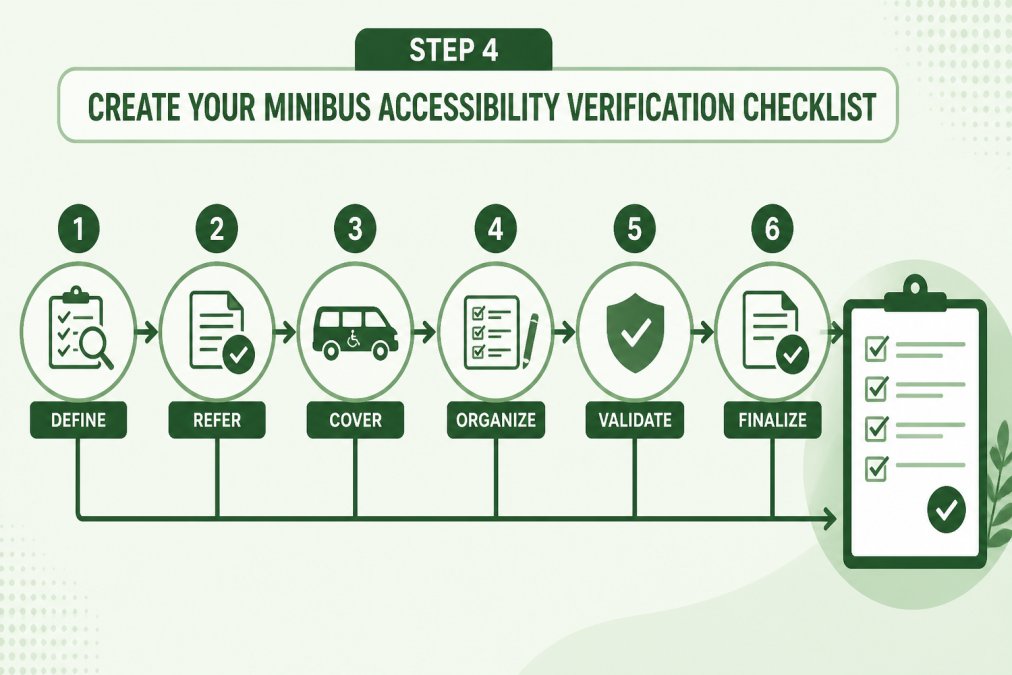
A structured verification checklist ensures you don't miss critical compliance elements. Use this checklist when purchasing a vehicle, during routine audits, or when preparing for regulatory inspection.
Begin with a visual walk-around of the vehicle. Check the exterior for damage to the ramp housing, lift mechanism, or bodywork that might affect functionality. Move inside and inspect the wheelchair space for obstructions and intact securing points. Check priority seating for damage and verify that grab handles and armrests are secure. Inspect emergency exit signage and ensure all emergency routes are unobstructed.
Test all accessibility features, ramp deployment, lift operation, securing systems, and emergency controls. Document any defects or concerns. Common failure points include ramp surfaces that become slippery when wet, securing straps that fray or weaken over time, and control buttons that become unresponsive.
| Inspection Element | Check | Pass/Fail | Notes |
|---|---|---|---|
| Ramp/Lift Deployment | Smooth operation, reaches ground level | ||
| Ramp Surface | Non-slip, no damage or gaps | ||
| Securing System | All straps intact, holds firmly | ||
| Wheelchair Space | Clear, correct dimensions, unobstructed | ||
| Priority Seating | Intact, marked, accessible | ||
| Grab Handles | Secure, positioned correctly | ||
| Emergency Exits | Clear signage, routes unobstructed | ||
| LOLER Certificate | Current, dated within 6 months | ||
| Driver Training | MiDAS or equivalent on file |
Priority seating must be clearly marked with symbols indicating it's reserved for elderly passengers, pregnant women, and passengers with disabilities. Verify that the seating is positioned near the entrance for easy access and that it provides adequate space for mobility aids.
Assess sight lines from priority seating. Passengers using these seats should be able to see the driver and emergency exits clearly. Confirm that all grab handles and armrests are secure and positioned at appropriate heights. Test grab handles by applying firm downward pressure; they should not move or flex.
Emergency procedures are critical to passenger safety and regulatory compliance. Every minibus must have documented emergency procedures that account for passengers with different mobility and communication needs.
Identify all emergency exits on the minibus, typically the main door, rear door, and emergency windows. Verify that each exit is clearly marked with illuminated signage that remains visible even if main lighting fails. Test emergency door releases to confirm they operate smoothly and don't require excessive force.
Develop procedures for assisting passengers with mobility impairments during evacuation. A wheelchair user may need help transferring to a mobility aid or being assisted down emergency steps. A passenger with a visual impairment needs clear verbal direction. A passenger with a hearing impairment needs visual signals or written instructions.
Create emergency signage in accessible formats. Standard text-only signs are insufficient. Include pictorial symbols, large clear text, and consider Braille labels for passengers who are blind.
The UK government publishes guidance on accessible transport, including the Safety Code of Practice for minibuses. This guidance covers vehicle design, equipment maintenance, driver training, and passenger assistance. Document your organisation's accessibility policy, outlining your commitment to accessible transport, responsibilities for equipment maintenance and driver training, and procedures for responding to accessibility issues.
Assuming certification is permanent is a significant error. PSVAR certificates are valid for a specific period, and LOLER inspections must be repeated regularly. An expired certificate means your vehicle is no longer compliant. Create a calendar system to track certification renewal dates and schedule inspections well in advance.
Neglecting driver training is another common mistake. A vehicle with perfect equipment is useless if the driver doesn't know how to operate it safely or assist passengers appropriately. Invest in quality training and verify competency through practical assessment.
Failing to maintain equipment properly causes many compliance failures. Ramps and lifts deteriorate with use. Regular maintenance, documented in your maintenance log, prevents these failures and demonstrates your commitment to safety. Overlooking emergency procedures creates serious liability; staff must be trained on assisting passengers with different disabilities during evacuation.
Verification isn't a one-time event. Accessibility compliance requires continuous monitoring, maintenance, and periodic re-verification to ensure standards are maintained throughout the vehicle's operational life.
Establish a maintenance schedule specific to your minibus's accessibility equipment. Consult the manufacturer's guidance on recommended maintenance intervals. Most boarding ramps and lifts require inspection and servicing every 6 to 12 months, depending on usage intensity.
Record every maintenance action, inspections, repairs, component replacements, and testing. Include the date, technician name and qualifications, work performed, parts used, and any defects found. A comprehensive maintenance log demonstrates to regulators that you're taking accessibility seriously and protects your organisation legally.
Conduct a comprehensive accessibility audit at least annually. Use your verification checklist to assess all accessibility features, review driver training records, and verify that maintenance has been completed on schedule.
Arrange LOLER inspections with a competent person before your current certificate expires. Schedule PSVAR re-certification if required by your regulatory body. Confirm that all drivers have current accessibility training and that new staff have completed required training before operating accessible vehicles.
Document the results of your annual audit. Note any defects found and the remedial actions taken. If defects are serious, such as a non-functional ramp, take the vehicle out of service immediately until repairs are completed and verified. Review your accessibility policy annually and update procedures based on lessons learned, regulatory changes, or feedback from drivers and passengers.
Ensuring your minibus fleet meets accessibility standards protects your passengers and protects your organisation from regulatory action and liability. The verification process, from initial purchasing decisions through ongoing maintenance and re-certification, requires attention to detail and sustained commitment. Speak to a sector specialist today to discuss how Minibus Leasing UK can support your fleet's accessibility compliance and operational efficiency.
PSVAR sets mandatory accessibility standards for public service vehicles in the UK, requiring features such as wheelchair spaces, accessible boarding equipment, priority seating, and emergency communication systems. All minibuses operating as public service vehicles must comply with PSVAR unless exempt. Operators must obtain a PSV Accessibility Certificate confirming compliance with these statutory requirements before operating passenger services.
Wheelchair accessible minibus requirements UK mandate that vehicles have boarding ramps or lifts capable of safely accommodating wheelchairs, secure wheelchair restraint systems, and accessible entrances. Lifting platforms must comply with LOLER regulations, including regular inspection and maintenance. Ramps must have appropriate gradient and non-slip surfaces. All boarding aids must be regularly tested and documented to ensure passenger safety and regulatory compliance.
MiDAS Accessible Driver Training is not a legal mandate but is highly recommended and increasingly expected by operators and regulators. The training equips drivers with knowledge of accessibility features, passenger assistance techniques, and disability awareness. Many organisations operating accessible minibuses require their drivers to hold MiDAS certification to ensure consistent, professional passenger service and reduce liability risks associated with incorrect equipment operation.
LOLER (Lifting Operations and Lifting Equipment Regulations) specifically governs lifting equipment such as wheelchair lifts and boarding platforms. LOLER requires thorough examination by a competent person at least every six months, detailed maintenance records, and immediate removal from service if defects are found. Standard vehicle safety inspections do not provide the same level of technical scrutiny for lifting mechanisms, making LOLER compliance essential for wheelchair accessible minibuses.

